
A tattoo style is defined by its lines, fill, shading and colour. For small and first tattoos, people tend to choose styles based on linework: fine line, minimalism and botanicals. Larger tattoos suit illustrative work, blackwork, Japanese traditional and realism. Below are short guides to each style, sorted into groups.
How to use this directory
The styles are grouped by how the design is drawn: with lines, with solid black, following a traditional style or with a painterly approach. For each style you’ll see what it looks like and what it suits. There’s more on choosing yours in “Choosing a tattoo style”.
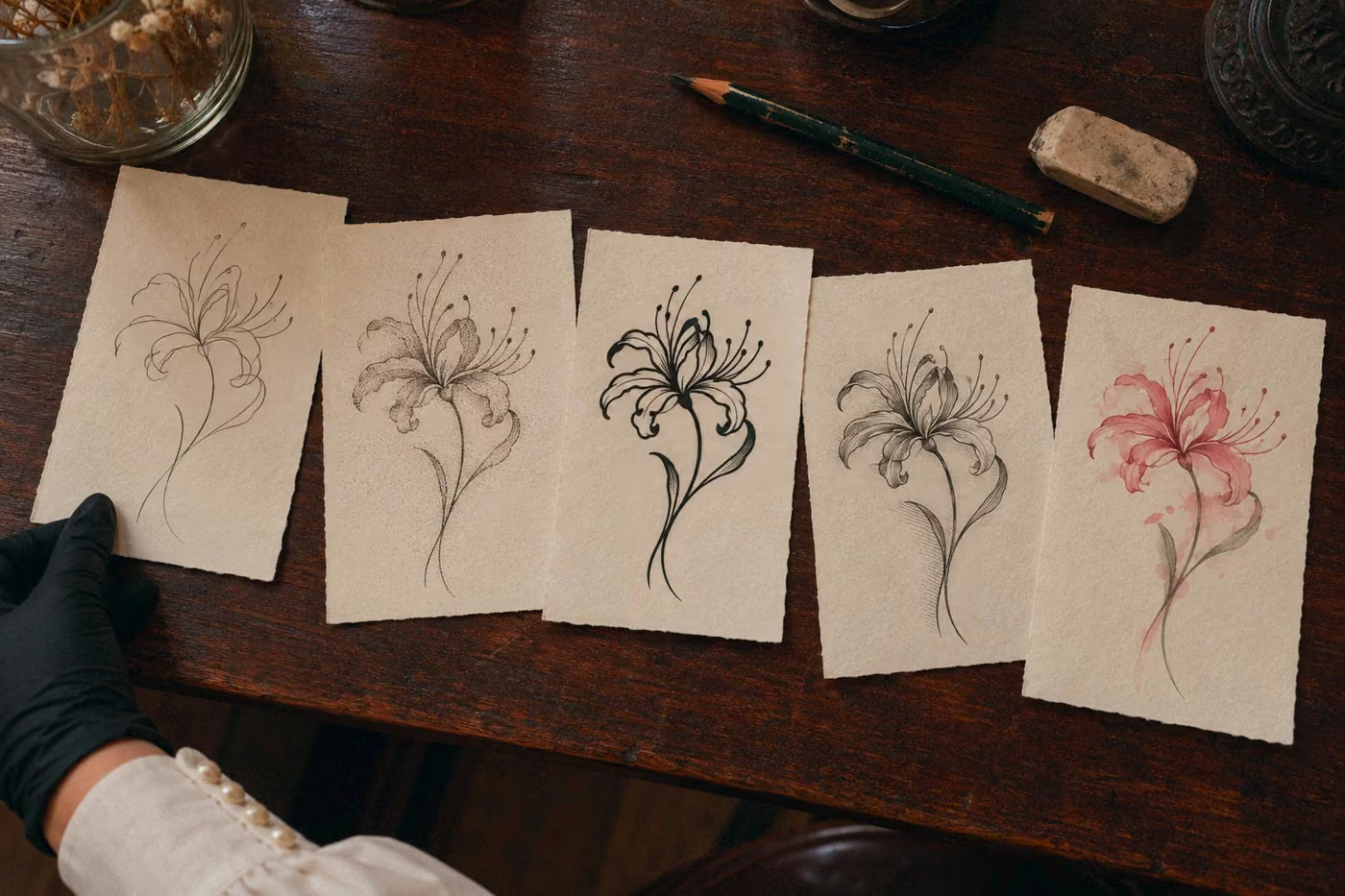
The lines between styles are blurry. Artists often mix them, and that’s fine: what matters more is that the design works as a whole.
Line-based styles
These designs use linework, with little or no fill. They look light and airy and work well for a first tattoo.
- Fine line. Very thin, precise lines and fine detail. It needs an experienced artist and enough space for the detail.
- Minimalism. A few lines, a simple shape, lots of empty space. Works best when the idea reads at a glance.
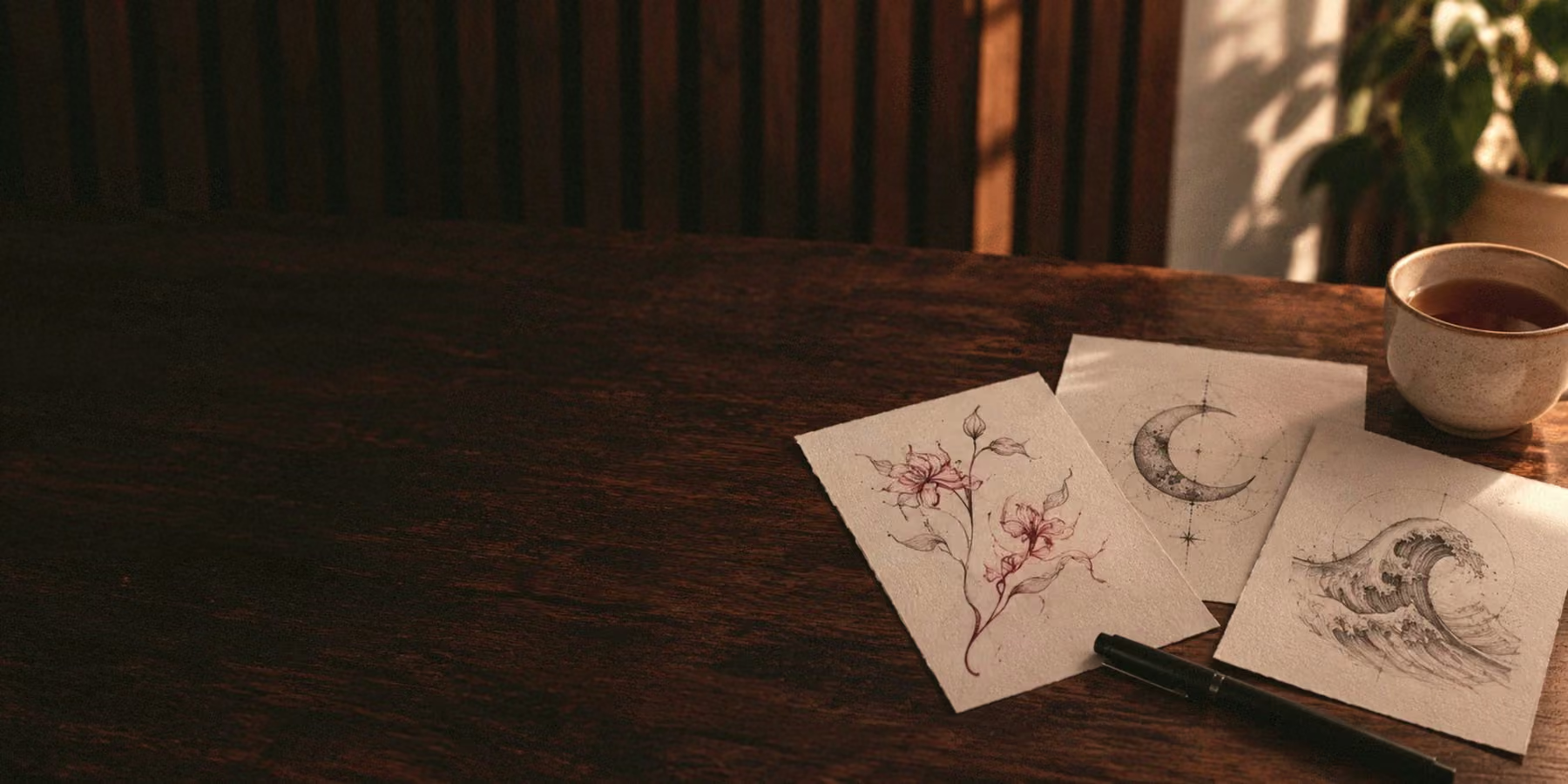
- Botanical. Flowers, branches and herbs in fine line, sometimes with soft shading. Fits easily on any part of the body.
- Single line. A design drawn in one continuous line, without a break. It looks like a flourish of the pen.
- Sketch. Work that looks like a pencil drawing, with construction lines and a deliberately “unfinished” feel.
Most of my work is delicate illustrative linework, botanicals and minimalism. To keep the lines clear ten years on, I sometimes suggest making the design a little bigger than you had in mind.
Illustrative and black-ink styles
Everything is done in black; hatching, dots or solid fill give the design depth. These are some of the longest-lasting styles.
- Illustrative. Hatching, like an old engraving or a book illustration. Crisp and expressive.
- Dotwork. Shading and depth created with countless dots. The transitions are soft, without blending.
- Blackwork. Large areas of solid black, with strong contrast between skin and pigment.
- Ornamental. Patterns, mandalas, lace. Often follows the curves of the body.
- Geometric. Lines, shapes, symmetry. It demands precision: any wobble shows.
- Tribal. Bold black shapes rooted in the traditional patterns of different cultures.
Traditional tattoo styles
These styles have their own rules for subjects, line weight and colour palette. You can recognise them at first glance.
- Old school. Bold outlines, flat bright colour, classic subjects: swallows, anchors, roses, hearts.
- Neo-traditional. The same principles, but with more detail, more shades and a softer feel.
- Japanese traditional. Koi, dragons, waves, peonies. Usually done as large pieces, such as sleeves or back pieces.
- Chicano. Black and grey work with smooth shading, portraits, lettering and religious motifs.
Painterly styles
The design relies on shading, colour and gradual changes in tone rather than linework. This kind of work is usually larger and takes several sessions.
- Realism. Portraits, animals and objects that look like photographs. Black and grey or colour.
- Watercolour. Patches of colour, drips and splashes, as if on paper. Without an outline, it loses definition faster.
- New school. Cartoonish proportions, bright colour, bold outlines and plenty of humour.
- Trash polka. Black and red, a collage of graphic elements, lettering and smears.
Subjects and techniques
Some names describe the subject or technique rather than the drawing style. They’re often combined with any of the styles above.
- Anime. Characters and scenes from anime and manga. Can be fine linework, colour or black and white.
- Gold tattoos. My signature style. The easiest way to get a feel for them is to look at the examples in the portfolio.
- Lettering. Words as the main element of the design. More in “Lettering tattoos”.
- Hand poke. A technique, not a style: the artist tattoos the design by hand, dot by dot. More in “Hand poke and DIY tattoos”.
How styles age
Every tattoo softens over the years. But how fast depends on the style: the more black and the crisper the outline, the longer the design stays readable.
- Last longer: old school, blackwork, illustrative, tribal.
- Need enough space: fine line, minimalism, micro tattoos. Lines packed too close together merge over time.
- Lose definition faster: watercolour without an outline, light colours, very fine details.
More in “How tattoos age”.
Frequently asked questions
Can't find your question? Message me on Telegram or Instagram. I reply personally.
Can I mix several styles?
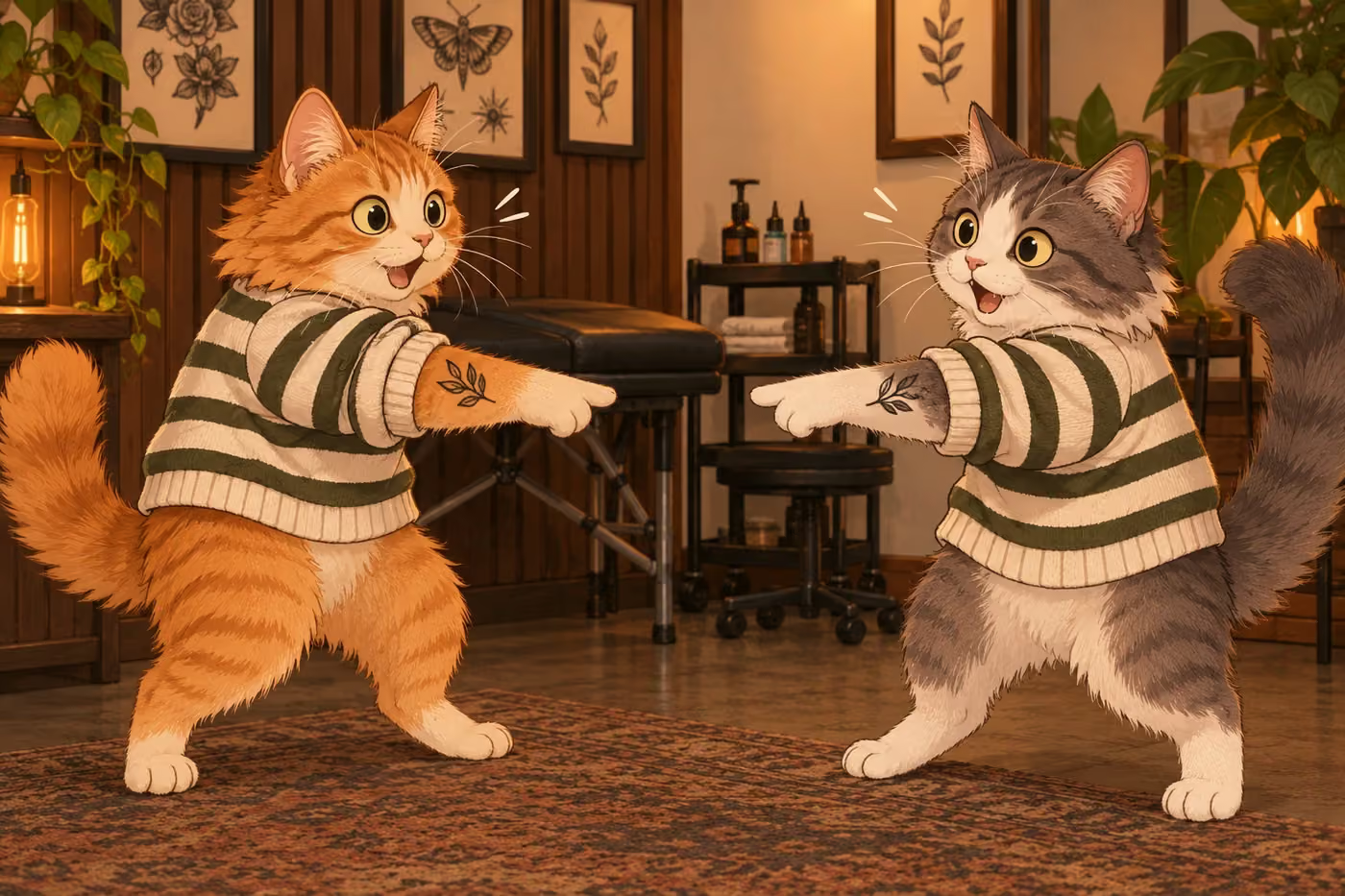
Yes, lots of tattoos are done that way: botanicals with dotwork, illustrative work with a watercolour splash. The key is for the design to work as a whole.
Which style is best for a small tattoo?
Minimalism, fine line and simple illustrative work. But it’s best not to overload them with tiny details.
Does one artist work in every style?
Rarely. Every artist has their own strengths, so look for someone whose portfolio includes work in the style you want.
How do I know which style suits me?
Collect pictures you like and see what they have in common. There’s a full breakdown in “Choosing a tattoo style”.