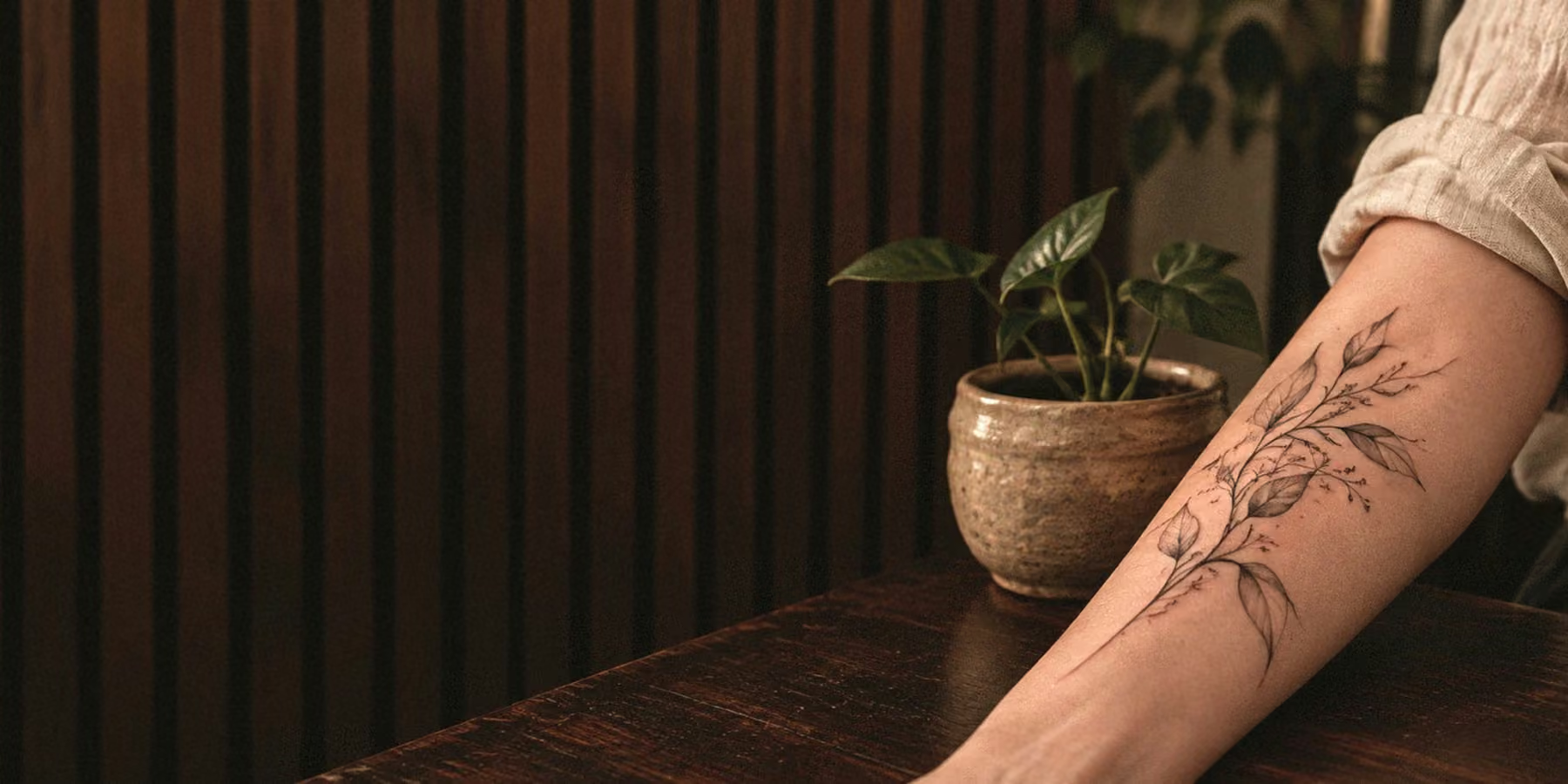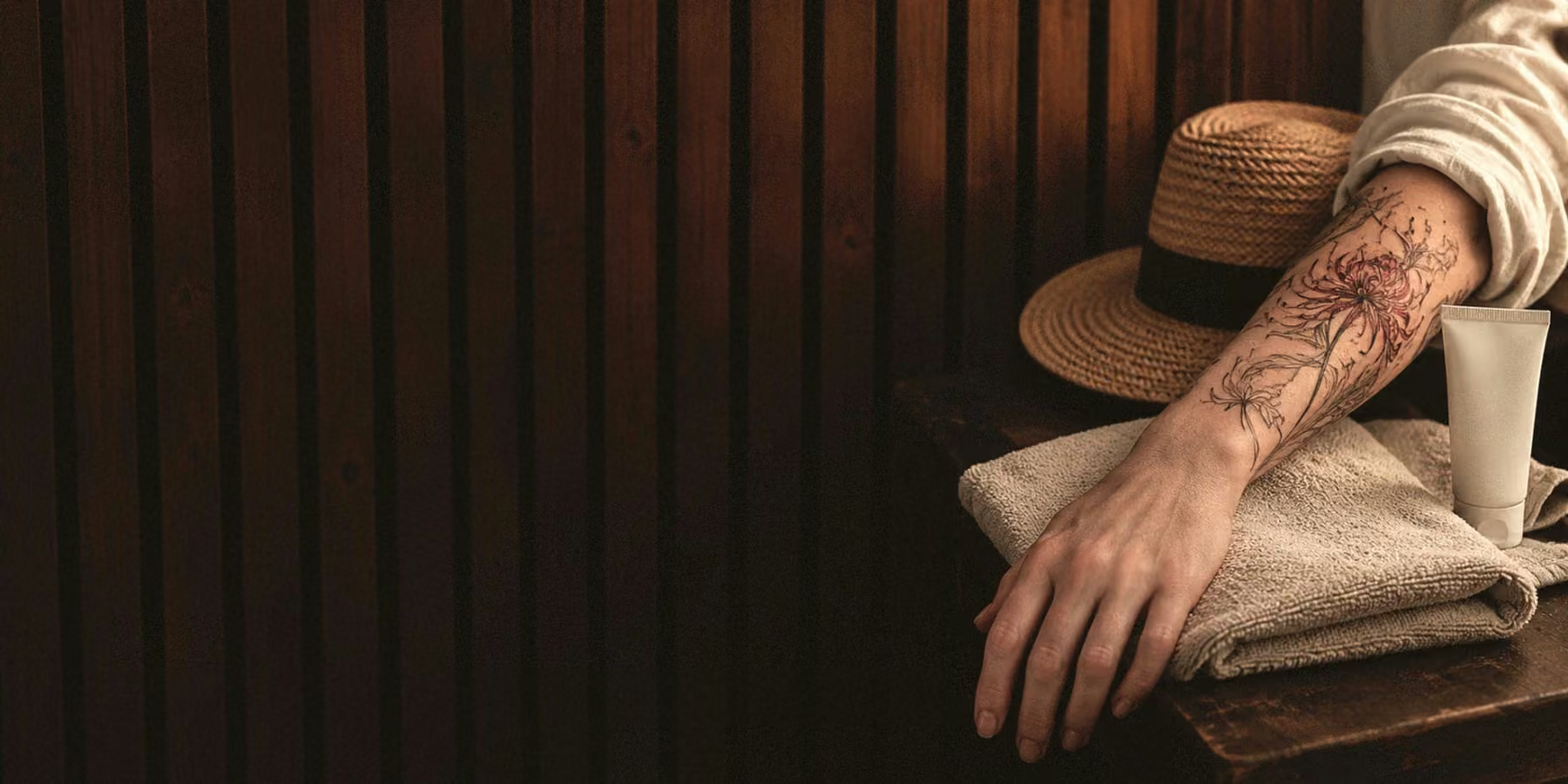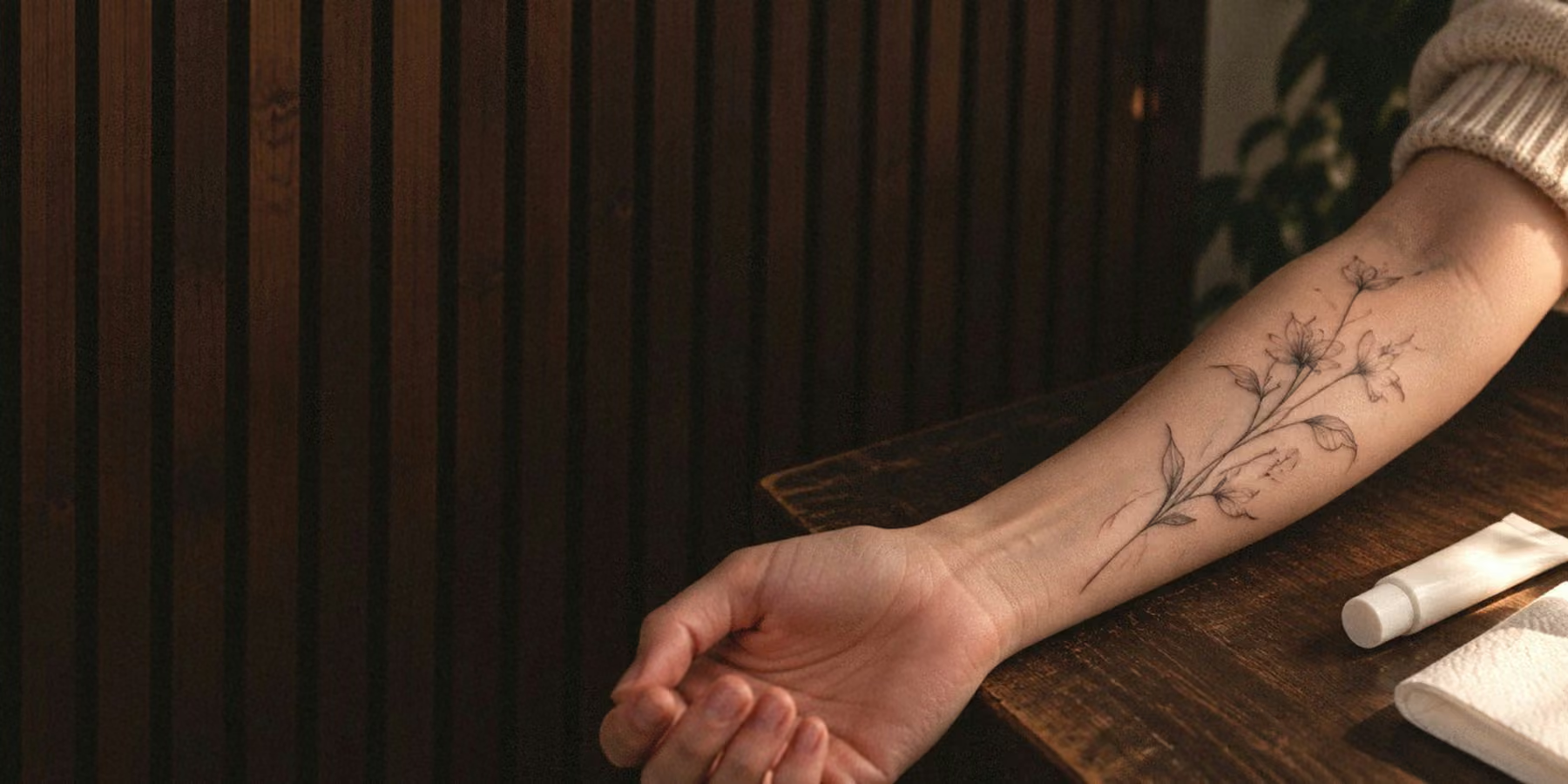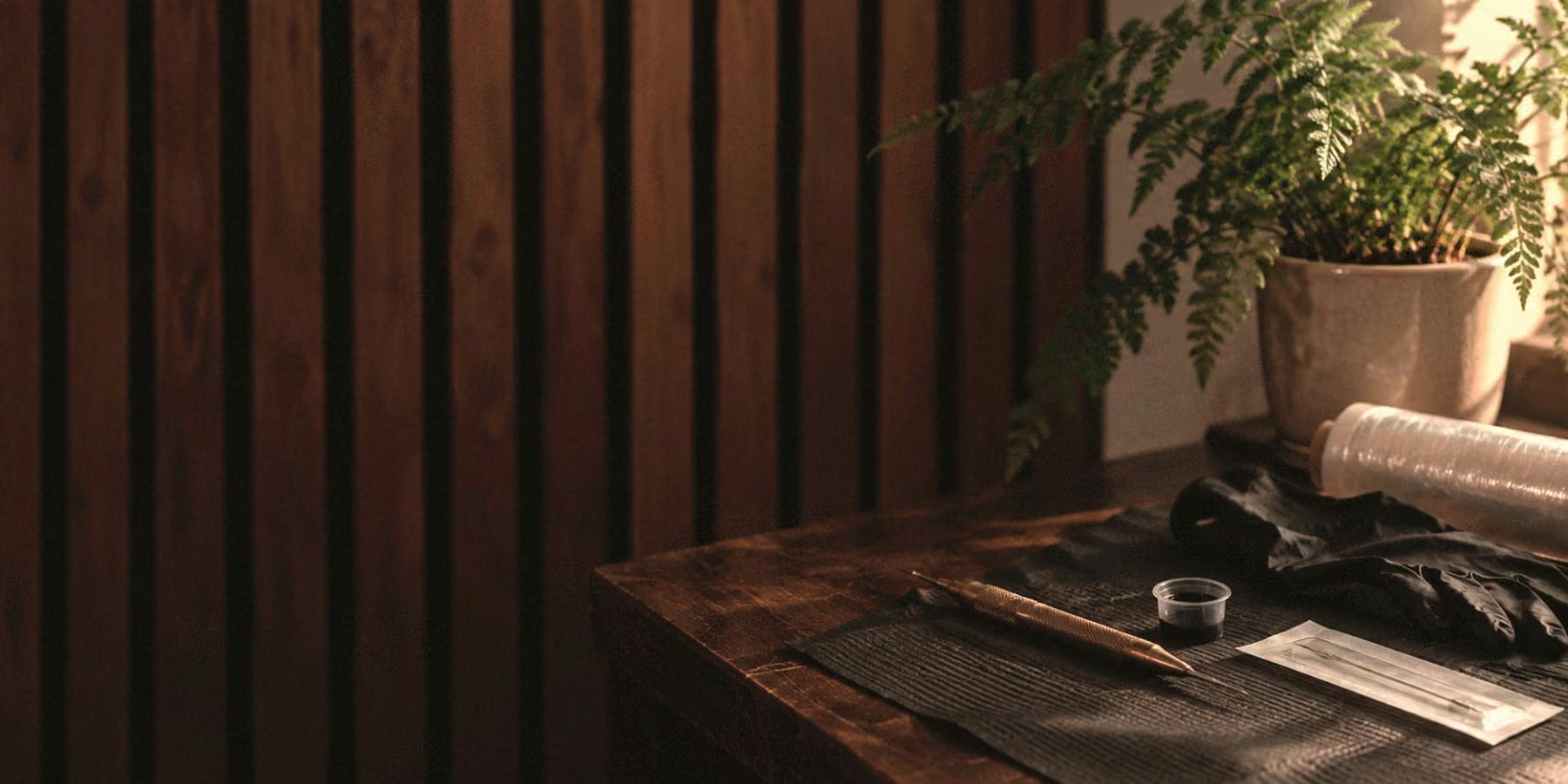

Hand poke is a technique where the artist tattoos the design by hand, dot by dot, with a sterile single-use needle and tattoo pigment. A home-made tattoo with a sewing needle and ink is something else entirely: you risk infection, wobbly lines and ink spreading under the skin. If you love the handmade look, find a hand poke artist.
What hand poke is
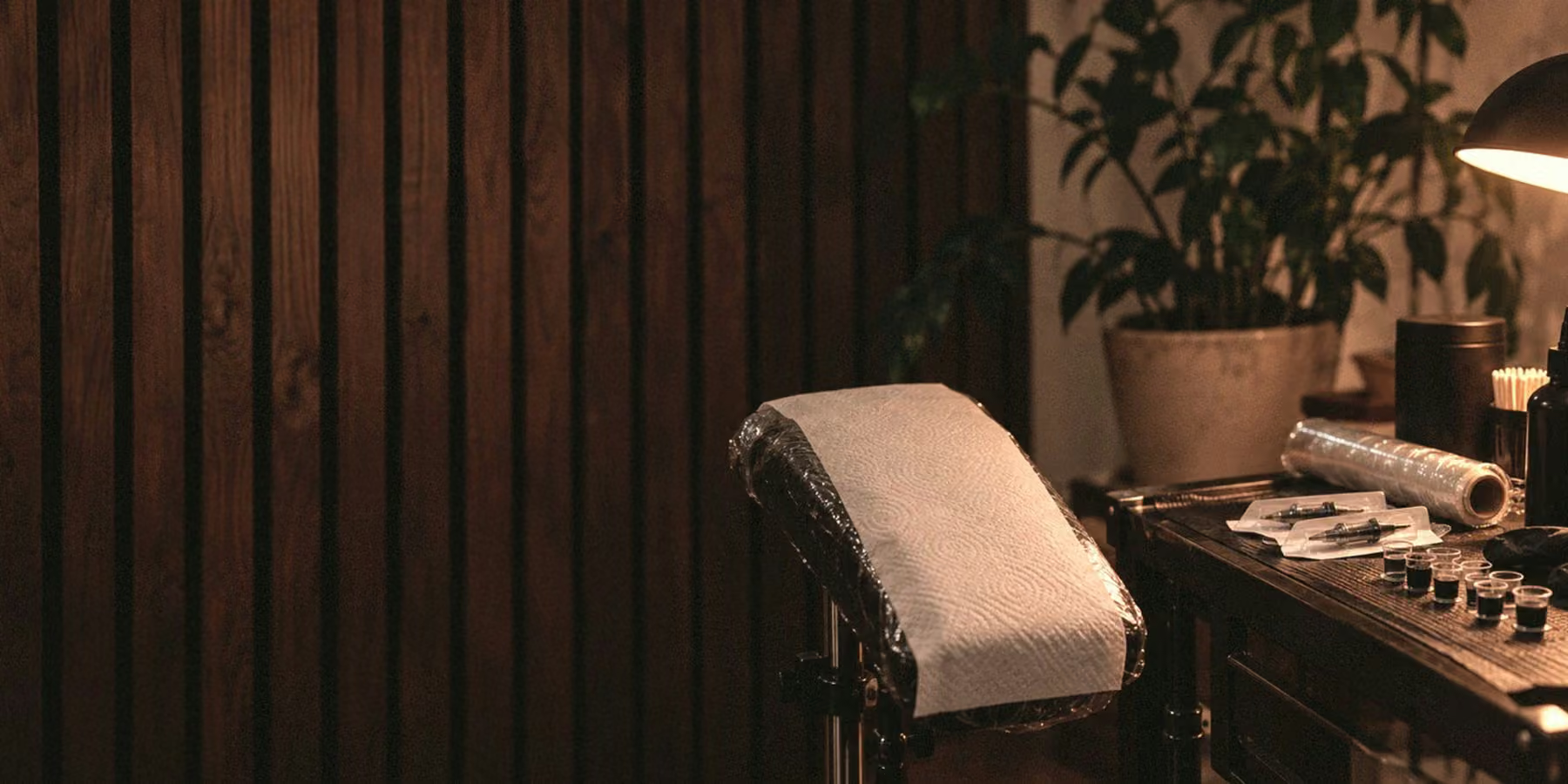
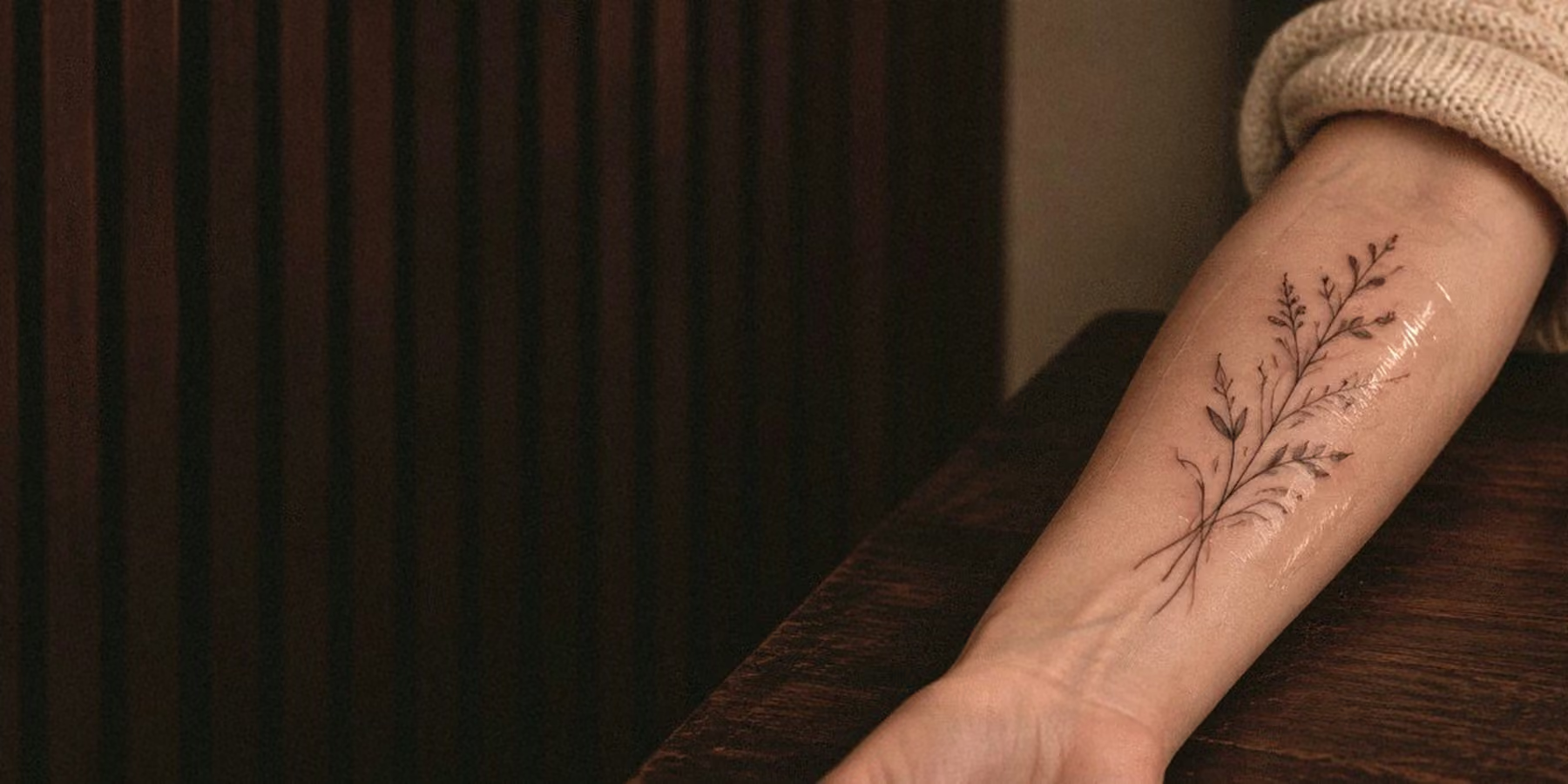
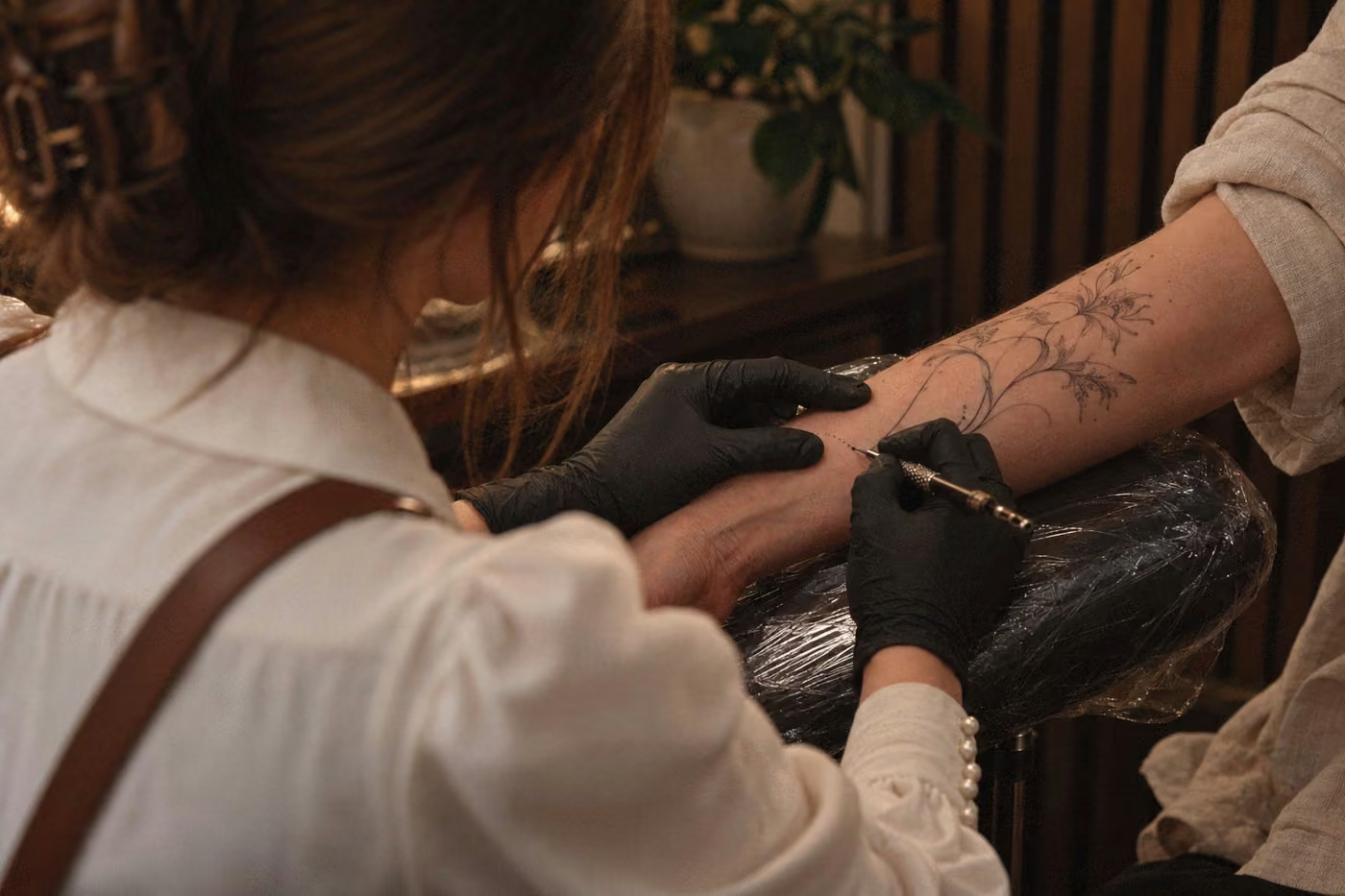
Hand poke is tattooing without a machine. The artist holds the needle in a special handle and applies the pigment dot by dot. It's just as professional as machine tattooing, but done by hand.
- the needles are sterile and single-use, just like with a machine;
- the pigment is the same as for ordinary tattoos;
- the lines come out softer, with a slight dotted texture;
- the work is slower, so hand poke is usually chosen for smaller designs.
Hand poke or machine
Neither technique is better than the other. The choice depends on the design and on the result you want.
- Hand poke: small designs, dotted texture, a handmade look. No buzzing machine, but it takes longer.
- Machine: long even lines, solid fill, large pieces, fine graphic work with small details.
Hand poke feels different too, with slow, individual needle pricks. Some people find it easier to tolerate, while others find the longer session harder. More on techniques and styles in “Choosing a tattoo style”.
Why tattooing at home is dangerous
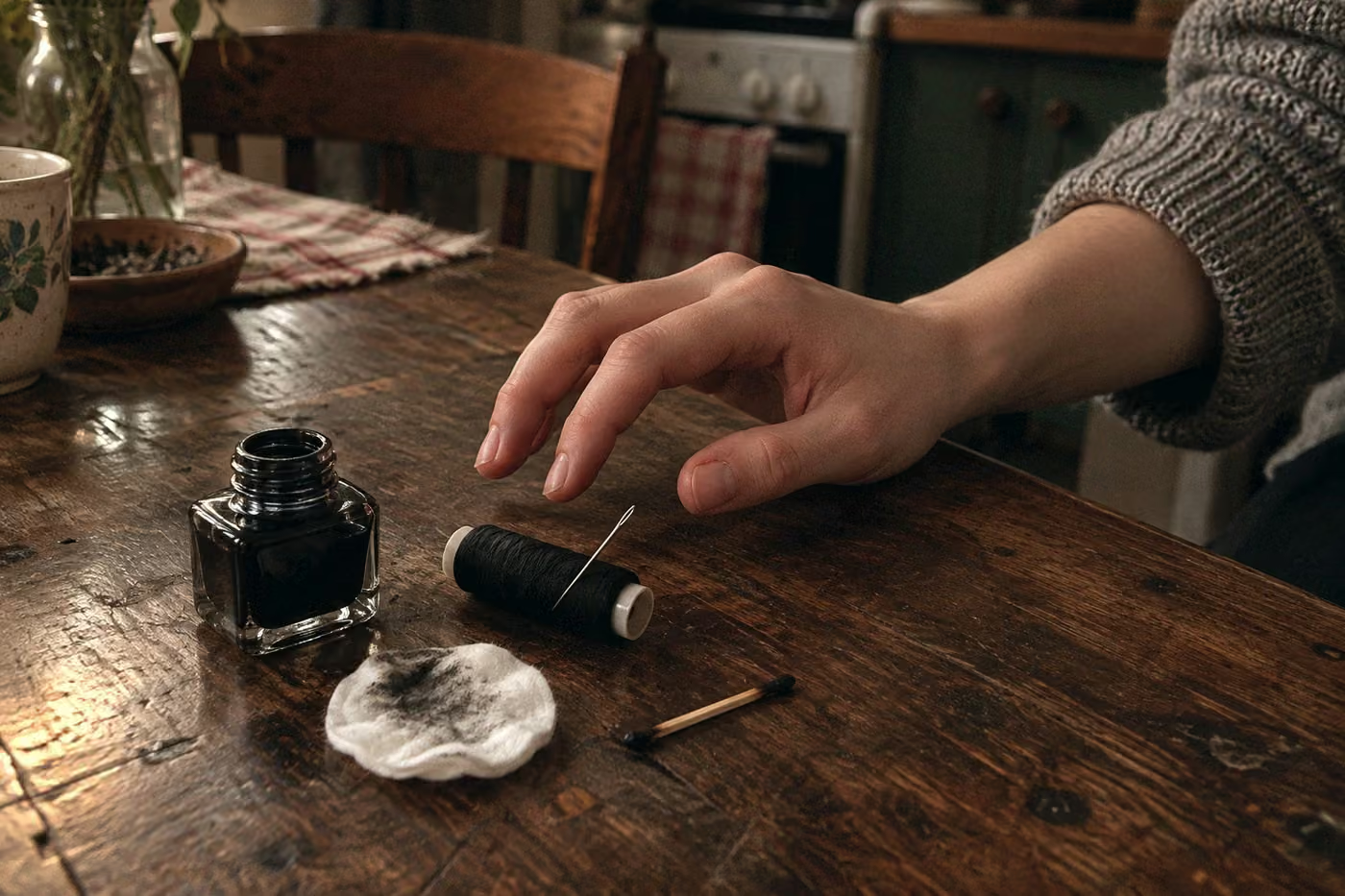
A home-made tattoo seems like the same thing as hand poke, just free. In reality, all they have in common is the lack of a machine.
- The needle isn't sterile. A sewing needle heated over a flame or wiped with alcohol doesn't become sterile.
- The ink isn't meant for skin. Drawing ink, writing ink and biro ink aren't made to stay under your skin for years.
- The depth is guesswork. Too shallow and patches of ink don't stay in the skin; too deep and the ink blurs and leaves a scar.
- No proper setting. A kitchen table and a sofa are no substitute for a clean workstation.
Shared or poorly cleaned needles pass on blood-borne infections, including hepatitis. Taking turns with the same needle is dangerous.
What a tattoo like this looks like a year on
Right after the “session”, a home-made tattoo can look passable. The problems show up later: lines of uneven thickness, dots at different depths, and ink that turns bluish and spreads over time.
If you already have a home-made tattoo
Don't try to fix it yourself: that only makes things worse. Show it to an artist. There are usually three options:
- rework it, if the design is small and evenly tattooed;
- cover it up with a new design (more on this in “Covering up an old tattoo”);
- lighten or remove it with a laser (see “Tattoo removal”).
I rarely take on cover-ups. I can only tell whether I’ll take one on and what it will cost from a photo and a detailed description of what you want: the photo shows how dense the ink is and how much space the tattoo takes up.
How to choose a hand poke artist
The rules are the same as for any artist. Look for:
- photos of healed work, not just fresh tattoos;
- single-use needles opened in front of you;
- proper tattoo pigments, not “the ink everyone uses”;
- a clean workstation: a studio, not a room in student halls.
For a detailed guide, see “How to choose a tattoo artist”.
If you just want to give it a try
Home-made tattoos are most often done by teenagers, out of curiosity or because they can't go to a studio yet. The urge is understandable. But a small professional piece will cost less than covering up or removing the “experiment” later. There's more on this in “Tattoos for minors: a guide for teenagers and parents”.
Frequently asked questions
About hand poke and home-made tattoos. Can't find your question? Message me on Telegram or Instagram. I reply personally.
Do hand poke tattoos last as long as machine tattoos?
Well-done hand poke lasts for years. It's home-made tattoos that don't hold up, because of inconsistent needle depth and unsuitable ink.
Does hand poke hurt more?
It feels different: you feel slow, individual needle pricks. Some people find it easier to tolerate, while others find it harder because the session is usually longer.
What if I buy a sterile kit and do it at home?
A sterile needle is only part of it. You also need a clean workstation, the skill to keep the depth consistent and an understanding of skin. Without those, the risk is still there.
Can a home-made tattoo be covered up?
Often, yes, if it's small and not very dense. Sometimes it needs lightening with a laser first. That's decided in person, with an artist.