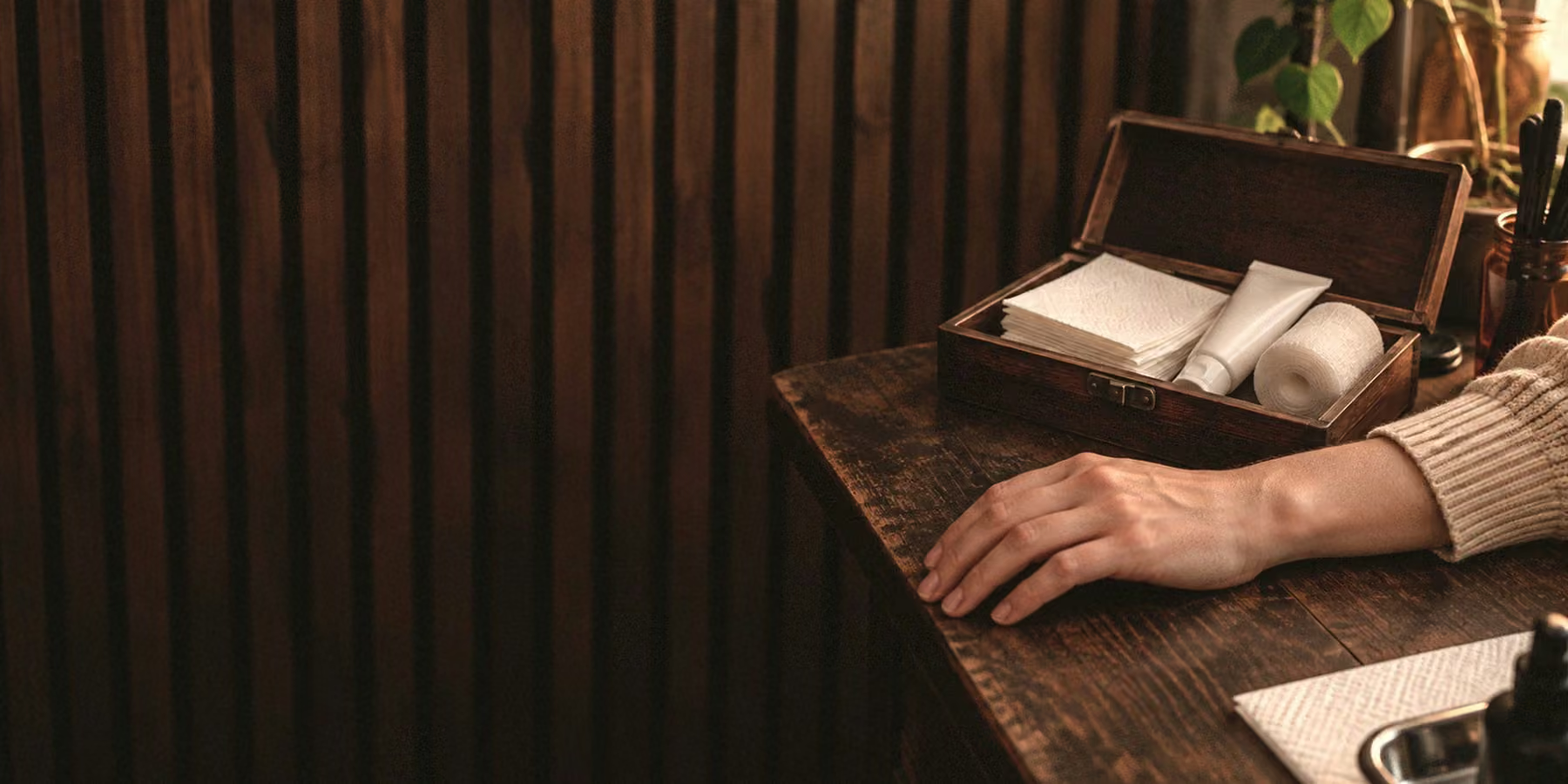

Don't panic: most damage to a fresh tattoo can be fixed. Gently wash the area, pat it dry, apply a thin layer of the product recommended in your aftercare instructions and then leave it alone. Take a photo and message your artist; once the tattoo has healed, a touch-up usually fills any gaps. If the area feels hot, you notice pus or the redness spreads, see a doctor first.
What usually happens
A fresh tattoo is healing skin, and life doesn't stop for two weeks. Most often the damage looks like this:
- A scab comes off: you scratch it in your sleep, catch it with a sponge or sleeve, or just can't resist picking it.
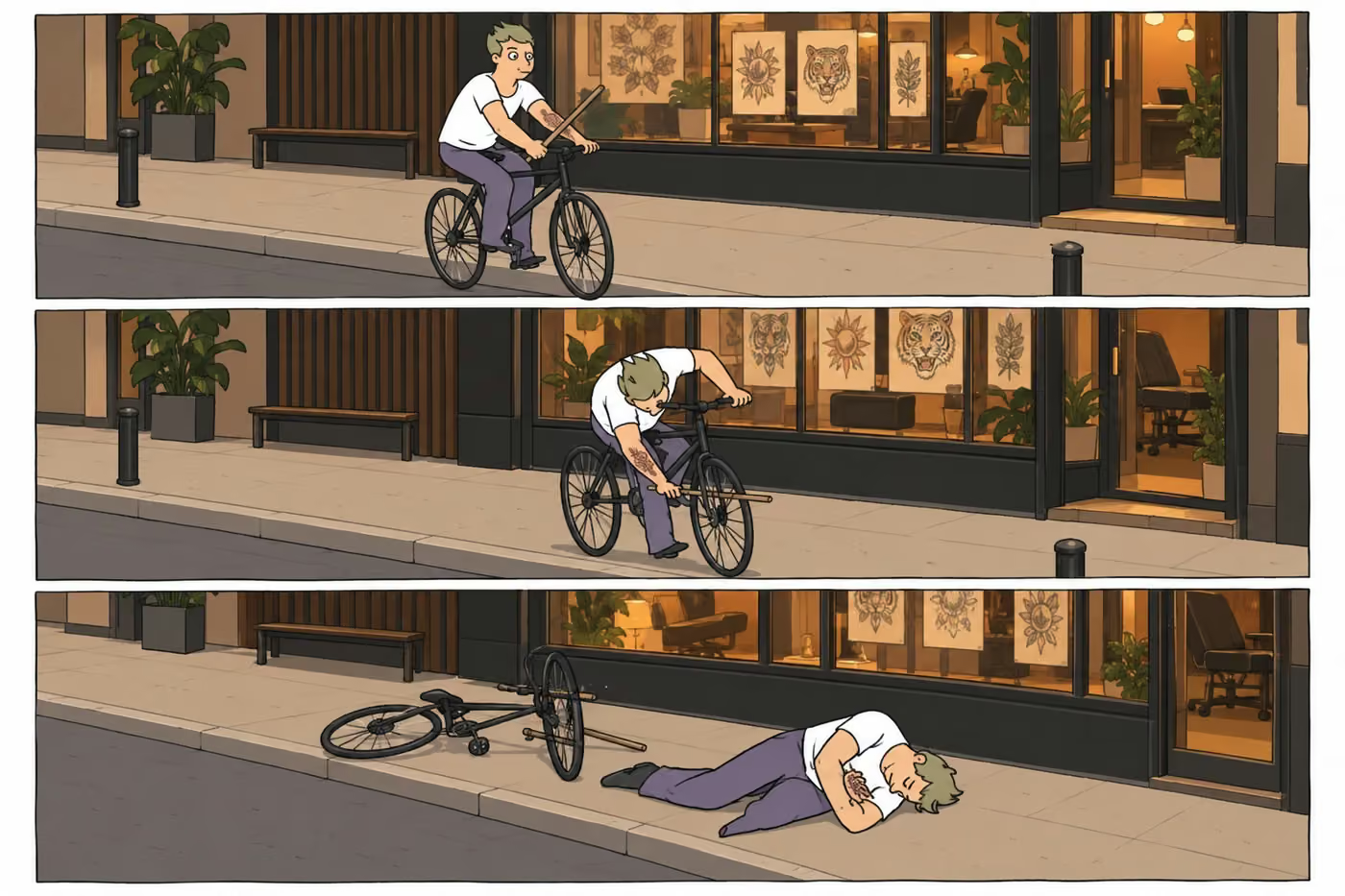
- A snag or a knock: on a door frame, a bag, a seatbelt.
- Rubbing from clothes: tight jeans, a watch strap, a backpack seam.
- Sunburn: you forgot your arm was resting in the sun in the car or on a terrace.
- Soaking and heat: a swim, a bath or a sauna too soon.
It sounds alarming, but in most cases it only affects how the tattoo looks, and that can be fixed.
What to do straight away
The first few minutes matter more than you might think. Keep calm and follow these simple steps:
- Wash your handsWith soap, before you touch the tattoo.
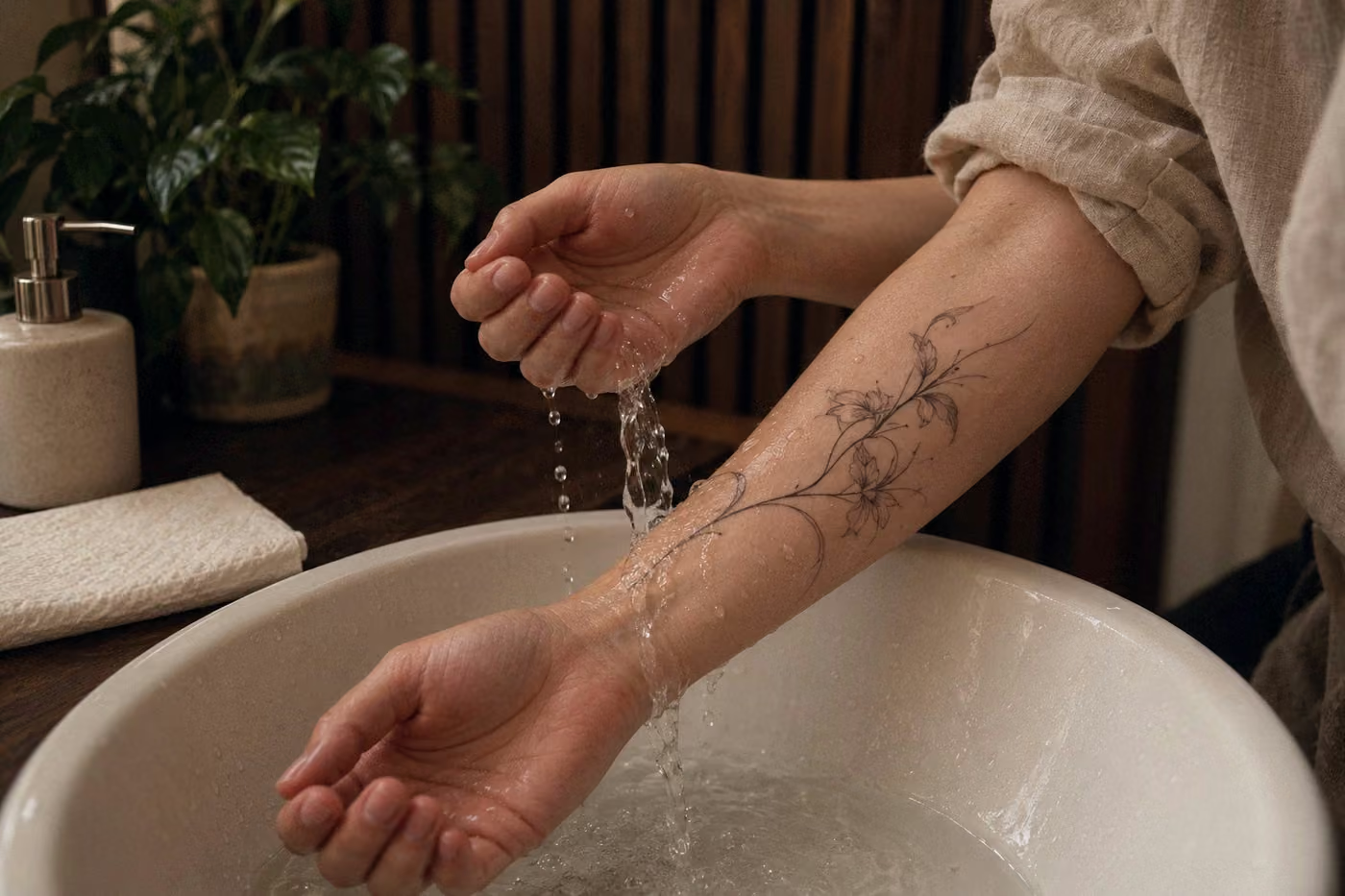
- Wash the areaUse warm water and the mild cleanser recommended in your aftercare instructions. Don't use a sponge.
- Pat it dryWith a clean paper towel. Don't rub.
- Apply a thin layerUse the same aftercare product as before. Don't try anything new.
- Take a photoTake it in daylight, then message your artist to explain what happened.
What not to do
The urge to “rescue” a tattoo often does more harm than the damage itself.
- don't pull off what's left of a scab, even if an edge is hanging loose;
- don't dab it with alcohol, hydrogen peroxide, brilliant green antiseptic or iodine;
- don't cover it with an ordinary plaster, as it will pull off whatever is left;
- don't slather on a thick layer “so it heals faster”;
- don't go to another artist to “touch up” fresh work.
If something has happened to a tattoo I did, just message me and send a photo. I'll stay in touch until it has fully healed and explain what to do now and what can safely wait for a touch-up.
If you get sunburnt
Sunburn on a fresh tattoo puts a double strain on the skin. Get the tattoo out of the sun, hold a cool, clean compress on it for a few minutes through a cloth, and carry on with your usual aftercare. Don't use products for burns without checking: ask your artist or a pharmacist whether the product is suitable for healing skin.
After a burn, the lines may heal paler. You'll only see that after a month or six weeks, and it can be fixed with a touch-up. To stop it happening again, keep the tattoo covered with clothing until it heals, and after that use a high-SPF sunscreen.
When it's no longer about how it looks
Sometimes damage opens the door to infection. Keep an eye on your skin for a few days afterwards. It's time to be concerned if:
- the redness is spreading and isn't fading;
- the area is hot and hurts more than yesterday;
- pus or an unpleasant smell has appeared;
- you've developed a temperature.
If you notice these signs, see a doctor without waiting for your artist to reply. Your artist can help with the design, but treating inflammation is a doctor's job. The difference between ordinary healing and something worrying is covered in detail in “Normal or a warning sign”.
What will happen to the design
While the tattoo is healing, it's too early to judge the result. Often what looked like a disaster heals with barely a trace. But if a pale patch is left where a scab was picked off, it gets filled in at a touch-up once the skin has fully recovered.
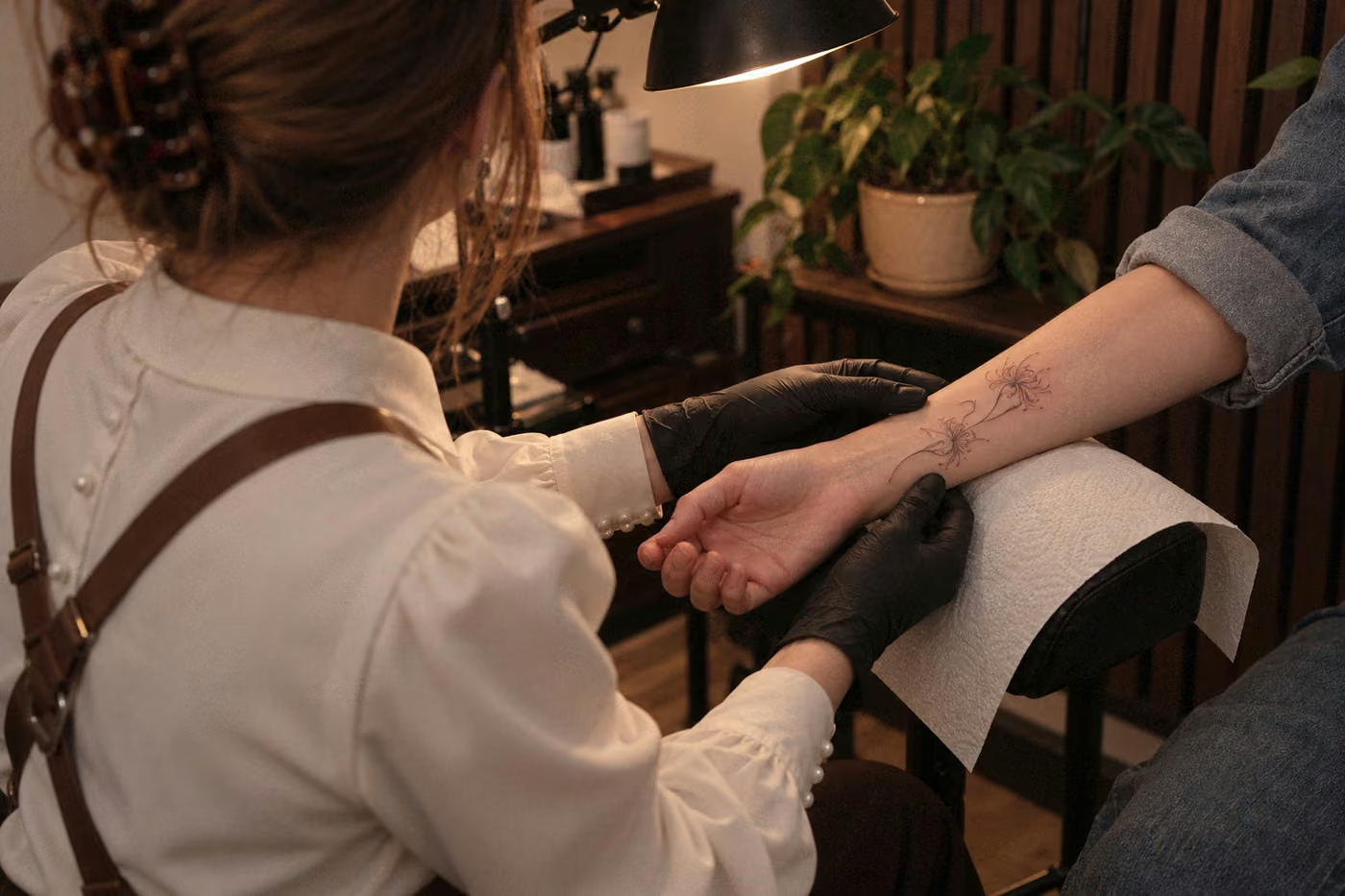
How touch-ups work and when to have one is covered in “Tattoo touch-ups”.
How to stop it happening again
For the rest of the healing period, stick to a few simple habits: wear loose clothing over the tattoo, keep your bedding clean and keep straps and bags off that area. If the damage happened in your sleep, a soft, loose sleeve at night helps. Other common mistakes are covered in “Tattoo aftercare mistakes”.
Frequently asked questions
Can't find your question? Message me on Telegram or Instagram. I reply personally.
The scab came off with the ink. Is my tattoo ruined?
Most likely not. Wait until it has fully healed and look at it in daylight. If there's a gap, a touch-up will fill it in.
Can the damaged area be fixed straight away?
No. You can't tattoo over healing skin: it has to recover fully first, which usually takes at least a month.
I went swimming in a pool on day three. What now?
Rinse the tattoo with clean water, pat it dry, apply the product from your aftercare instructions and keep an eye on your skin for a few days. If you get redness, heat or pus, see a doctor.
My cat scratched my tattoo. Is that dangerous?
Wash it, continue with your usual aftercare and keep an eye on your skin. Animal scratches are more likely to become inflamed, so if there's swelling, pain or you develop a temperature, see a doctor straight away.