
Tattoos aren't done directly over a mole: the ink makes it harder for a doctor to keep an eye on any changes, and the needle damages the mole itself. Next to one is fine: the artist will leave clear skin around it and either steer a line around the mole or work it into the design. If a mole has changed recently, show it to a dermatologist first.
Why artists don't tattoo over a mole
A mole isn't just a dark dot on the skin. It's a cluster of pigment cells, and a doctor should check it from time to time. A tattoo on top hides exactly what they need to see: colour, edges and size.
- The doctor won't see changes. Ink masks the mole, and a warning sign is easy to miss.
- The needle damages the mole. Raised moles also bleed and get in the way of a clean line.
- The ink won't settle evenly. The skin of a mole has a different structure and doesn't retain ink as well.
Moles are monitored by a dermatologist, not a tattoo artist. An artist may notice that a mole looks unusual and suggest you see a doctor, but it isn't their place to assess it.
How close to a mole you can go
Working next to a mole is fine. A small ring of clear skin is left around it, usually a few millimetres wide, so the needle and ink don't touch it. The artist decides the exact distance on the spot, based on the mole's size and shape.
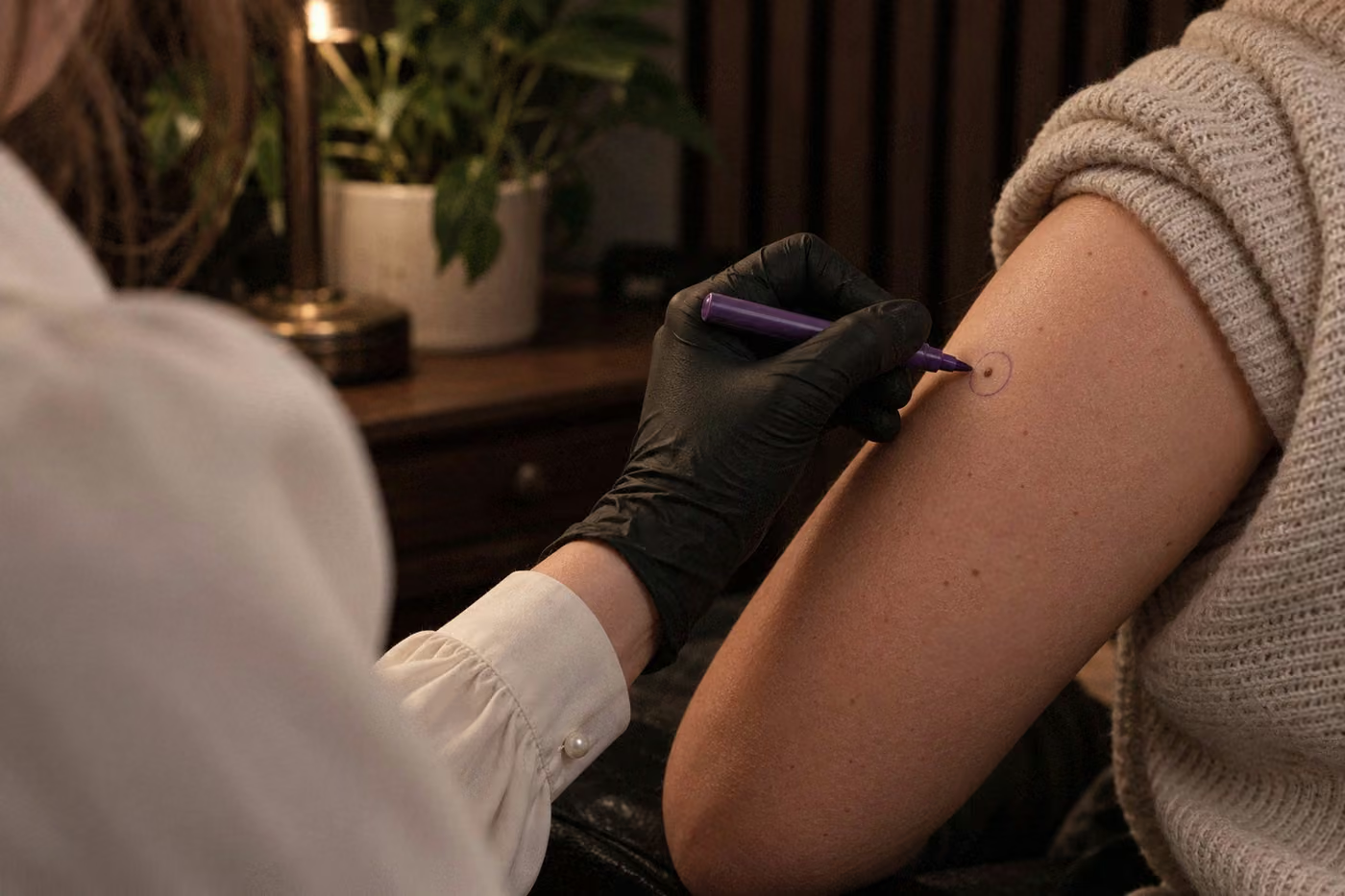
A small flat mole barely gets in the way of a design. A large raised one is trickier: it has to be factored into the composition, and sometimes it's easier to shift the design a little.
How to work a mole into the design
A mole doesn't have to be hidden. With a well-planned design, it becomes part of the tattoo, and within a week you stop noticing it.
- The centre of the composition. The mole becomes a berry on a branch, the heart of a flower or a star in a constellation.
- An empty space. The line goes around the mole, leaving it in a gap in the design.
- Moving the design a couple of centimetres. Sometimes it's easier to place the design slightly higher or lower than to fit it around the mole.
If there's a mole where the design will go, I don't cover it with ink; I work around it. With botanical designs, it's easy: the mole becomes a berry or the heart of a flower, and the lines pass close by without touching it. In geometric tattoos, I work around moles too, so the whole design still works.
Lots of moles and freckles
Freckles don't get in the way of a tattoo: they're flat and light, and you can work over them. But if the area has lots of small moles, the design needs more careful planning.
- the back, shoulders and chest are often covered in moles, so it's best to show the area to your artist before they start the design;
- airy designs with plenty of open space suit these areas: they make it easier to leave the moles untouched;
- dense fill and large black areas are almost impossible on this kind of skin without tattooing over moles;
- pigmentation and sun spots are handled the same way, and they're also best shown to a doctor first.
When to see a dermatologist first
Before getting a tattoo next to a mole, take a good look at it. If anything on this list applies to you, show the mole to a doctor first, and plan the session for afterwards.
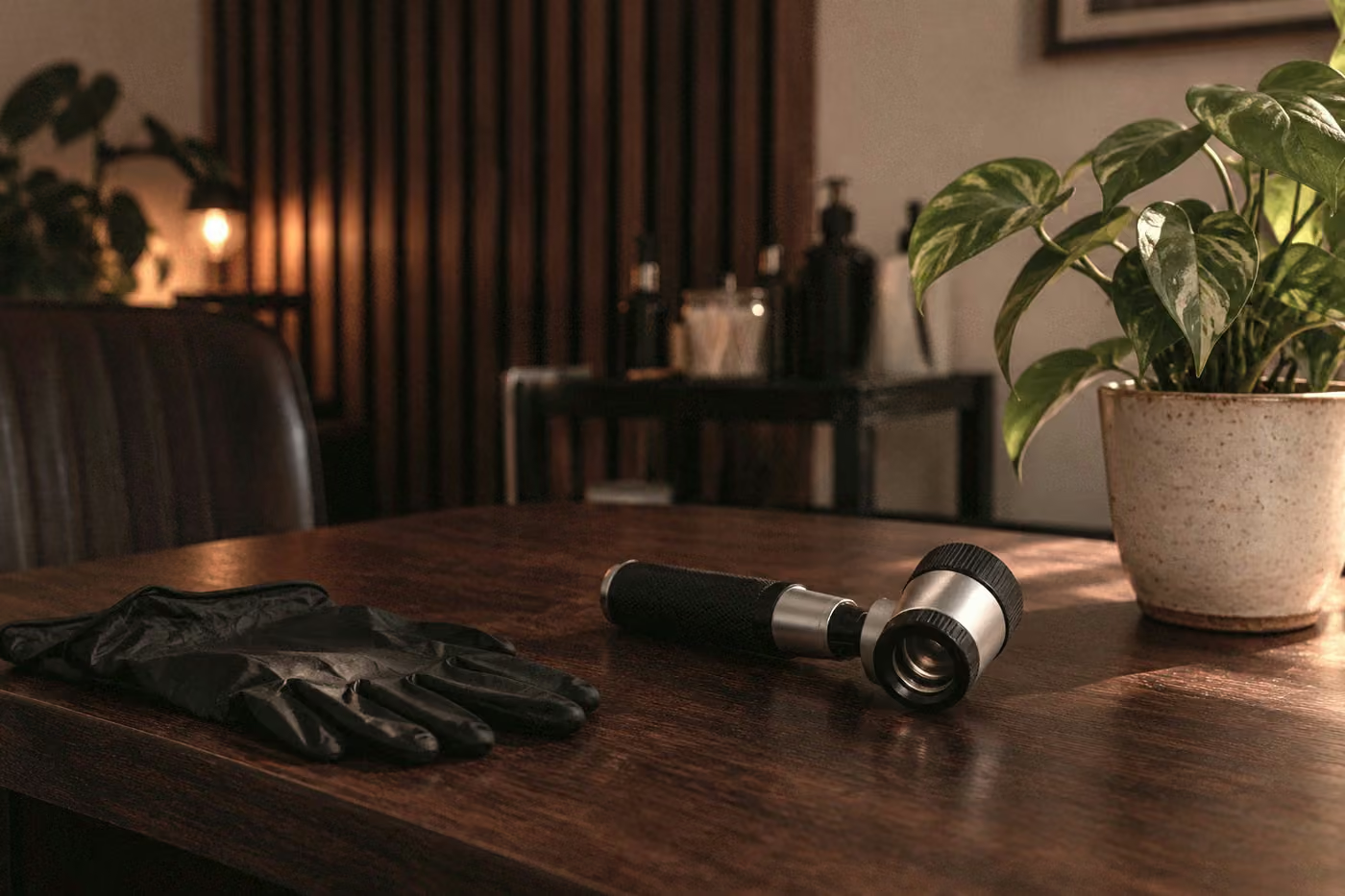
- the mole has grown or changed shape in recent months;
- the edges have become uneven or blurred;
- the colour is patchy or has darkened;
- the mole itches, flakes or bleeds;
- a new mole has appeared and you're over thirty.
If a mole has been removed
Removing a mole leaves a small scar. It can be tattooed over, but not straight away: first wait for the doctor's report and for it to heal fully. The person who removed it will tell you when it's OK.
A fresh scar is pink and firm, and it's hard to predict how well it will hold ink. A mature one is pale and soft and easier to work with. How an artist assesses scars and how long people usually wait is covered in “Tattoos over scars and stretch marks”.
What to tell your artist
The more your artist knows about your skin in advance, the better they can adapt the design to it. Before the consultation, check:
You can send photos of your skin along with your idea even before the consultation. What to write in your first message is covered in “Your first message to a tattoo artist”.
Moles after a tattoo
A tattoo next to a mole doesn't mean you can stop keeping an eye on your skin. Every few months, check the moles around the design, or better still, photograph them in the same light so changes are easier to spot.
Once it's healed, both the tattoo and the moles need sunscreen. If a mole starts changing, go to a dermatologist, not a tattoo artist.
Frequently asked questions
Moles come up at almost every consultation. Can't find your question? Message me on Telegram or Instagram. I reply personally.
Can I cover a mole I don't like with a tattoo?
No. Ink over a mole makes it harder for a doctor to keep an eye on it. If it bothers you, discuss removal with a dermatologist, and save the tattoo for after it has healed.
Can a tattoo cause skin cancer?
No link has been proven. But a tattoo can hide changes in a mole, which is why artists don't work over the mole itself.
Do I need a note from a dermatologist?
Usually not. But if you or your artist have doubts about a mole, it's best to see a doctor before the session.
Can I get a tattoo where a mole has been removed?
Yes, once the scar has healed and your doctor gives the go-ahead. The timing depends on how and why the mole was removed.