
You can tattoo over a scar or stretch marks once they have matured: the scar is pale, flat and soft, and the stretch marks have changed from red to white or silvery. That usually takes at least a year. You need a dermatologist's advice before tattooing over keloids or raised scars. A tattoo won't hide the texture, but it can draw attention to the design rather than the scar.
Can you tattoo over a scar?
You can, and lots of people do: they cover the mark left by surgery, a burn or an injury, or turn stretch marks into part of a design. But scar tissue is structured differently from ordinary skin. It's denser, has a poorer blood supply and takes ink differently.
So the decision depends on the condition of your skin rather than just what you'd like: how mature the scar is, its shape and how your skin usually heals.
How long to wait before tattooing a scar
A scar keeps changing long after the wound has closed. At first it's red or pink, firm and sometimes itchy. Then it fades and becomes softer and flatter. You can only tattoo over a mature scar, and a scar usually takes at least a year to reach that stage.
- Too early: the scar is red, pink or purple, hurts, itches or is noticeably raised.
- Worth discussing: the scar is pale, close to your skin tone, flat and soft to the touch.
- After surgery: it's best to check the timing with the doctor who operated.
Which scars are suitable
Scars come in different types, and when it comes to tattooing, the type matters more than the size:
- Flat and pale: the most suitable for tattooing; ink goes into the skin much as it would in an unscarred area.
- Indented: from acne or chickenpox, for example. A design won't level them out, but it can draw the eye away.
- Raised and firm: the ink goes in unevenly, and the needle can irritate the scar.
- Keloids: these grow beyond the edges of the original wound. A tattoo can trigger a new keloid.
If you're prone to keloids, or your scars tend to become firm and raised, see a dermatologist first. An artist can't assess that risk for you, and you're the one who would have to live with the consequences.
Stretch marks
Stretch marks are scars too, just long, thin ones. Fresh stretch marks can be red or purple, and it's too early to tattoo over them. Mature stretch marks are white or silvery, and at that stage, tattooing becomes an option.
Ink may take slightly differently on a stretch mark than on the skin next to it, and the texture will stay. But a well-chosen design makes stretch marks part of the composition. If you're still losing or gaining weight, or planning a pregnancy, it's better to wait.
Which design to choose
Tattooing over a scar calls for a different design approach from tattooing smooth skin:
- the design runs along the scar or stretch marks, not across them;
- dense areas sit next to the scar, while light lines pass over it;
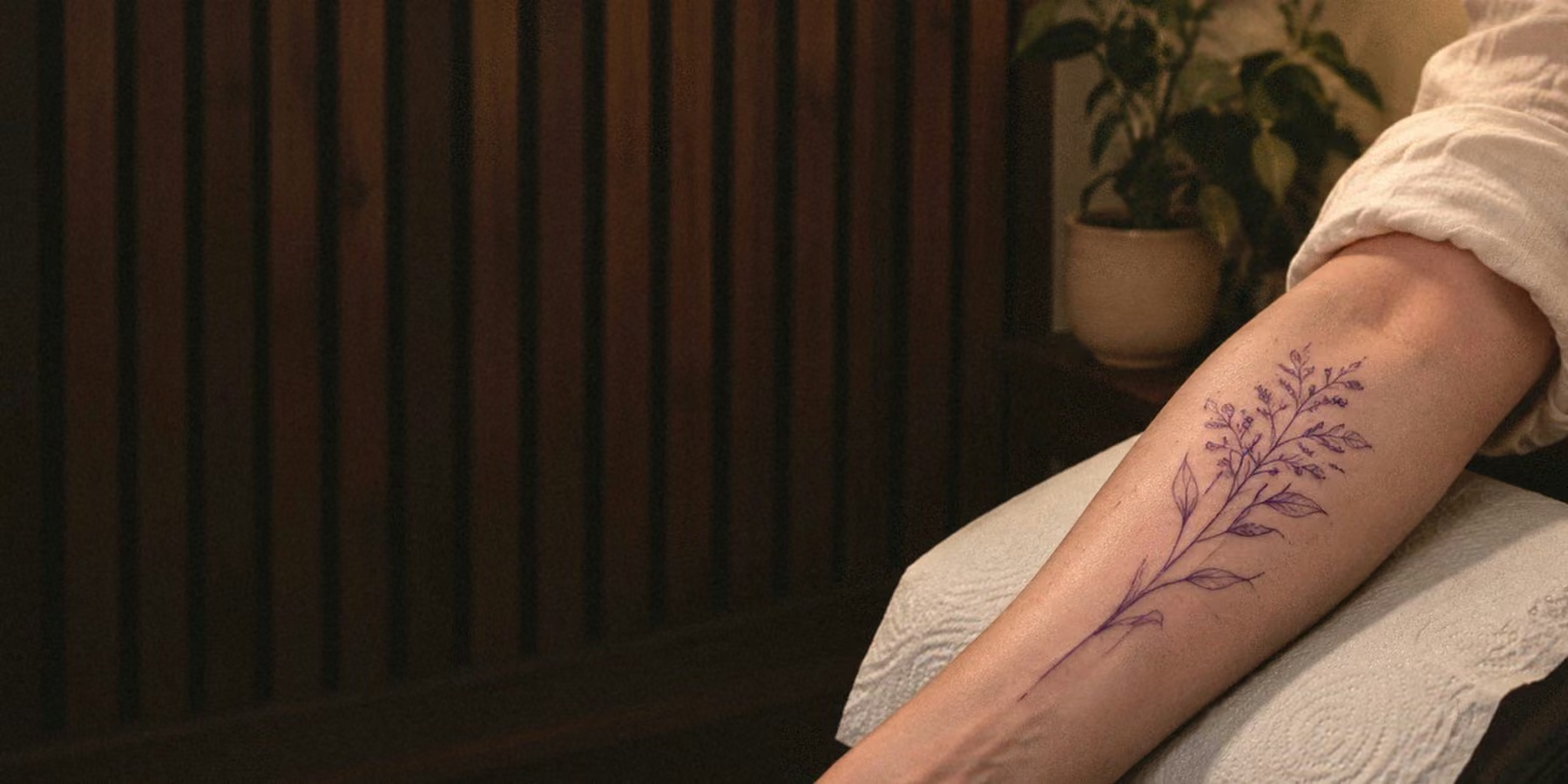
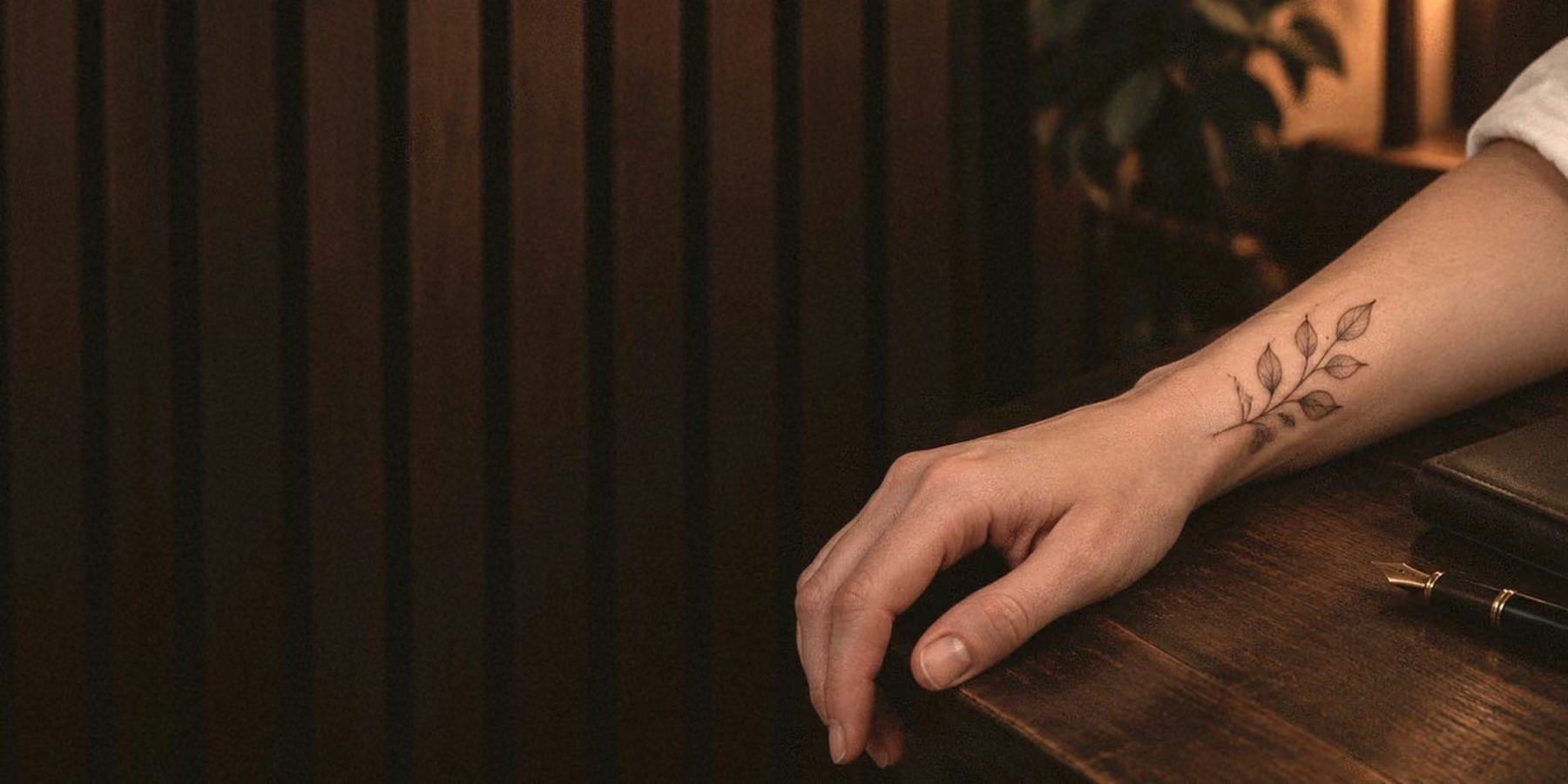
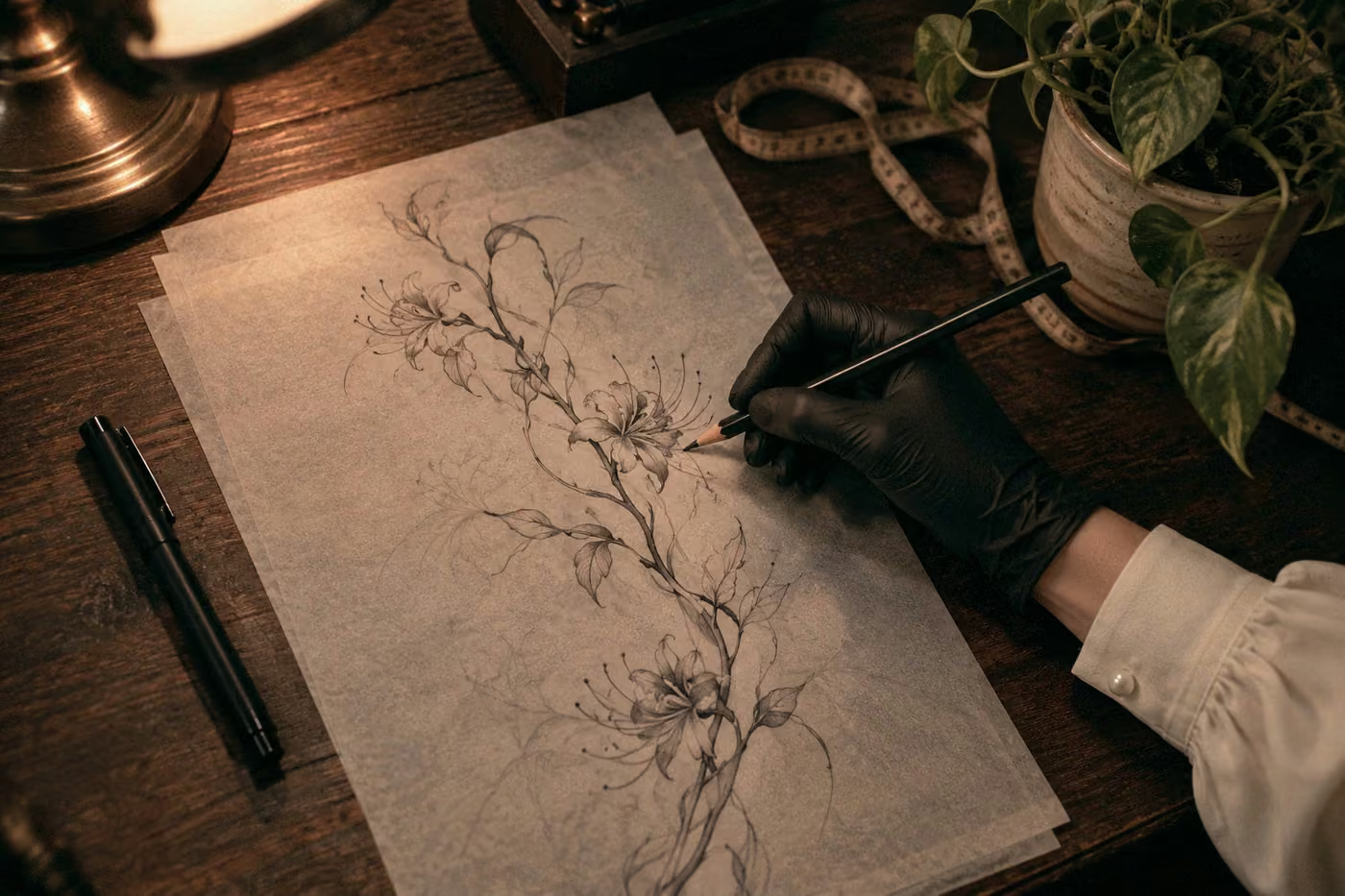
- botanical designs, branches and flowing shapes work better with uneven texture than geometric designs;
- a precise straight line directly over a scar often turns out uneven, so it's best not to include one in the design.
Botanical designs work well with scars: a branch can run alongside a scar, and the leaves can draw attention away from it. Come in for a consultation, and I'll look at your skin and suggest how to design a tattoo around it.
When a scar is part of your story
Sometimes a scar is a reminder of something you'd rather not talk about. You don't have to tell your artist where it came from. It's enough to say when it appeared and how it healed: that's all we need to assess the skin.
If you want to cover self-harm scars, it's worth thinking first about how you're doing and, if you need to, talking to a specialist. A tattoo can be a positive step, but it shouldn't be your only source of support.
What to bring to the consultation
To help your artist give you an honest idea of what's possible, be ready to answer a few questions:
If there are moles on the skin nearby, mention those too: more in “Tattoos and moles”.
The session and healing
Tattooing over scars can feel unpredictable: you may feel very little in some areas and more pain than usual in others. Scarred skin sometimes takes longer to heal, and the ink may settle unevenly. That's normal, and a touch-up after healing can even it out: “Tattoo touch-ups”.

Frequently asked questions
Can't find your question? Message me on Telegram or Instagram. I reply personally.
Will a tattoo hide a scar completely?
A tattoo can often hide a scar's colour and shape, but not its texture. Working the scar into the design draws attention to the tattoo instead.
Does tattooing over a scar hurt more?
It varies. Scar tissue can be less sensitive, while the surrounding skin can be more sensitive than usual.
Can a C-section scar be covered?
Yes, once the scar has matured, which usually takes at least a year. Check the timing with your doctor, especially if you're planning another pregnancy.
Can I get a tattoo over red stretch marks?
It's better to wait until they turn white or silvery. Fresh stretch marks are still changing, and the design could warp.