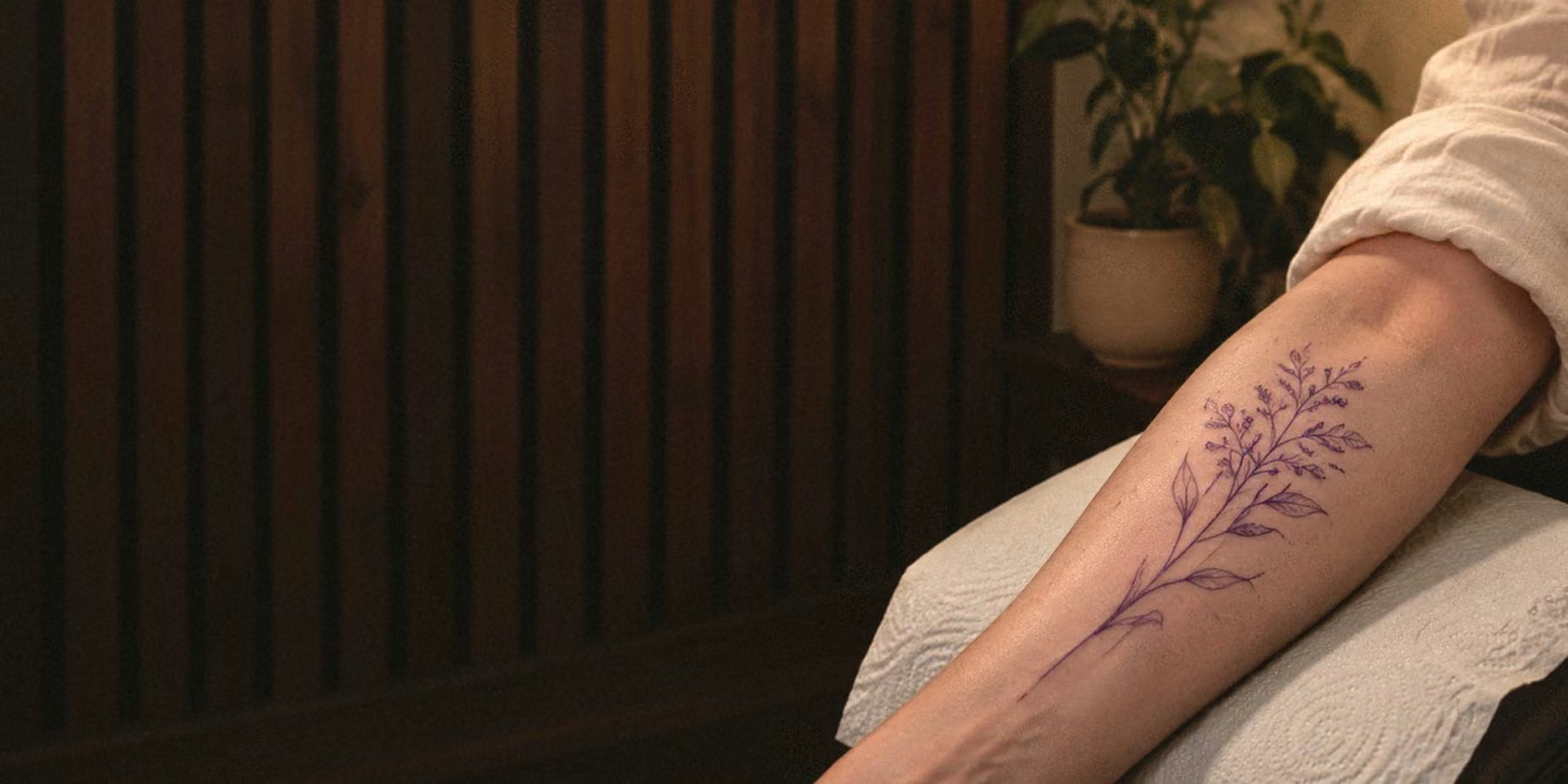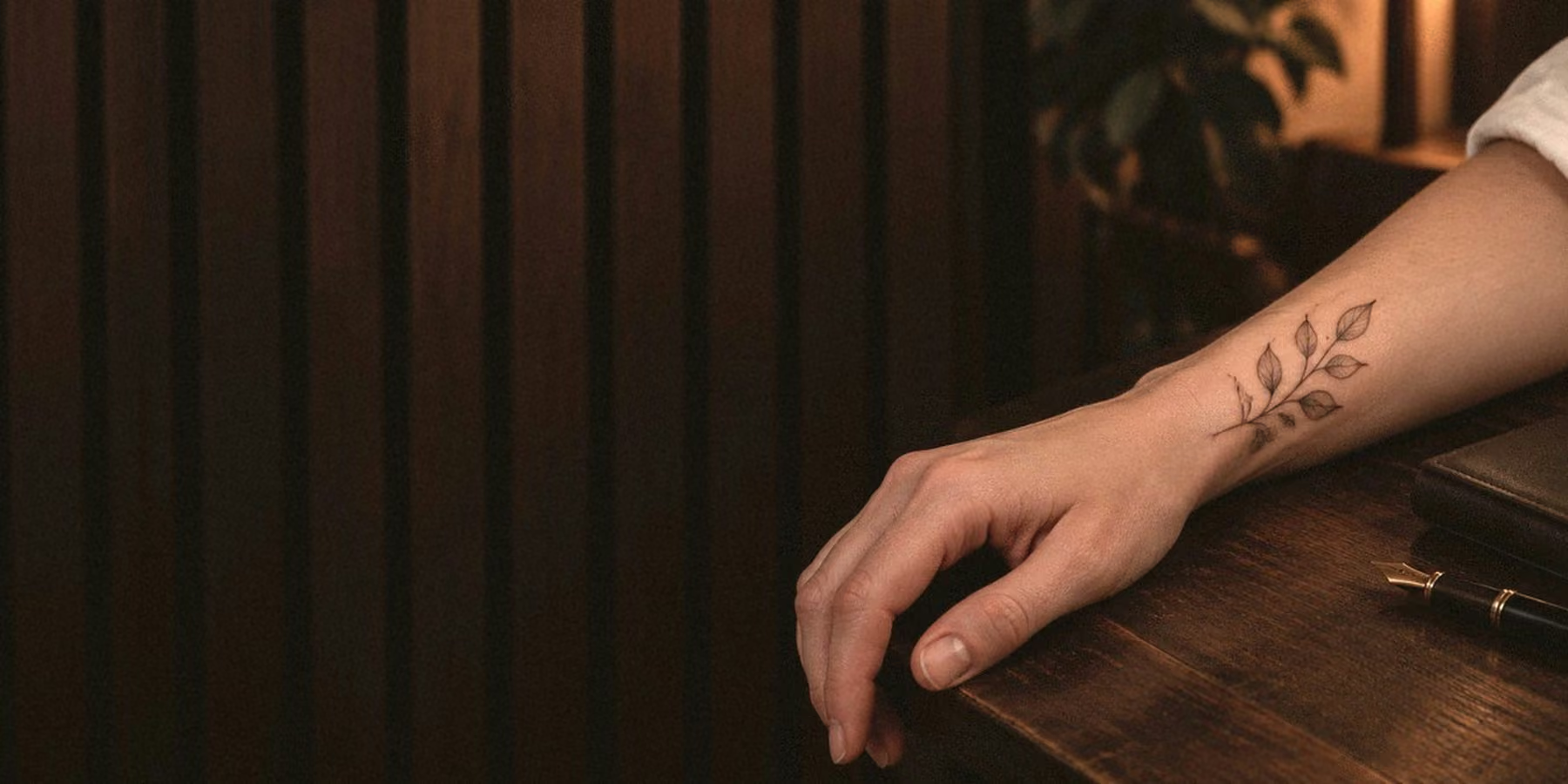

A touch-up is a short follow-up session where the artist fills in gaps and evens out lines once the tattoo has healed. You don't always need one, but you often do: skin takes ink unevenly. It's only done on fully healed skin, usually no sooner than a month after the session. Every artist has their own terms, so ask about them before your first session.
What a touch-up is
A touch-up is follow-up work on an existing tattoo using the same design. The artist doesn't draw anything new, but brings the tattoo back to how it was meant to look: filling in light patches, strengthening pale lines and tidying up the edges.
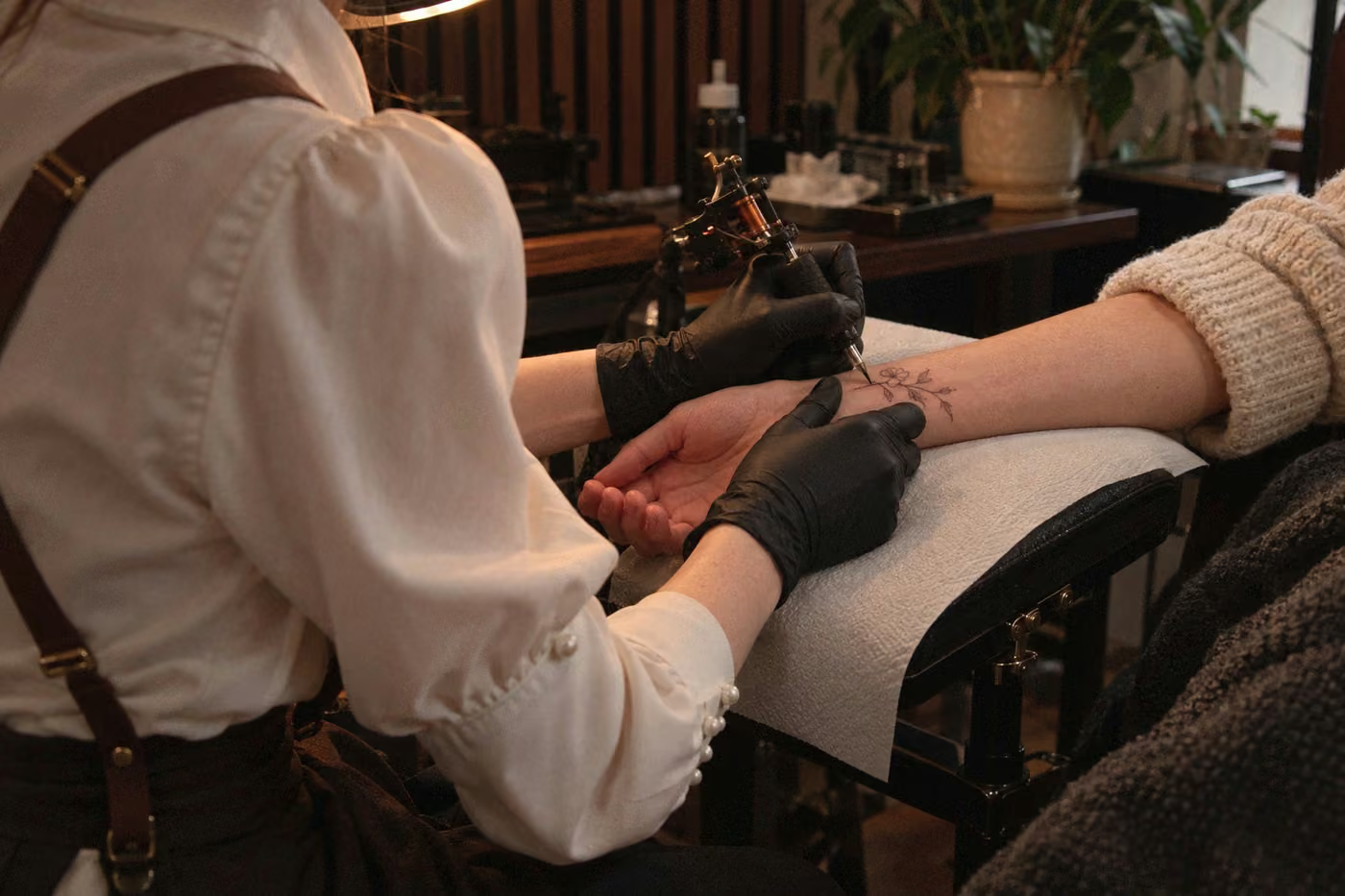
Needing a touch-up doesn't mean the work is bad. It's a normal part of the process, especially with fine lines and areas where the skin renews itself quickly.
Why you might need one
Even with careful work, skin doesn't always behave the same way. Gaps after healing most often appear for these reasons:
- Placement. On fingers, hands, feet and joint creases the skin is thinner, moves more and renews itself faster.
- Healing. Picking a scab, rubbing clothes, sun exposure or swimming in a pool during the first few weeks can all cause some ink to be lost.
- Skin. Dry, very thin or, at the other extreme, thick skin can take ink unevenly.
- Health. Having a cold or taking medication that affects your blood can also make a difference during the session and while the tattoo heals.
When to have a touch-up
Only once the skin has fully healed and settled down. That's usually at least a month after the session, and longer for some placements and some people. Tattooing it again too soon means working on skin that hasn't recovered, which makes the result worse.
Don't leave it for years either if a gap is visible right after healing: the sooner the artist sees the work, the easier it is to remember how it was done.
Once your tattoo has healed, send me a photo taken in daylight, with no filters. That lets me see whether it needs a touch-up and exactly what needs fixing.
What a touch-up isn't
A touch-up corrects how the agreed design has healed. It doesn't change the design itself. You'll need a separate conversation if you want to:
- add new elements, shading or a background — that's reworking;
- cover the tattoo with a different design — that's a cover-up;
- fix another artist's work — that's a separate job with a new design;
- make it bigger or change its shape because you've changed your mind.
If you're not sure what you need, start with “What to do if you don't like your tattoo”.
Refreshing an old tattoo
Over the years every tattoo softens: the lines spread a little and the black loses its depth, especially if the design has spent a lot of time in the sun. An old piece can be refreshed by going over the outline again and strengthening the dark areas.
This is a touch-up too, but on skin that has already changed. Sometimes the artist will suggest not retracing the old lines exactly, but making them slightly bolder so the design reads clearly again. Why this happens is explained in “How a tattoo ages”.
What to check with your artist in advance
Every artist has their own touch-up policy. It's best to ask about it before your first session rather than waiting until the tattoo has healed:
For the price and what goes into it, see “What goes into the price of a tattoo”.
Aftercare for a touch-up
After a touch-up, the skin heals in the same way as after your first session, though the area is usually smaller. Film, washing, a thin layer of cream, no sun and no pool: follow the same aftercare instructions. If you'd like a reminder, see “Daily tattoo aftercare”.
Frequently asked questions
Can't find your question? Message me on Telegram or Instagram. I reply personally.
Does every tattoo need a touch-up?
No. Lots of tattoos heal evenly the first time. A touch-up is needed if gaps or pale patches remain after healing.
Does a touch-up hurt?
It feels like the original session, but it's shorter because the artist only works on specific spots.
How many times can a tattoo be touched up?
One touch-up is usually enough. If the ink won't stay in a particular spot, your artist will suggest what could be changed.
Can I combine a touch-up with a new tattoo?
Often, yes, if the artist's schedule allows time for both. Arrange it in advance so they can include the touch-up in the session.