
First, wait until it has fully healed: a fresh tattoo almost always looks worse than it will in the end. Then look at it in daylight and work out exactly what you don't like. Message your artist calmly, with a photo. An uneven line or a gap can usually be fixed with a touch-up. Other options include a rework, a cover-up or laser removal.
Wait for it to heal first
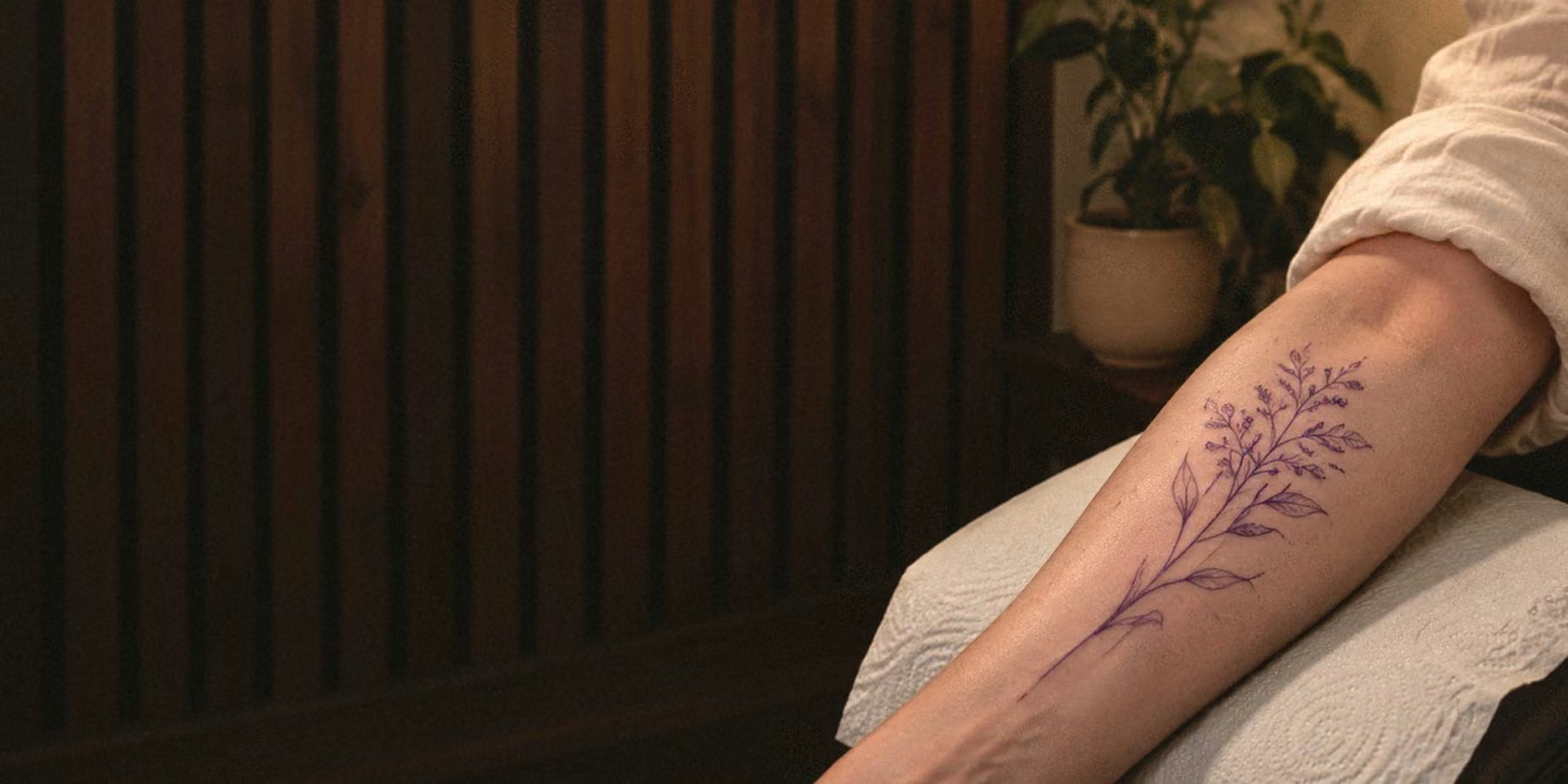
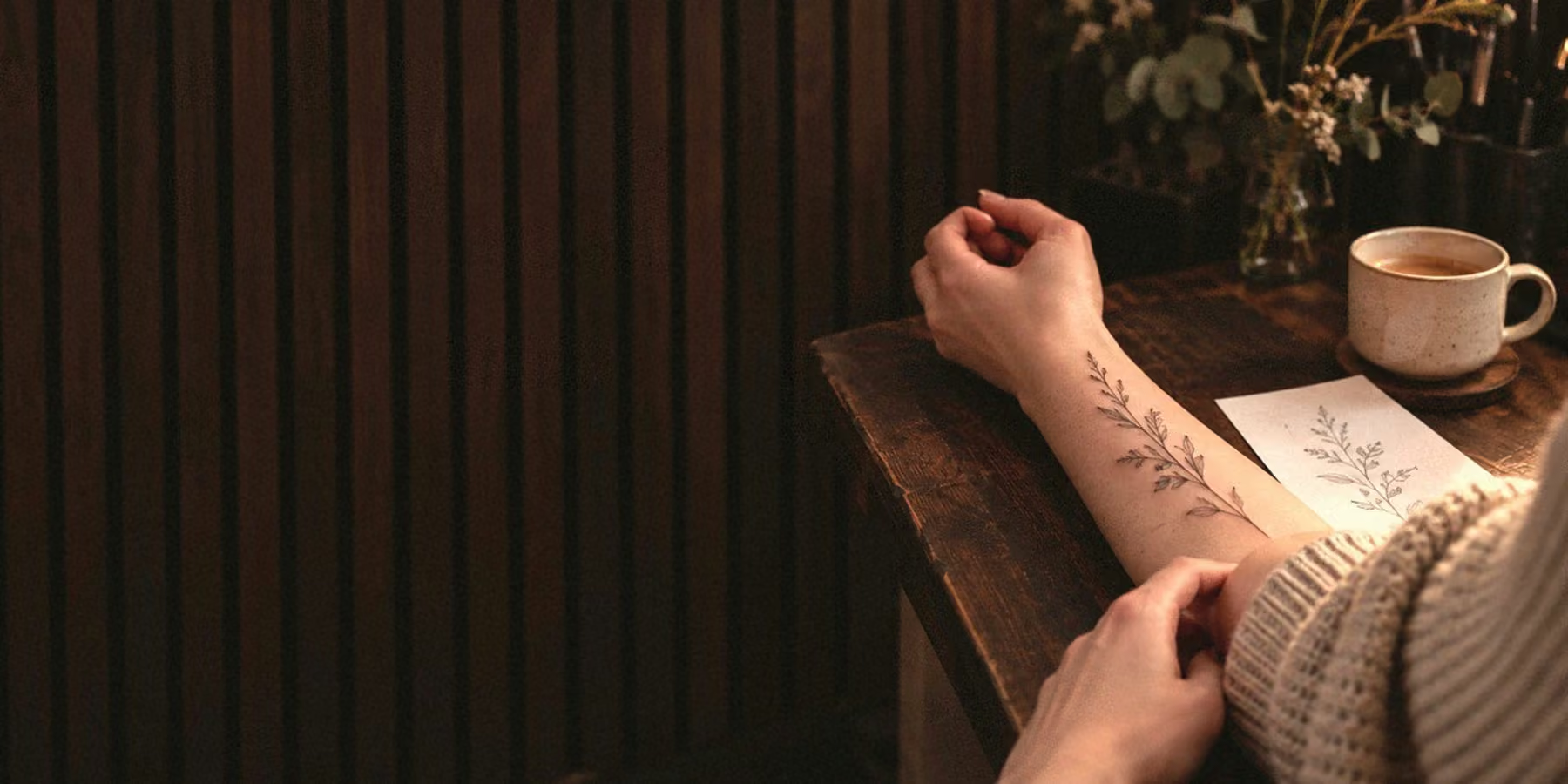
In the first few weeks, a tattoo can look different from one day to the next. It can be red and swollen, then dull and patchy, and the lines look thicker one day and paler the next. You'll only see the final result after four to six weeks, once the skin has fully recovered.
That's why deciding to “cover it all up” or “get it removed right now” in the first week is almost always premature. You can see how the design changes day by day in “Tattoo healing timeline”.
Work out what you don't like
“I don't like it” doesn't explain anything, either to you or to your artist. Try to pin down a specific reason. It usually falls into one of these groups:
- Technique. An uneven or broken line, gaps, ink that has blurred under the skin.
- Composition. The tattoo doesn't match the design: the size, angle or proportions are different.
- Placement. You like the design itself, but on this part of the body it looks different from how you imagined it.
- Expectations. The reference image was filtered or showed a fresh tattoo; healed tattoos look softer.
- Feelings. Nothing is ruined; you just haven't got used to seeing yourself with a tattoo yet.
A flaw or a matter of taste
A flaw is something that differs from the design you agreed on and is visible on healed skin: gaps, shaky lines, elements that have clearly shifted out of place, badly blurred, “blown-out” outlines. An artist will usually fix that themselves.
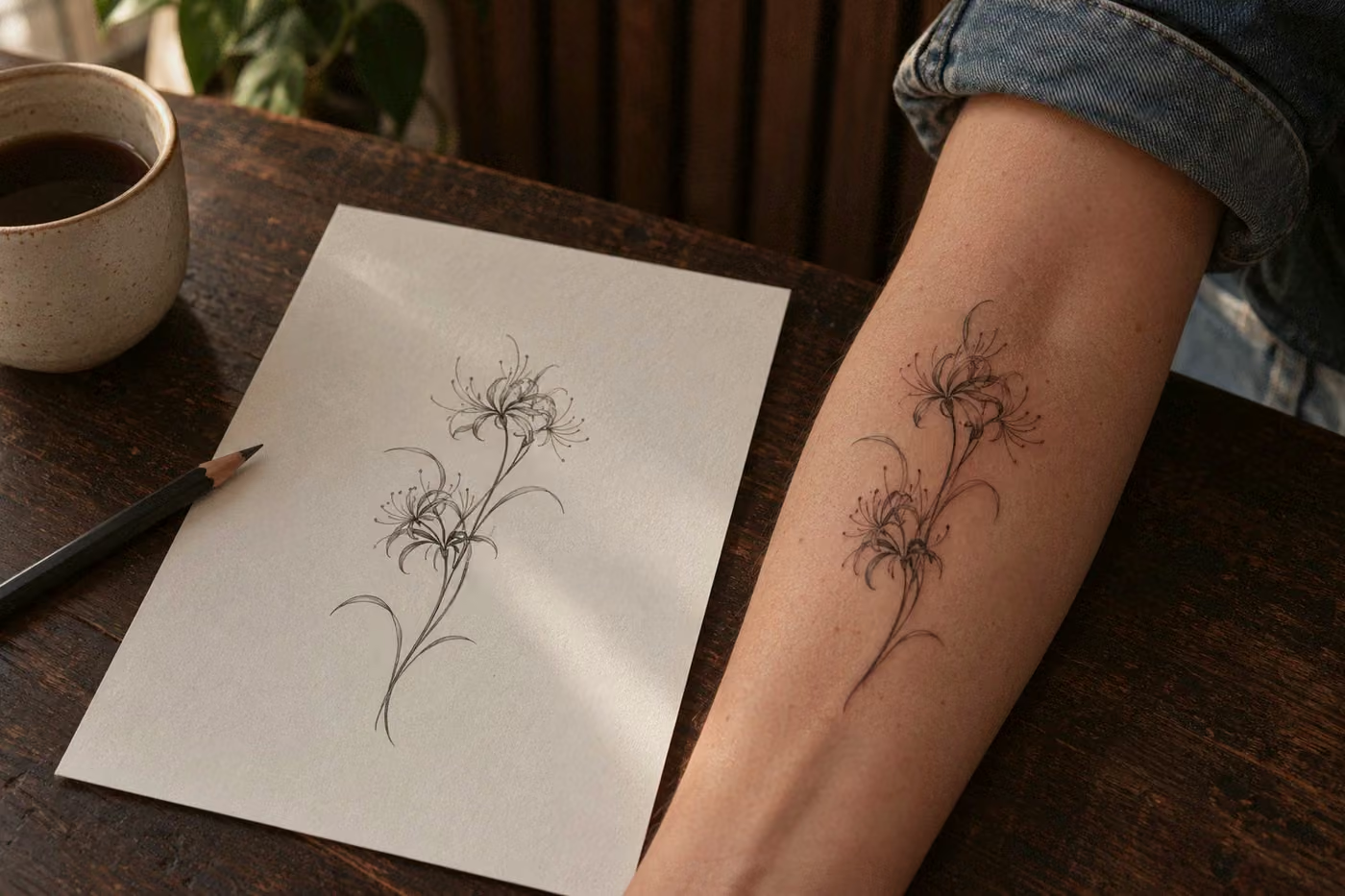
If the tattoo matches the design but you don't like it now, that's a matter of taste. That can be addressed too, but it counts as new work: reworking the design, covering it up or lightening it.
How to talk to your artist
First of all, message the person who did the tattoo. They know best what happened during the session and can usually fix it without any extra cost.
- send a photo of the healed tattoo in daylight, with no filters;
- point to a specific spot: “the line by the stem is broken”, not “it's all bad”;
- attach the design you agreed on;
- ask what your artist suggests before deciding on your own.
If there's something you don't like about my work, tell me straight. I'd much rather fix a line than hear about the problem second-hand a year later.
What the options are
There's almost always a way out. The question is which one suits your situation:
- Touch-up. Filling in gaps, evening out a line, strengthening pale areas. More in “Tattoo touch-ups”.
- Reworking. Adding elements, shading or a background to make the design work as a whole and hide the problem area.
- Cover-up. A new, usually larger and denser design over the old one. More in “Covering up an old tattoo”.
- Lightening or removal. Laser treatment with a doctor: it takes a long time, but sometimes it's the only realistic option. More in “Tattoo removal”.
What not to do in the heat of the moment
Disappointment pushes you towards quick decisions. It's better to give yourself time and avoid anything that will be hard to undo later:
- don't go to another artist to “redo it” before the tattoo has healed;
- don't ask to cover a small flaw with a design three times the size;
- don't use “removal” creams or try home methods;
- don't write an angry review before you've talked to your artist.
Removal creams, acids and tattoo “fading” at salons without a medical licence can cause burns and scarring that can't be covered with a tattoo. If you're thinking about removal, start with a consultation with a dermatologist.
If it just feels unfamiliar
Sometimes there's nothing wrong with the tattoo, and what bothers you is the change itself. You look in the mirror and don't quite recognise yourself. This passes: after a few weeks the design becomes part of your body and you stop noticing it. If it still doesn't make you happy after a couple of months, that's when it's worth talking about options.
Frequently asked questions
Can't find your question? Message me on Telegram or Instagram. I reply personally.
Does the artist have to fix the tattoo for free?
Every artist has their own terms, and it's best to ask about them before the session. Good artists usually fix their own technical mistakes, but redoing the design to suit a new idea is a separate job.
Can I go to a different artist to fix it?
Yes, if you couldn't sort it out with your original artist. Show the new artist the design and photos of the healed tattoo so they understand what was intended.
The tattoo came out bigger than I wanted. What can I do?
It can't be made smaller. You can rework the composition so the size looks deliberate, or, over time, lighten it with laser treatment and cover it up.
How do I avoid this next time?
Take your time with the design, check the stencil on your skin in a mirror, and choose your artist based on their healed work. More on this in “How to choose a tattoo artist”.