
In the first few days, the skin around a tattoo goes red, swells a little and weeps plasma. Then the tattoo itches, peels and looks dull. That's all part of normal healing. Be concerned if, after the third day, the redness and pain get worse rather than ease, the skin feels hot, you notice pus or an unpleasant smell, or you develop a temperature. If that happens, don't wait: see a doctor.
The first three days: what's normal
A tattoo is a mass of tiny punctures, and for the first few days the skin behaves as it would after a fresh graze. The main sign that all is well is that it gets better every day, not worse.
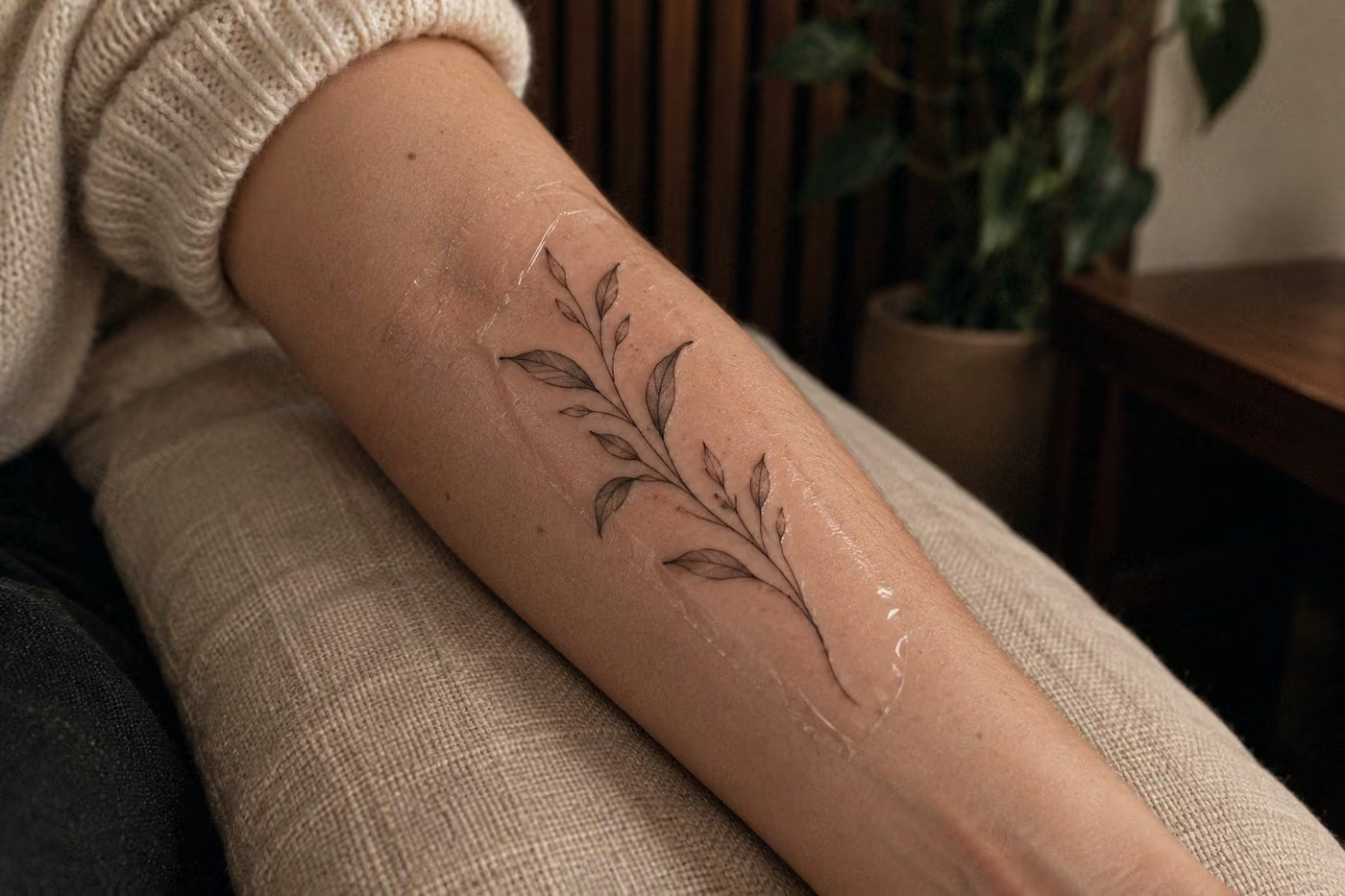
- redness a few millimetres around the design;
- slight swelling, especially on arms and legs by evening;
- clear or slightly tinted plasma under the film;
- skin that's warm and sensitive, as with a mild burn.
Peeling, itching and the “cloudy” film
The stage that worries people most starts around day four. The tattoo itches and thin flakes appear on the surface, as they can after a tan. Then the design looks dull, as though it's under a milky film.
This is the top layer of skin renewing itself over the pigment. After a few weeks the film clears and the lines become crisp again. The flakes will fall off on their own; just don't help them along with your nails.
In the second week, people often message me: “My tattoo has faded, it's ruined.” It's almost always that same cloudy stage. Wait another couple of weeks and look at it in daylight: the design will look clear again.
How a tattoo changes week by week
Healing times vary a little depending on the placement, size and your skin. But the stages almost always follow this order:
- Days 1–3Redness, swelling, weeping plasma. The skin is warm and tender.
- Days 4–7Thin scabs appear and the itching starts.
- Weeks 2–3The scabs come off and the design looks dull and uneven.
- Weeks 4–6The skin evens out and the lines become crisp. Now you can see whether a touch-up is needed.
A detailed day-by-day guide is in “Tattoo healing timeline”.
Signs that you need a doctor
It's time to be concerned if, after the third day, things are getting worse instead of better. Especially when several of these signs appear together:
- the redness is spreading further from the design and isn't fading;
- the pain and swelling are getting worse and the skin feels hot to the touch;
- yellow or green pus or an unpleasant smell has appeared;
- red streaks are running across the skin from the tattoo;
- you've developed a temperature, chills or weakness.
This could be an infection, so don't wait for it to clear up on its own. See a doctor the same day, then message your artist. Don't try treating it with ointments you've read about online. A doctor needs to prescribe the treatment.
Allergies and reactions to pigment
A reaction to pigment is rare and looks different from an infection. The skin itches and becomes raised specifically along the lines of the design or in one colour, and sometimes a fine rash appears. Red and some bright colours are the most common culprits; black is far less likely to cause a reaction.
This kind of reaction may not appear straight away, but weeks or months later. You can also get irritation from a cream or the film: in that case the skin around the design goes red, not the design itself. Either way, you need a dermatologist, and it's worth telling your artist what products you've been using.
Checking your tattoo when you're worried
When you're anxious, everything looks suspicious. Work through this checklist:
If even one of these isn't true for you, don't wait: see a doctor. If they all check out, it's ordinary healing, so just carry on with your aftercare.
What to send your artist
A message saying “something weird is going on” doesn't give your artist much to go on. Specific details help:
- a photo in daylight, with no filters and no flash;
- another photo from a little further away, so the skin around it is visible;
- how many days it has been since the session;
- what you've been washing the tattoo with and putting on it, and what has changed since yesterday.
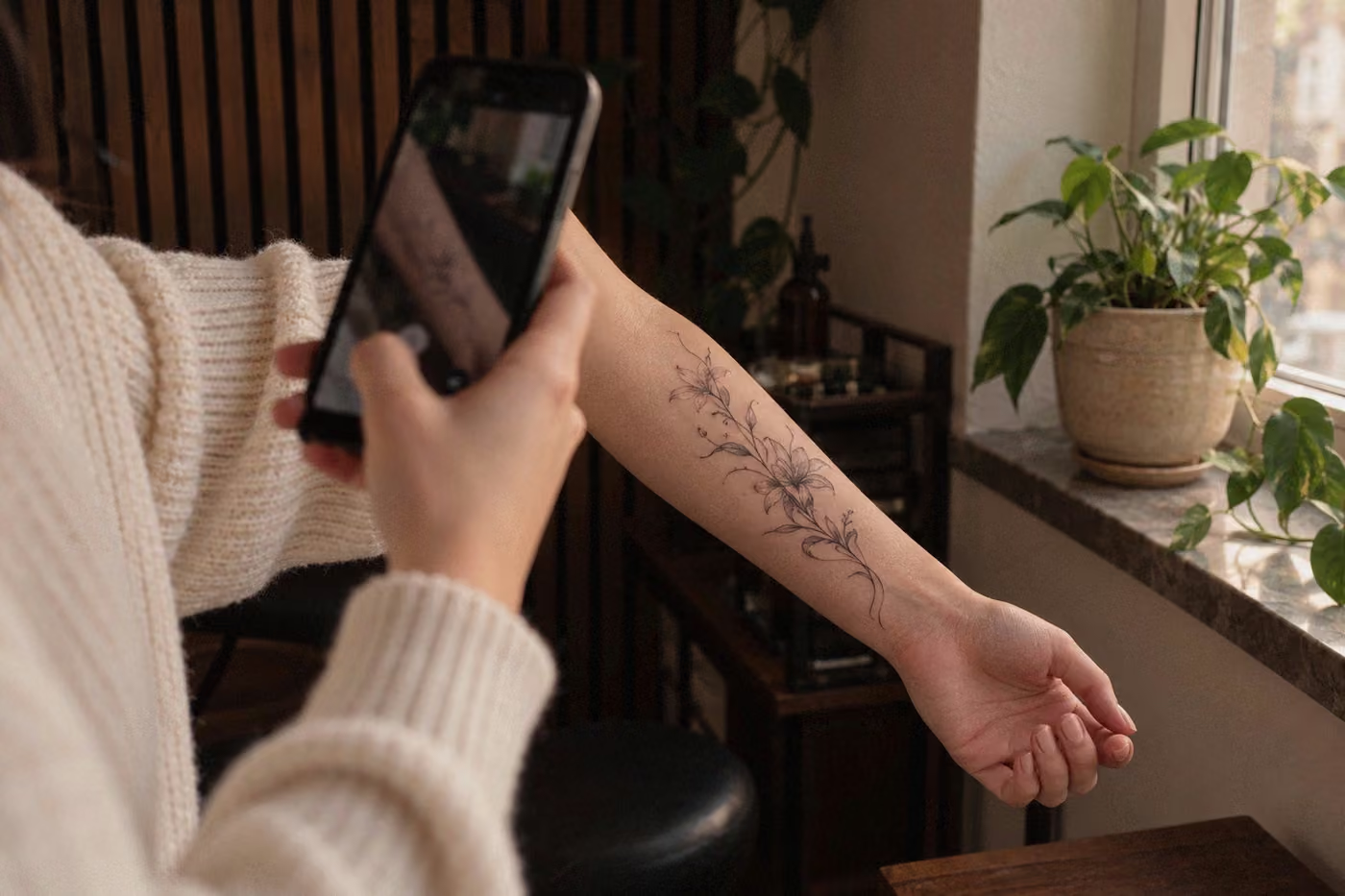
If you're still worried
It's normal to fret about a new tattoo: you paid for it, you waited for it, and now it's part of you. Most worries end with your artist saying “that's exactly how it should be”. And if not, you'll find out in good time that you need to see a doctor.
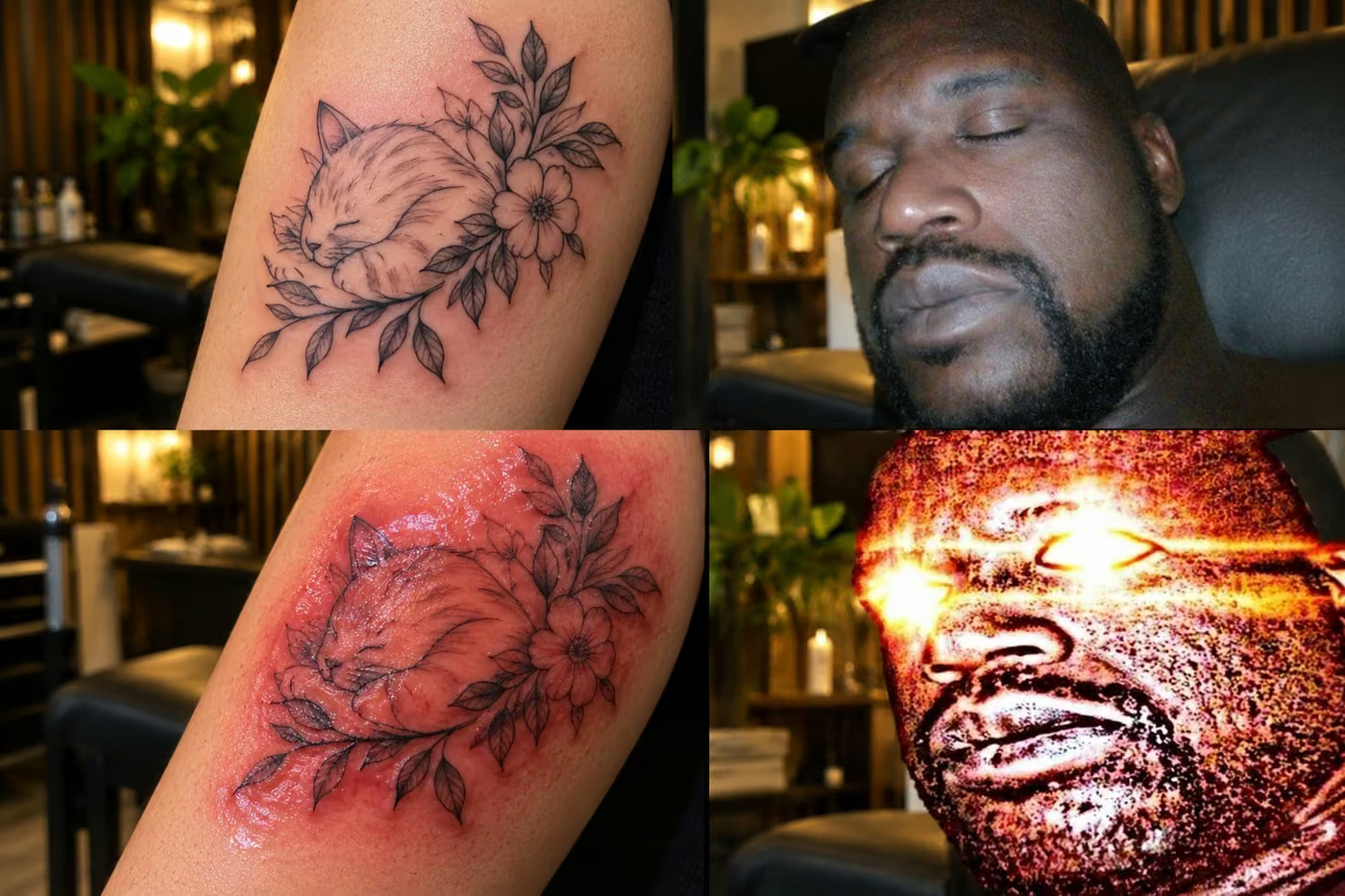
Frequently asked questions
Can't find your question? Message me on Telegram or Instagram. I reply personally.
My tattoo is still raised after a week. Is that normal?
Yes, a little raised or uneven skin is normal while it heals. If there's no pain or redness as well, there's no cause for concern.
Ink is coming off with the scab. Is something wrong with my tattoo?
Coloured flakes are a normal part of healing: excess pigment from the surface comes away with them. A gap only shows if the scab was picked off.
My tattoo started itching again a year later. What's going on?
Healed tattoos sometimes itch in hot weather, when the skin is dry or when the weather changes. If a rash or swelling appears, or the itching won't go away, see a dermatologist.
Can I take an antihistamine if it's really itchy?
Check with a doctor or pharmacist before taking any medication. A thin layer of the cream recommended in your artist's aftercare instructions usually eases the itching while the tattoo heals.