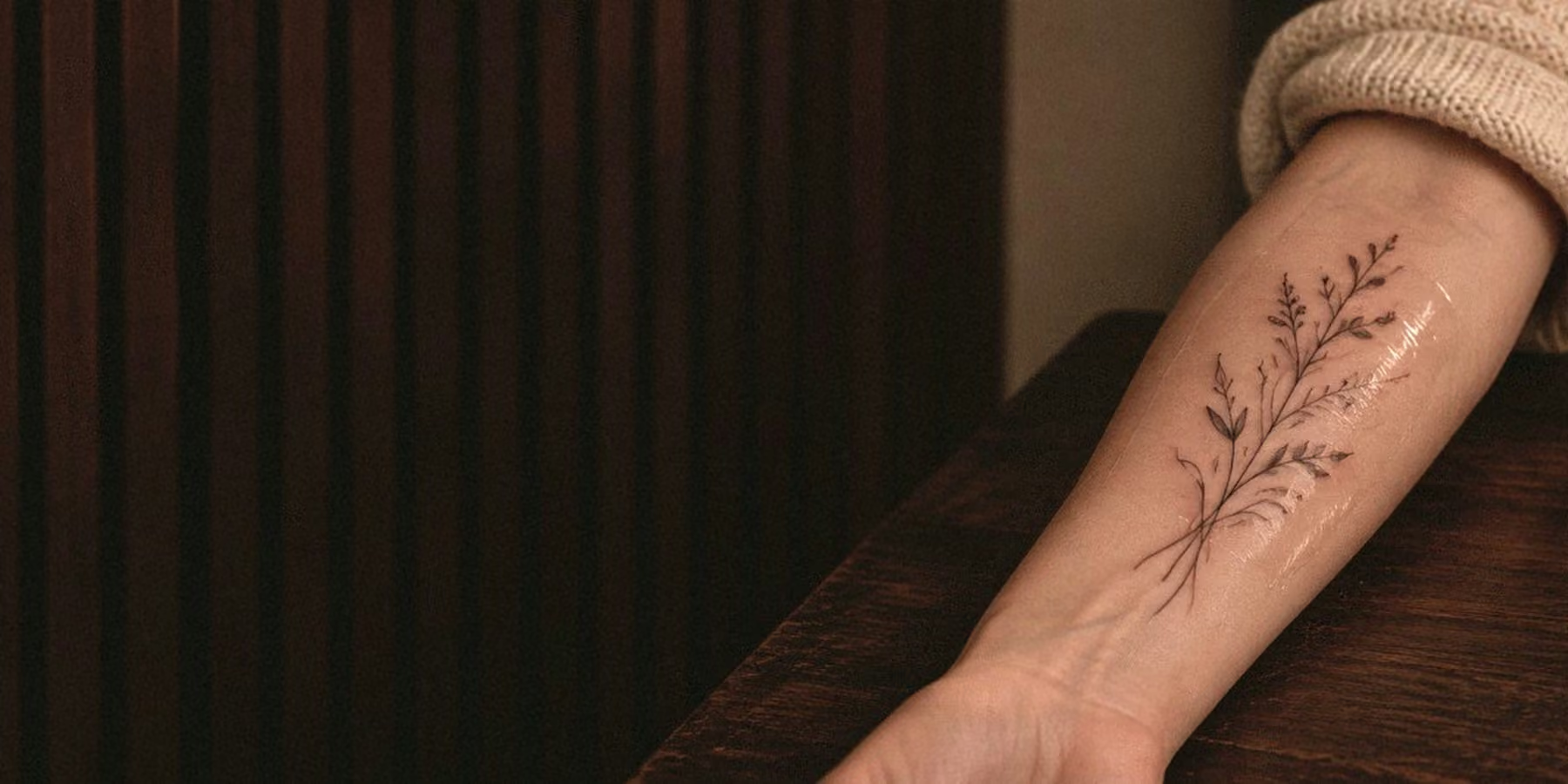

For most people, tattoos follow a similar healing pattern: redness and swelling for the first few days, then scabs and peeling, and then the skin looks cloudy for a while. The surface usually heals within a few weeks, while the deeper layers take another month or two to recover. The timing depends on the size, placement and aftercare.
How to read this timeline
The timings below are a guide, not a schedule. A small tattoo with fine lines heals faster than a large, densely inked one, while tattoos on feet, hands and areas that bend frequently take longer to heal.
If your tattoo is a couple of days ahead of or behind this timeline, that's normal. Your artist's aftercare instructions and advice based on your photo are more accurate than any general timeline.
Days 1–3: a fresh wound
For the first few days a tattoo behaves like a fresh graze. The skin is reacting to the needle, and it shows.
- redness and swelling around the lines;
- skin that's warm and sensitive;
- plasma weeping out with traces of ink;
- the design looks raised and too bright.
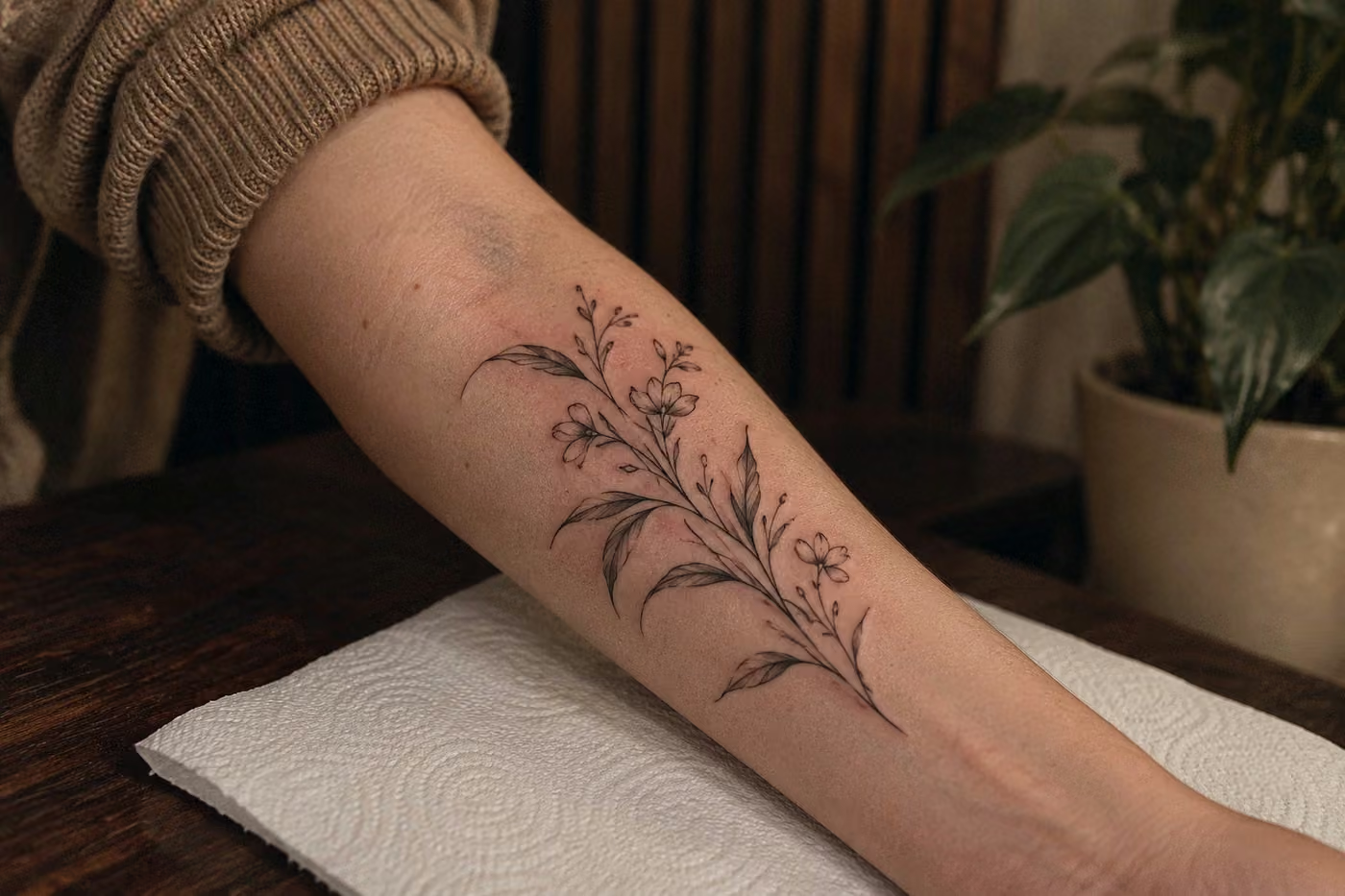
Days 4–14: scabs and itching
The swelling goes down and the skin feels tight. Thin scabs appear, then the skin peels, as it does after sunburn. This stage is tedious, but it's also the most important: the skin itches, and you must leave it alone.
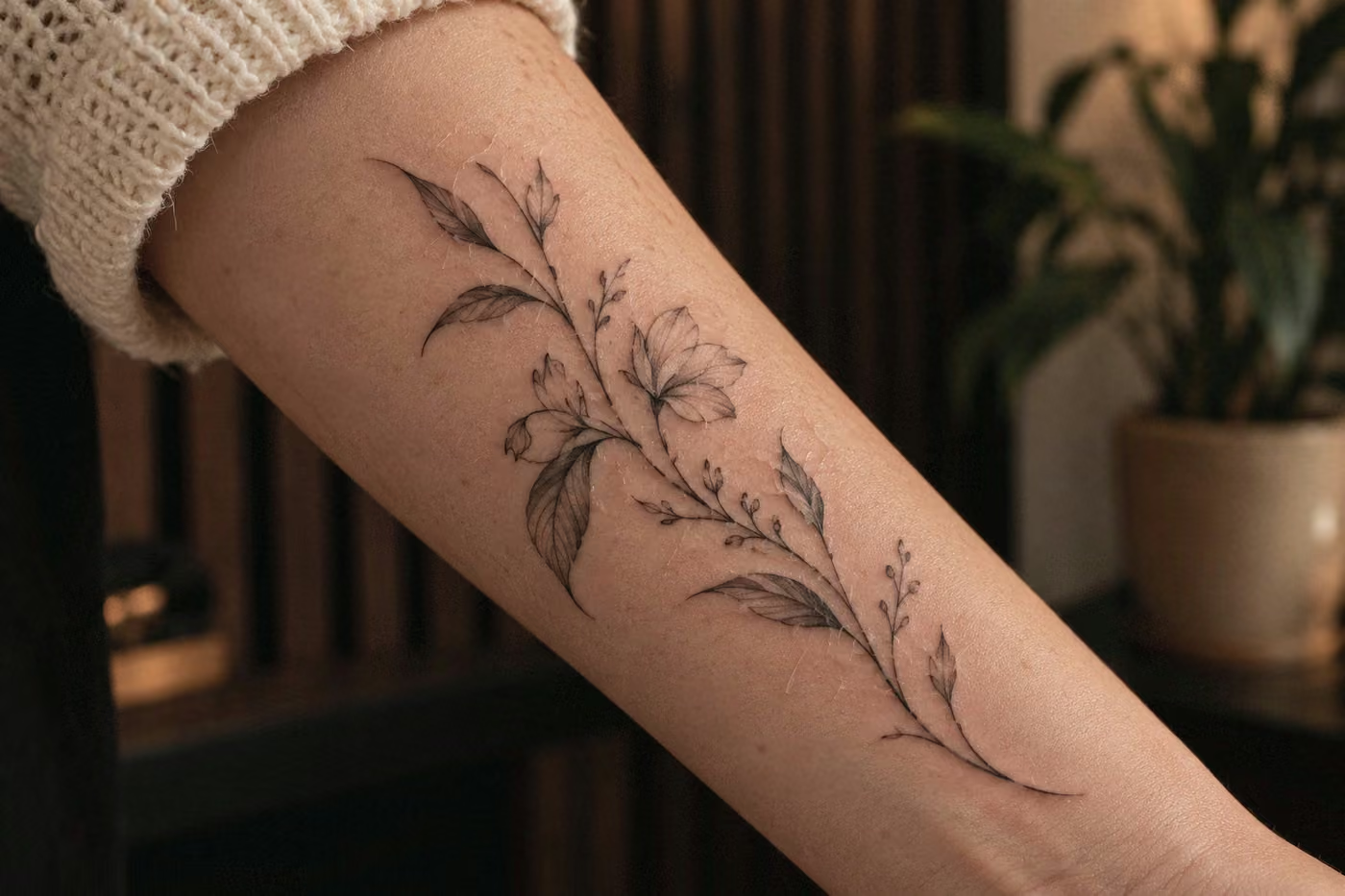
Don't pick the scabs or pull at the flakes: the ink comes away with them. How to look after it properly during this time is covered in “Daily tattoo aftercare”.
Weeks 2–4: cloudy skin
Once the peeling is over, the design may look dull, as though a milky film is covering it. Many people panic, thinking their tattoo has “faded”. In fact, a thin layer of new skin covers it and gradually becomes clearer.
If your tattoo looks faded at this stage, don't be disheartened just yet: it's the new skin. It's best to judge the result once it has fully healed, and if you're unsure, send me a photo.
One to three months: full healing
On the outside the tattoo already looks healed, but deeper down the skin is still recovering. During this time the design becomes crisp and the colour evens out. This is when you can see the final result and decide whether a touch-up is needed. On the “Fine line tattoos” page I show healed fine line work, without touch-ups or filters.
If a line has healed unevenly or the ink has settled patchily, it can be fixed. More on this in “Tattoo touch-ups”.
What slows healing down
- picked scabs and scratching;
- sun and sunbeds;
- pools, the sea, baths and saunas;
- clothes that rub and tight straps;
- a thick layer of cream that leaves the skin soggy;
- illness, alcohol and lack of sleep in the first few days.
A detailed breakdown is in “Tattoo aftercare mistakes”.

When it's no longer normal
During normal healing, redness and pain gradually ease rather than getting worse each day. If they're getting worse, don't wait.
Pain and swelling that get worse after the third day, pus, hot skin around the tattoo, a temperature or red streaks spreading from the design are all reasons to see a doctor straight away and message your artist.
How to tell what's normal from a warning sign is covered in “Normal or a warning sign: how your tattoo is healing”.
Frequently asked questions
The questions people ask most about timings. Can't find your question? Message me on Telegram or Instagram. I reply personally.
Why does my tattoo look shiny and raised?
That's caused by swelling and the fact that the tattoo is still a fresh wound. The skin starts to settle after a few days.
Is it normal for ink to come off with the flakes?
A little colour on peeling skin is normal. If a whole bit of a line has gone, you'll see it once it has healed, and a touch-up will fix it.
When can I judge the result?
Not until the cloudy layer of new skin has gone. For most people that's a month or a little longer.
Does fine-line work heal faster?
Usually, yes, because there's less damage to the skin. But placement and aftercare make a bigger difference.
Why do feet and hands take longer to heal?
These areas move a lot, rub against things and frequently come into contact with water. Tattoos there are also more likely to need a touch-up.