
Every tattoo softens over the years: the lines spread a little, the black fades and small details start to merge. Sun exposure has the biggest effect, followed by how well the design was planned and where it sits on your body. A well-drawn, carefully done tattoo that's protected from the sun will look softer after decades, but you'll still be able to make out the design.
Why a tattoo changes
Ink sits in a deep layer of the skin, and the skin around it is alive: it renews itself, loses elasticity, stretches. The body slowly tries to clear out the foreign particles. That's why lines spread a little over time and the edges become softer.
This isn't a fault; it's a natural change. Every tattoo changes over time, though some change more noticeably or more quickly than others.
The sun is enemy number one
UV light breaks down ink and ages the skin itself. A tattoo exposed to the sun without protection every summer fades many times faster than one that's almost always covered by clothing.
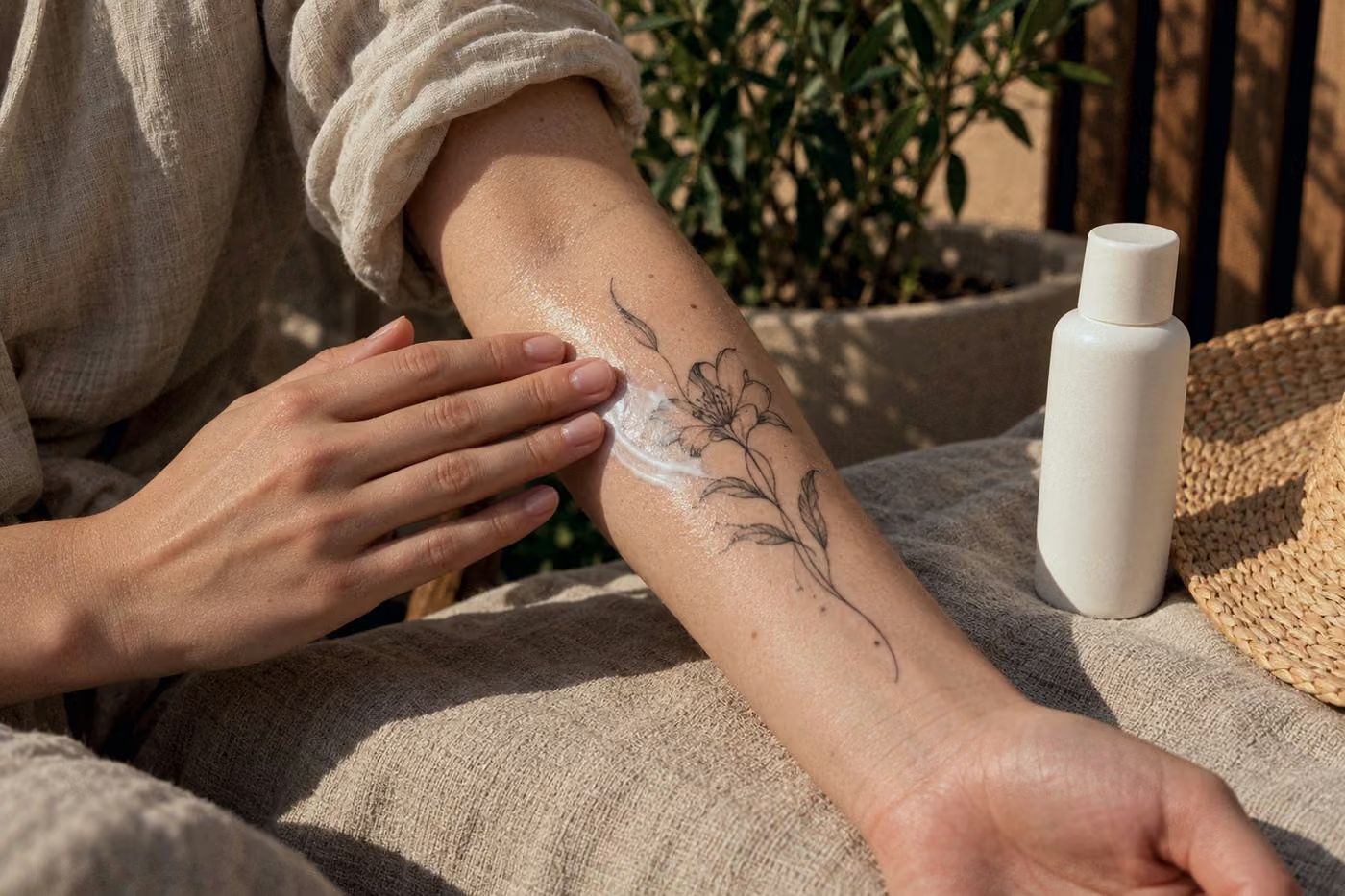
- in the sun, apply SPF 50 sunscreen to the tattoo and reapply it regularly;
- once you have a tattoo, it's best to skip sunbeds altogether;
- at the seaside, cover the design with light clothing during the sunniest hours.
Fine lines and small details
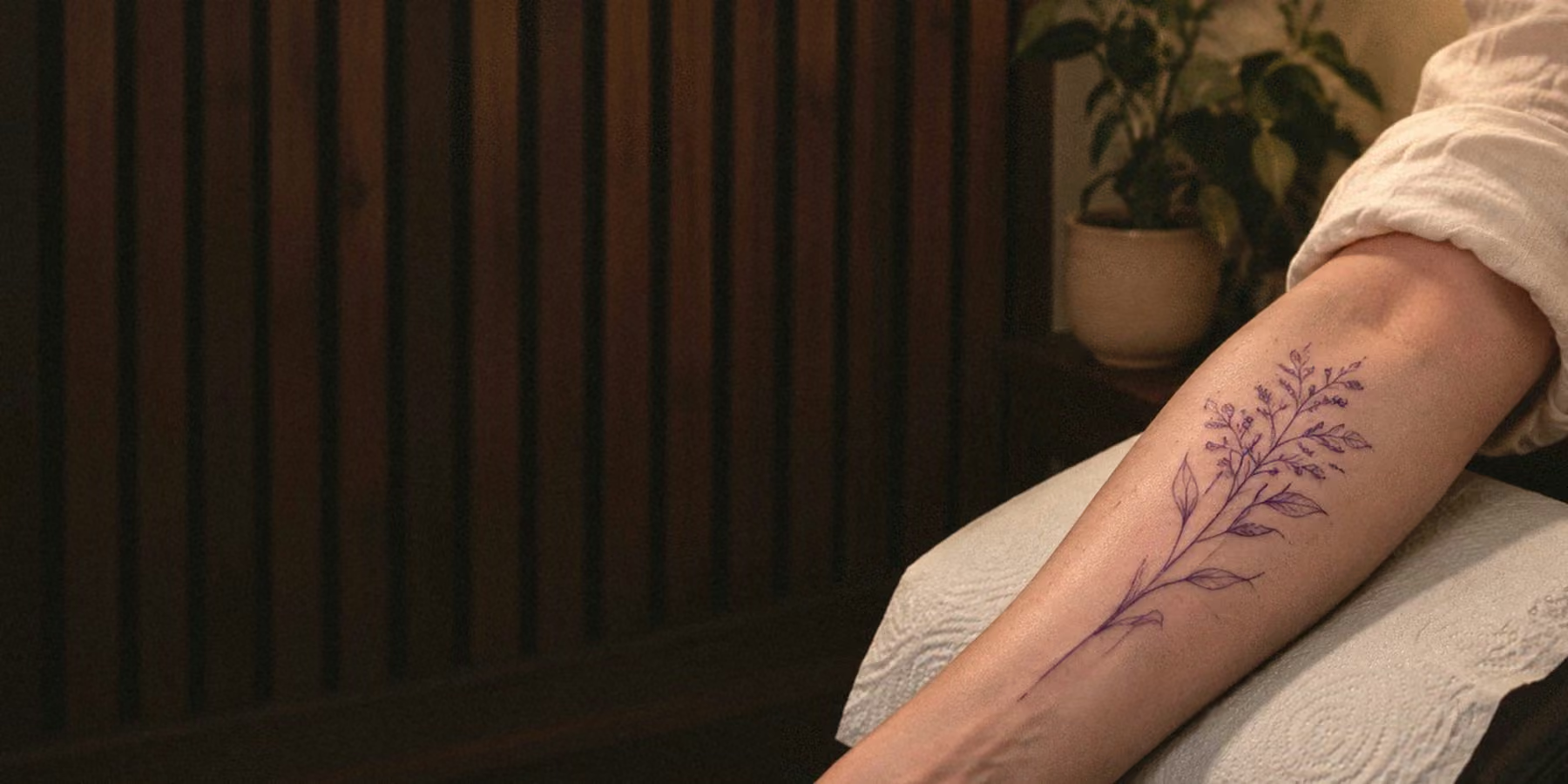
Fine-line work looks delicate, but it has its limits. If the lines sit too close together and the details are very small, the gaps between them close up over the years, and the design turns into a blur.
That's why it's best to discuss the size and amount of detail with your artist at the design stage. A small design with three lines will last longer than one the same size with twenty. More in “Tattoo size and composition”.
If the details in a design are too close together, I'll suggest making the tattoo a little bigger or leaving something out. A centimetre's difference may be barely noticeable now, but in ten years it determines whether the design is still clear.
Where tattoos age faster
In some areas, the skin is rubbed or washed often, or renews itself quickly. Tattoos there lose their crispness sooner:
- Fingers and palms: the skin renews itself quickly and holds ink worse than anywhere else.
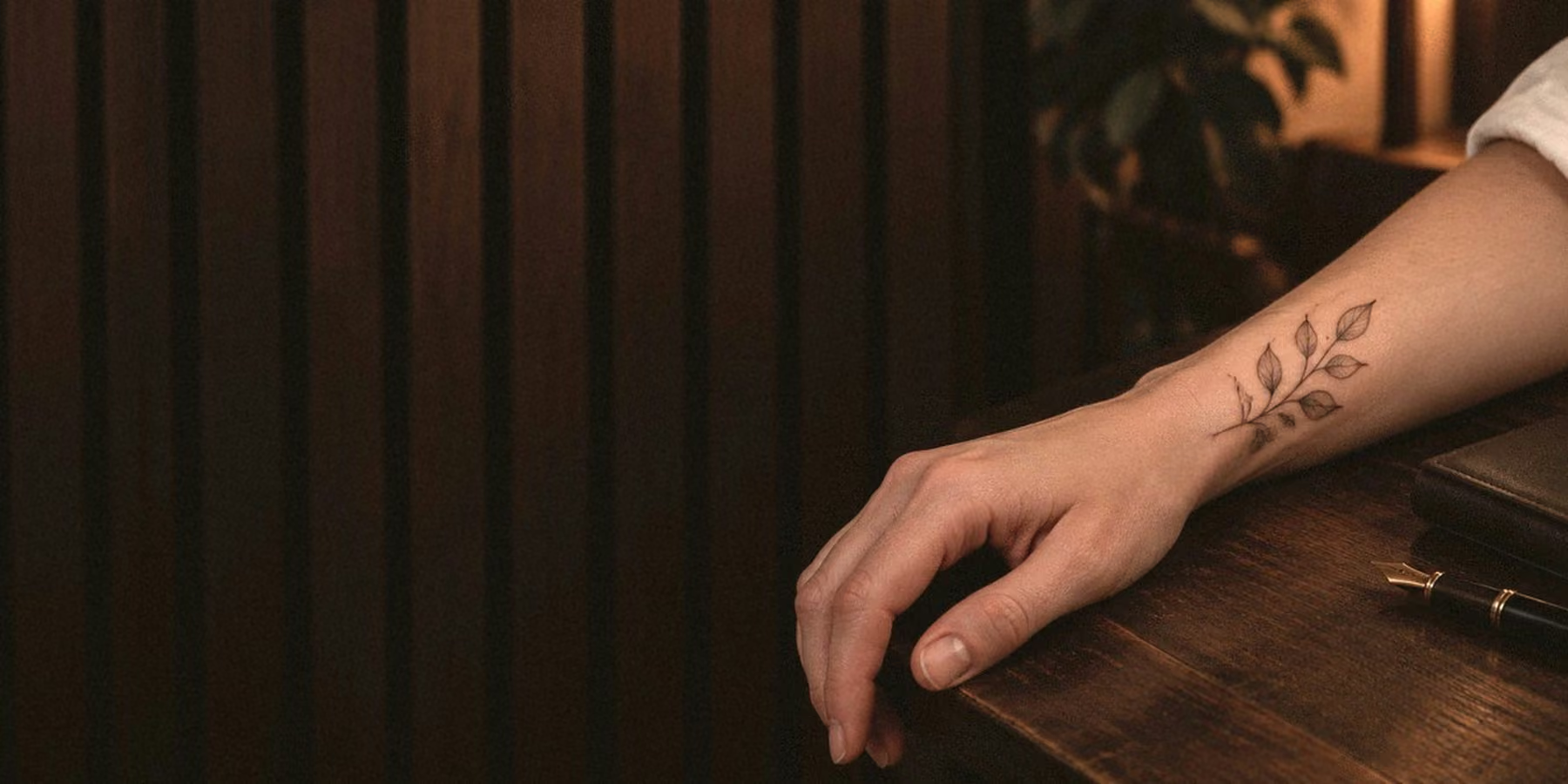
- Hands and wrists: constantly in the sun and in water.
- Feet and ankles: shoes and socks rub the same spot.
- Elbows and joint creases: the skin moves and folds a lot.
Tattoos on the shoulder, thigh, back and outer forearm stay clear for longer. For a guide to all these areas, see “Choosing your tattoo placement”.
Black and colour
Black ink lasts longest: over time it turns slightly greyer, but it doesn't disappear. Light and bright colours like yellow, pink, white and light blue suffer more from the sun and fade first. That's why colour work usually has a dark outline or shading: they hold the shape of the design once the colour softens.
Weight, pregnancy and ageing skin
Skin stretches and contracts along with your body. Small weight fluctuations barely affect a design, but sudden changes, pregnancy and putting on a lot of muscle can slightly distort its proportions, especially on the stomach, thighs, chest and shoulders.
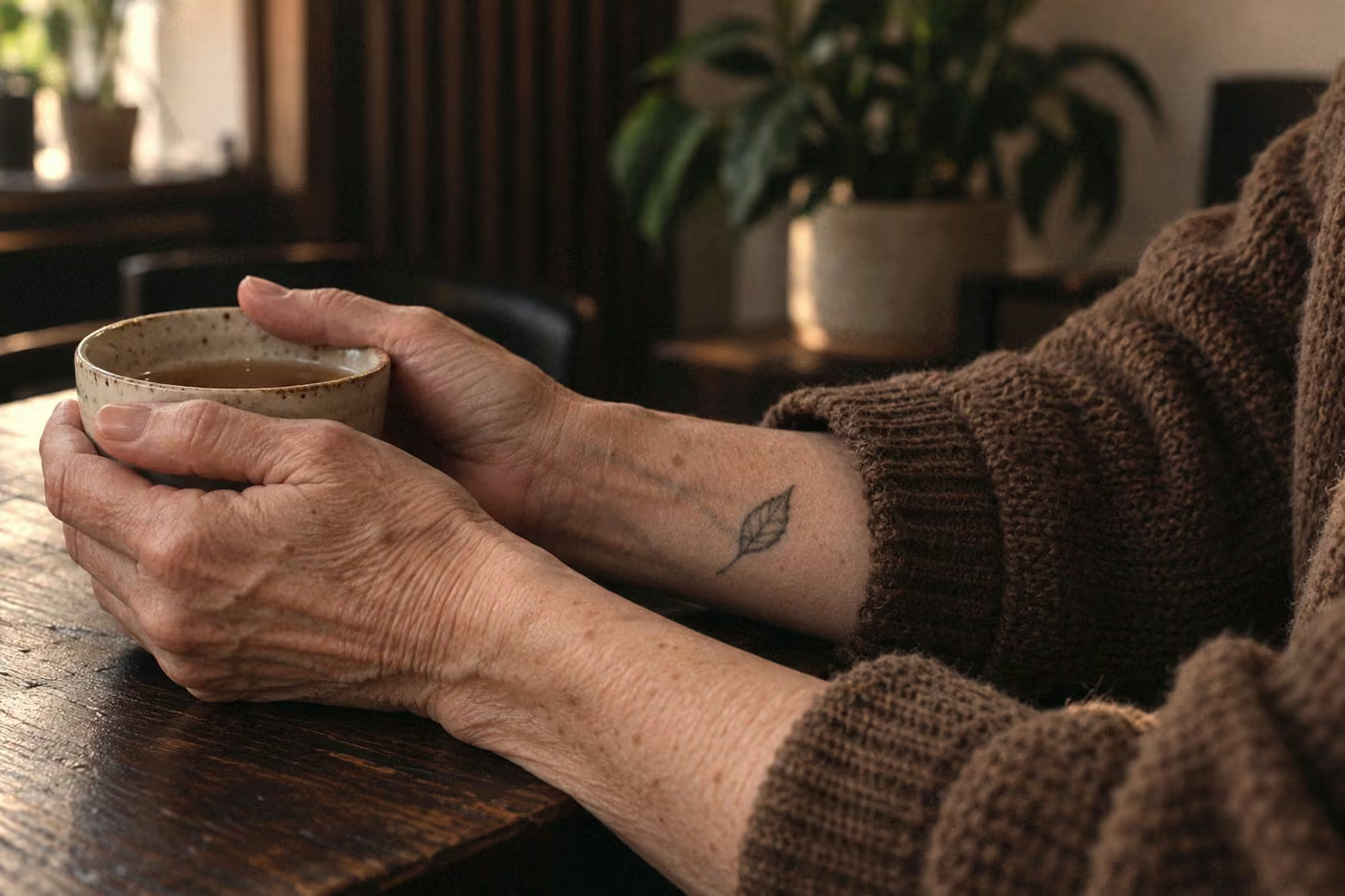
As we age, skin loses elasticity and becomes thinner, so tattoos look softer and less defined. That's no reason to give up on a tattoo, but it is a reason to choose the placement and size with the years ahead in mind.
How to help your tattoo last
The first few weeks matter most, but looking after a tattoo is a lifelong habit:
How an old piece is refreshed is explained in “Tattoo touch-ups”.
Soft lines are normal
Twenty years on, a tattoo won't look as it did on the day of your session, and that's normal. It ages with you, which has a charm of its own. A well-done tattoo softens, but you can still recognise the design and what it was meant to show.

Frequently asked questions
Can't find your question? Message me on Telegram or Instagram. I reply personally.
How many years before a tattoo starts to change?
The first noticeable changes usually show after a few years, especially with fine lines and on exposed areas. How quickly it changes depends on sun exposure, placement and your skin.
Do fine-line tattoos age faster?
Yes, fine lines and small details soften more noticeably. If the size and density of the design have been well thought through, it stays readable for many years.
Can an old tattoo get its crispness back?
Partly. An artist can refresh the outline and strengthen the dark areas. It won't look quite like new, but the design will be clear again.
Does moisturiser affect how a tattoo ages?
Moisturised skin looks better, and so does the design on it. But sun protection is what matters most, and ordinary moisturiser is no substitute for it.