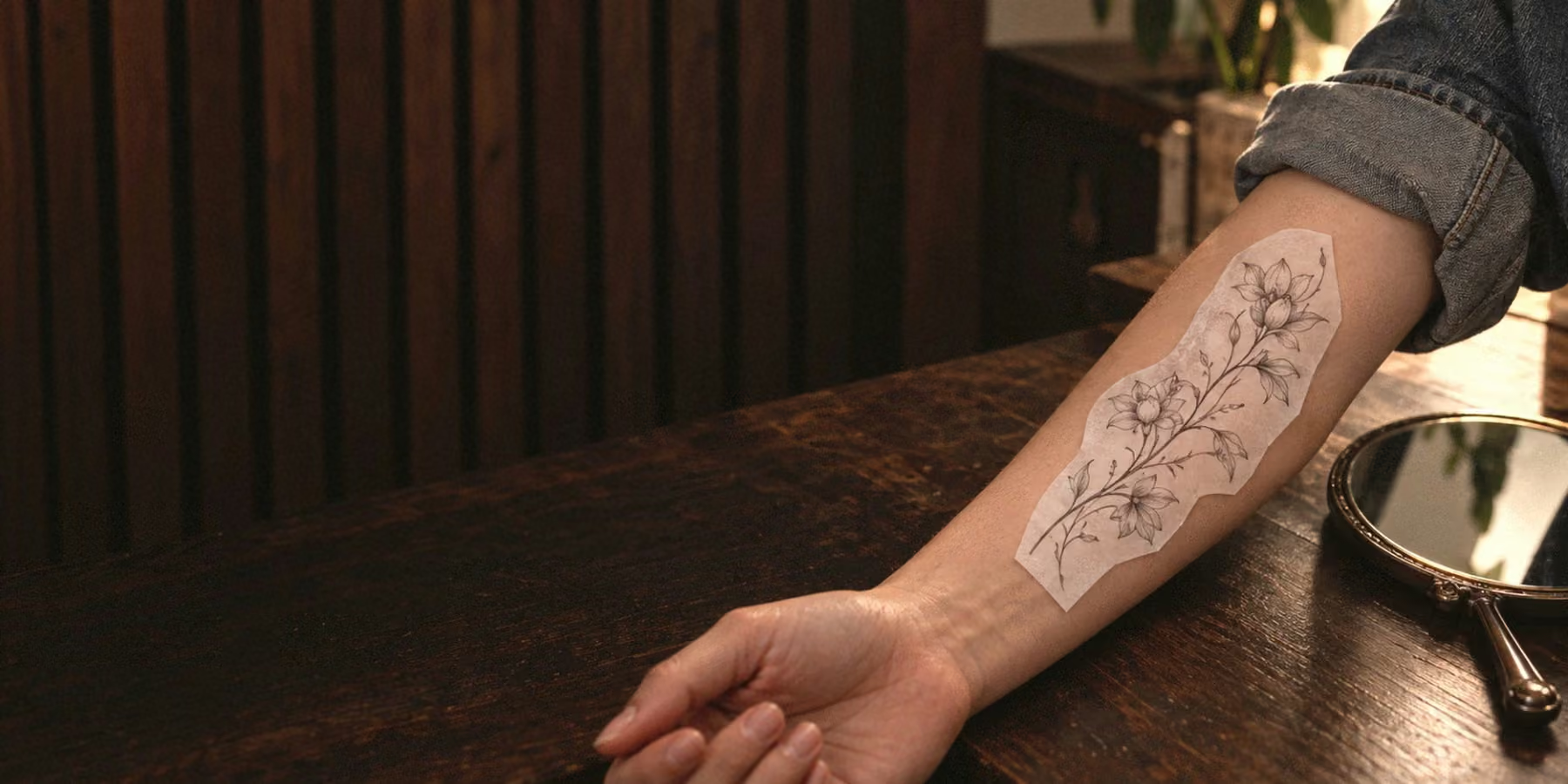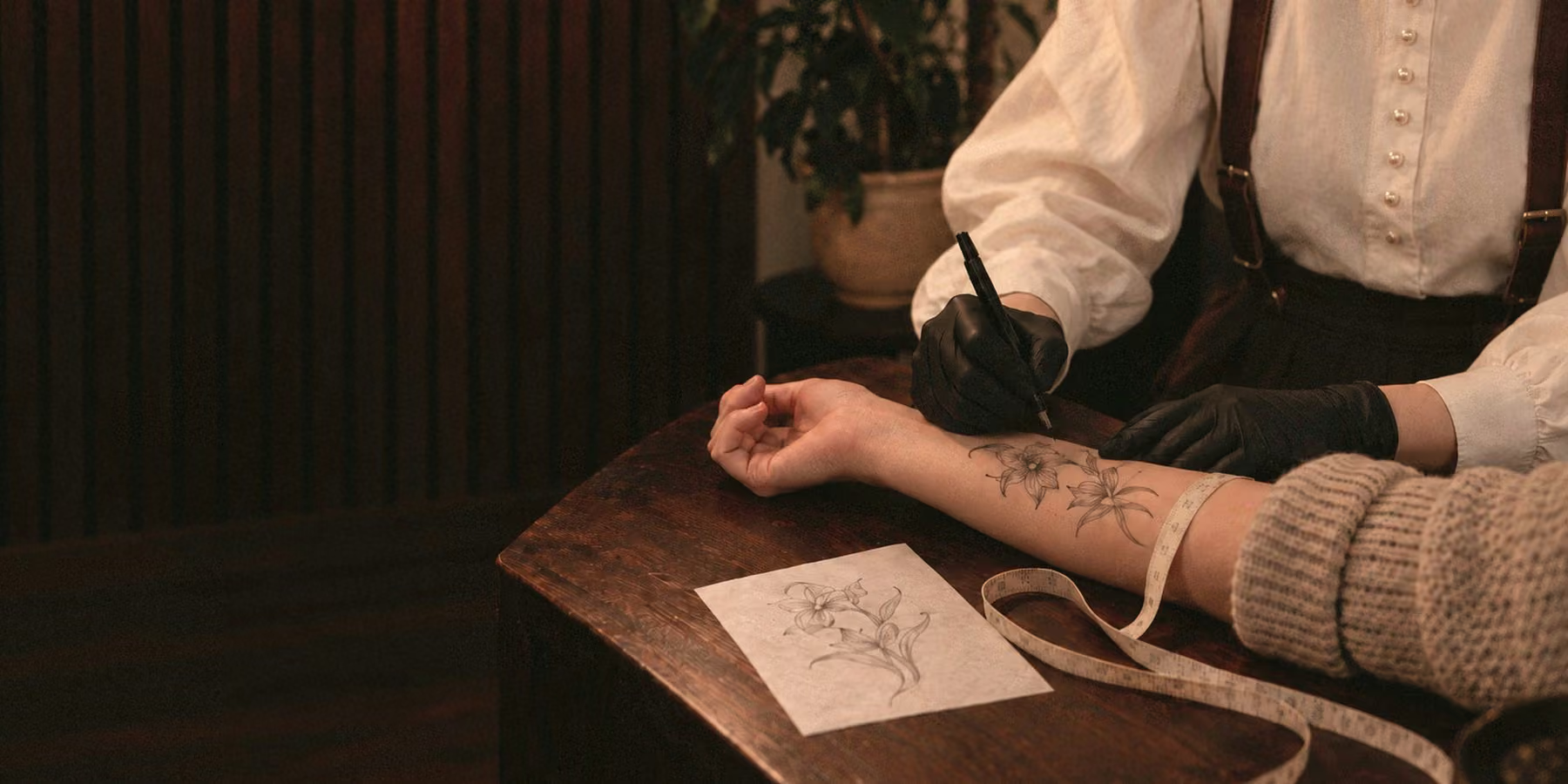

Size depends on how much detail there is: the more detail, the bigger the design needs to be, or within a few years the lines will merge. Composition is how the design fits your body and follows its contours. It's best to work out the size at the consultation using a rough sketch drawn on your skin with a marker or a printout held against it. You can check the size again with the stencil on the day of your session.
The golden rule: details need room
Skin isn't paper. Over time the pigment spreads a little, and lines become slightly thicker and softer. If lines sit too close together, the gaps between them disappear within a few years. That's why details need breathing space.
A simple test: look at the design at arm's length. If the small elements already blur together on paper, they'll blur even more on skin.
What works at a small size
A mini tattoo is a simple shape. A few centimetres is plenty for a silhouette, a short line, a symbol, or a sprig with a couple of leaves.
- Works: a flower outline, a moon, a heart, a small animal in silhouette, a single short word.
- Doesn't work: a portrait showing a facial expression, a long phrase in tiny lettering, a scene with several objects, fine hatching.
At a small size I strip out anything unnecessary and keep the silhouette and a couple of key details. If the idea relies on tiny things — faces, text, hatching — I suggest going bigger, so that it still reads just as well years from now.
Composition that follows the body
Composition is how the design sits on the body. Good composition follows your muscles and bones and doesn't distort when you move.
- a long branch or stem — along the forearm or shin;
- a round or fan-shaped design — on the shoulder, shoulder blade or top of the knee;
- a symmetrical pattern — down the spine or the centre of the chest;
- a curved line — along the collarbone or ribs.
Sometimes a design needs to be turned or stretched slightly so it follows the curve of your arm. That's a normal part of working on a design, and your idea stays the same. For help choosing the area itself, see “Choosing your tattoo placement”.
Matching the size to the placement
The same design looks different in different places. A three-centimetre tattoo is noticeable on the wrist but gets lost on the back. A large piece on the wrist, on the other hand, will wrap around the arm and only look clear from one angle.
A good size is one that suits the area: it fills it comfortably, without empty space or crowding at the edges.
Shrinking a design just to save money is a false economy. If the details merge, you'll need a touch-up or a cover-up to fix it, and that costs more than getting the right size in the first place.
Room for future tattoos
If you suspect this won't be your last tattoo, talk it through with your artist in advance. A small design in the middle of the forearm can get in the way of a sleeve later, and small tattoos scattered randomly over an arm are hard to bring together into one composition.
- leave space nearby if you want to add to it later;
- keep to one style within one area, so the pieces don't clash;
- plan a large project as a whole, even if you're doing it in stages.
How to choose the size
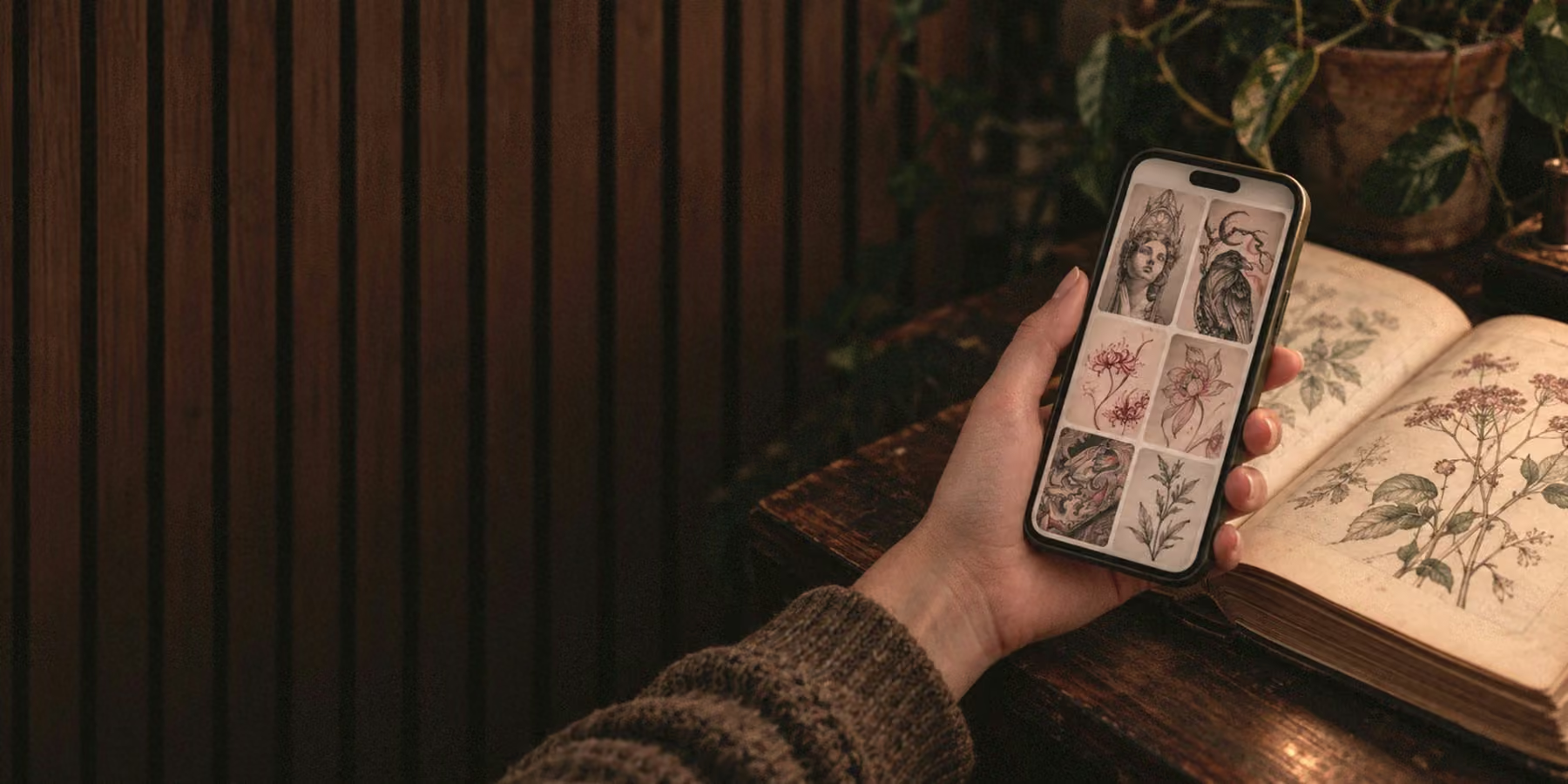
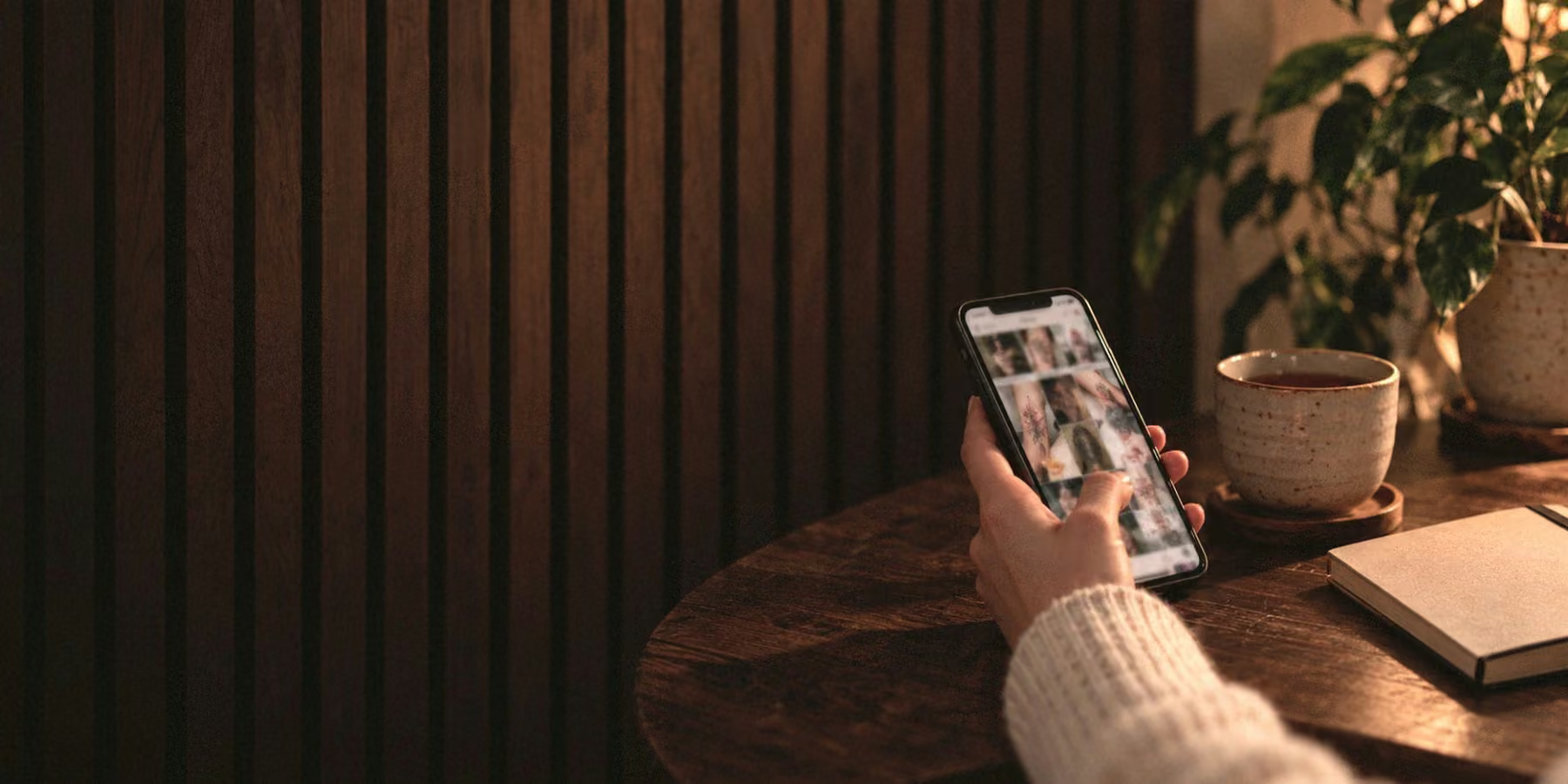
On a phone screen any design looks bigger than it will on skin. So it's best to test the size on yourself:
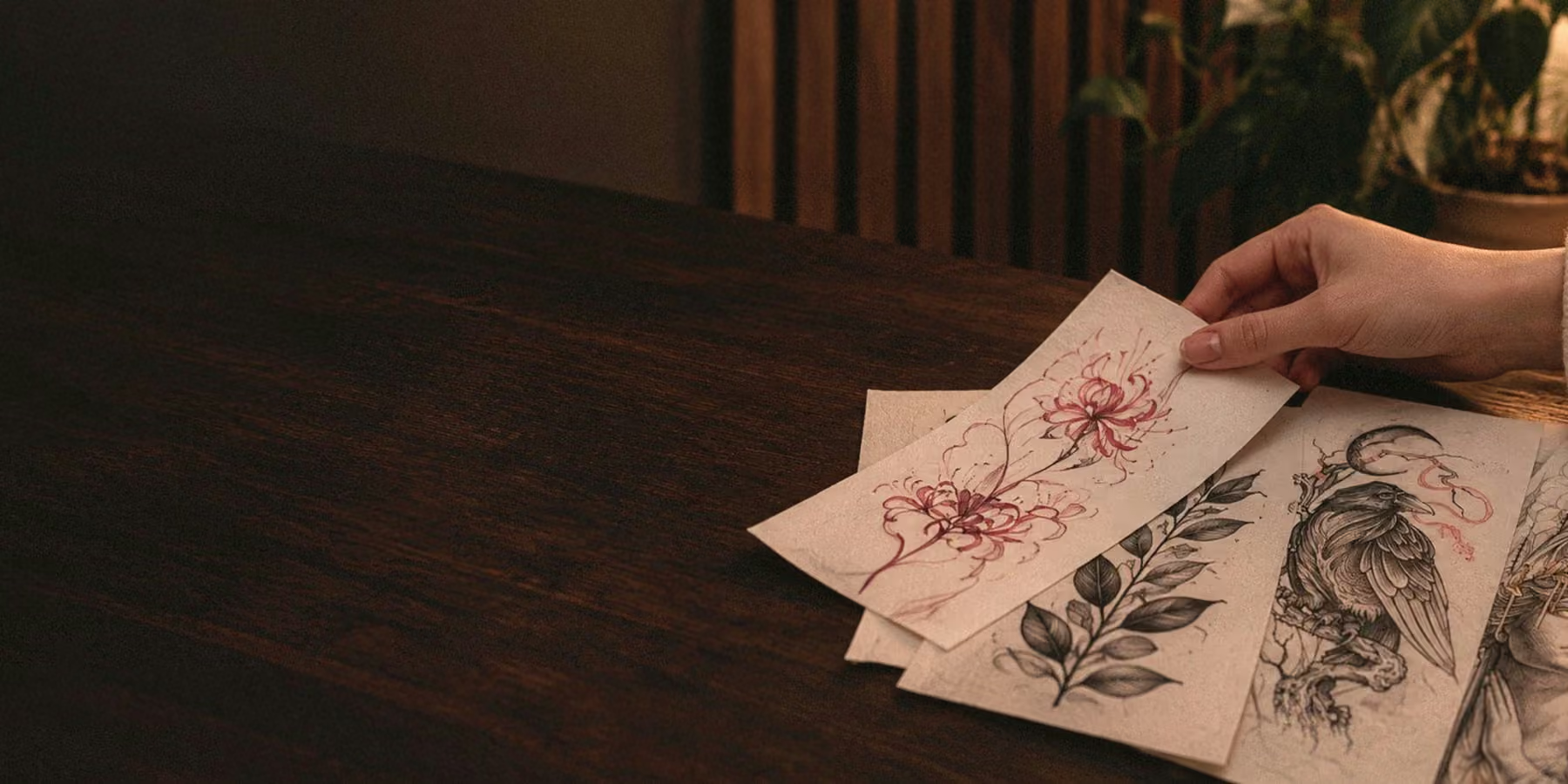
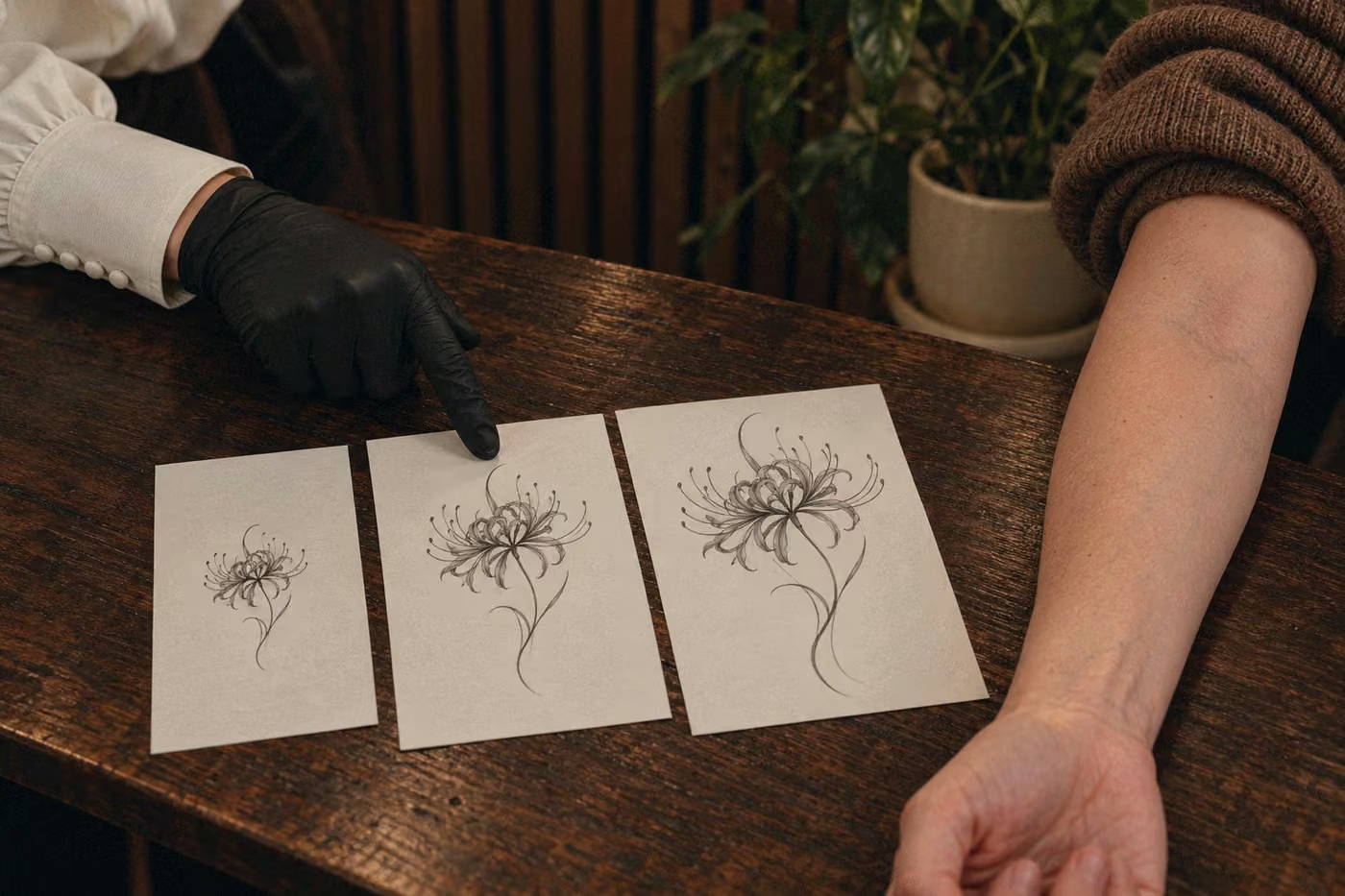
- Print the design in two or three sizesFor example, the width of your palm, half that, and a little bigger.
- Hold it against the spot you've chosenLook in the mirror up close and from a couple of steps back.
- Check the detailsIf small elements already blur together on paper, go for a bigger size.
- Decide at the consultationYour artist will hold a printout against your skin or sketch the design on it with a marker and tell you the smallest size that works for your design.
For more on how size affects the price, see “What goes into the price of a tattoo”.
If you want it small and detailed
This is the most common request, and there's only one honest answer: pick one. Either simplify the design to a silhouette and a couple of details, or make it bigger so all the details fit. Both are good options; the only bad one is trying to have it both ways.
Frequently asked questions
People ask about size more often than about style. Can't find your question? Message me on Telegram or Instagram. I reply personally.
What's the smallest a tattoo can be?
It depends on the design. A simple symbol can be really tiny, while a detailed design needs more room. Your artist will tell you the minimum size for your design.
Can I make a tattoo bigger later?
Sometimes you can extend it with new elements around it. But a small, detailed piece whose details have already merged is easier to cover up than to expand.
Why is my artist suggesting a bigger size than I wanted?
Most often because the design has a lot of detail, which will blur together over the years if the tattoo is too small. You can keep the size you want by simplifying the design.
Do I need to know the size in centimetres?
No. A rough guide is enough: “about the size of my palm”, “half my forearm”. You'll choose the exact size together with your artist.