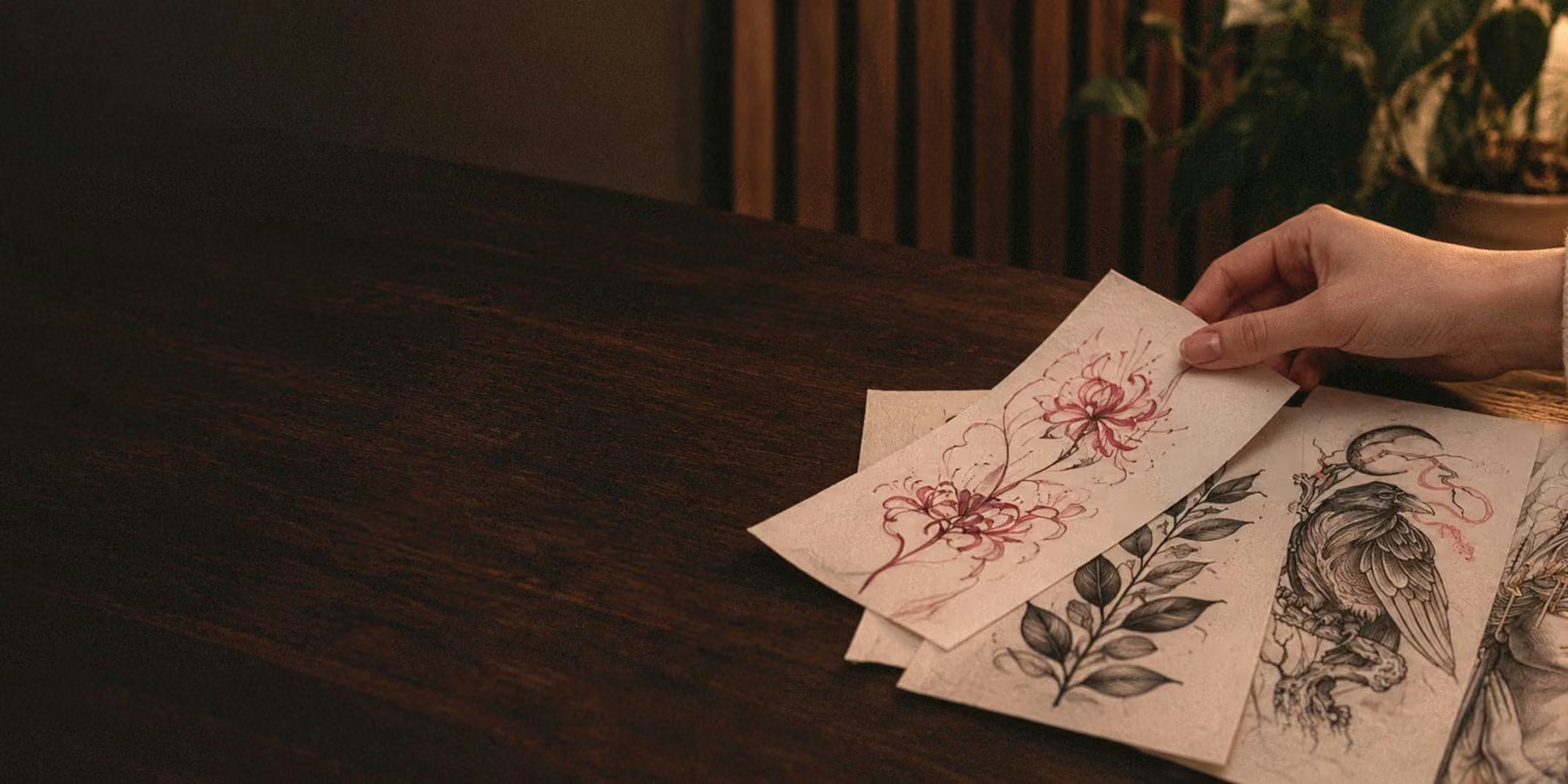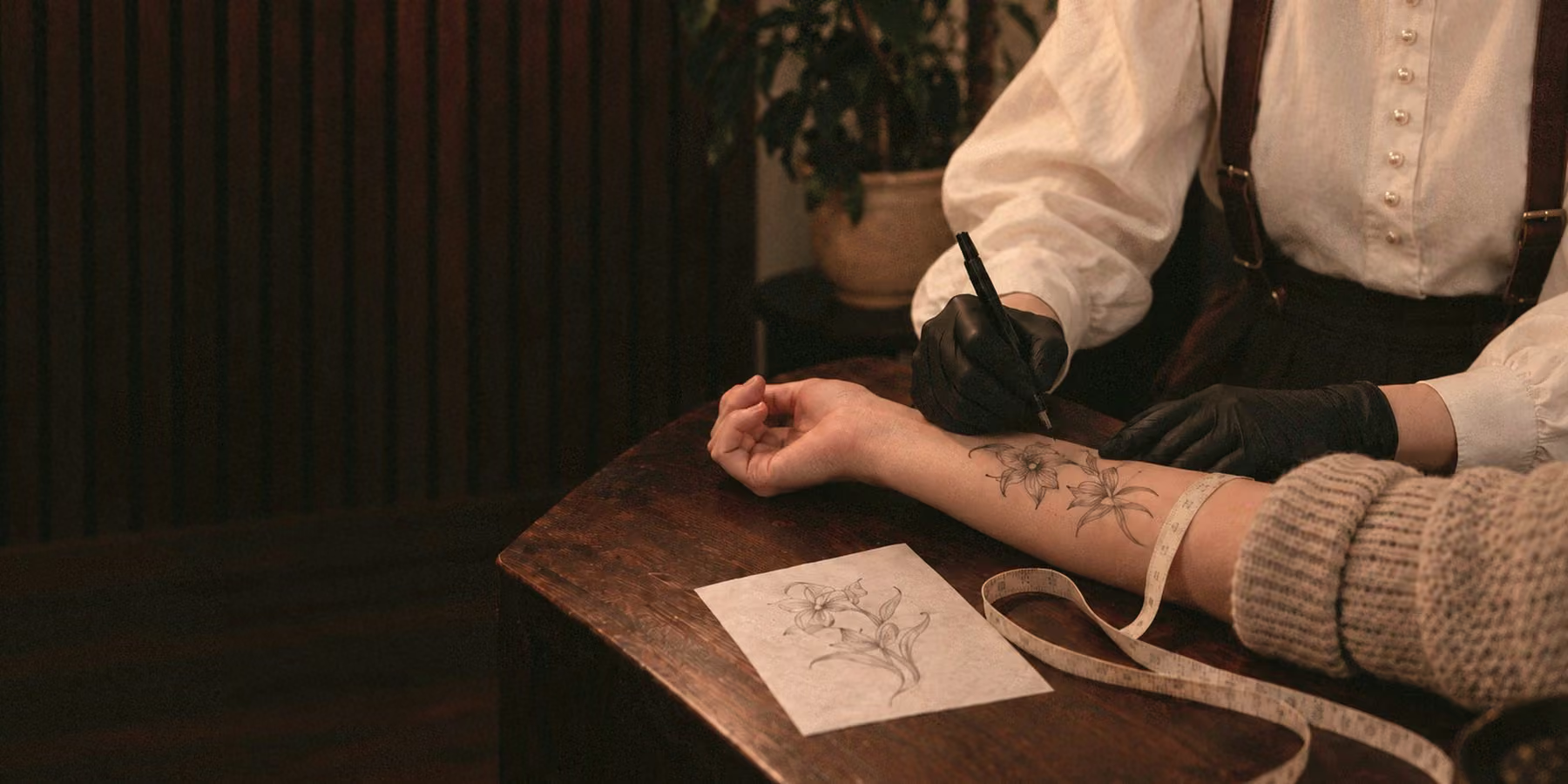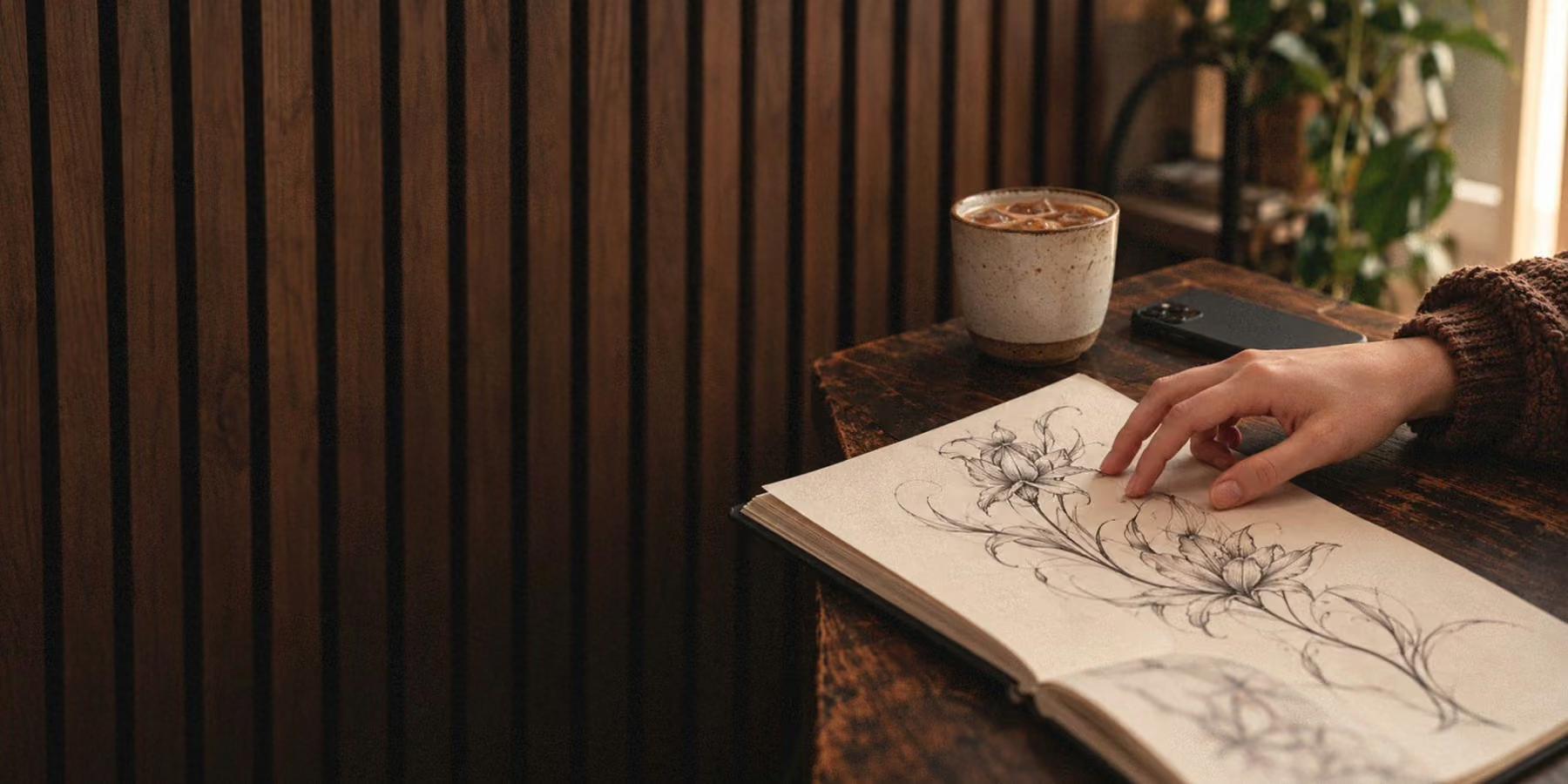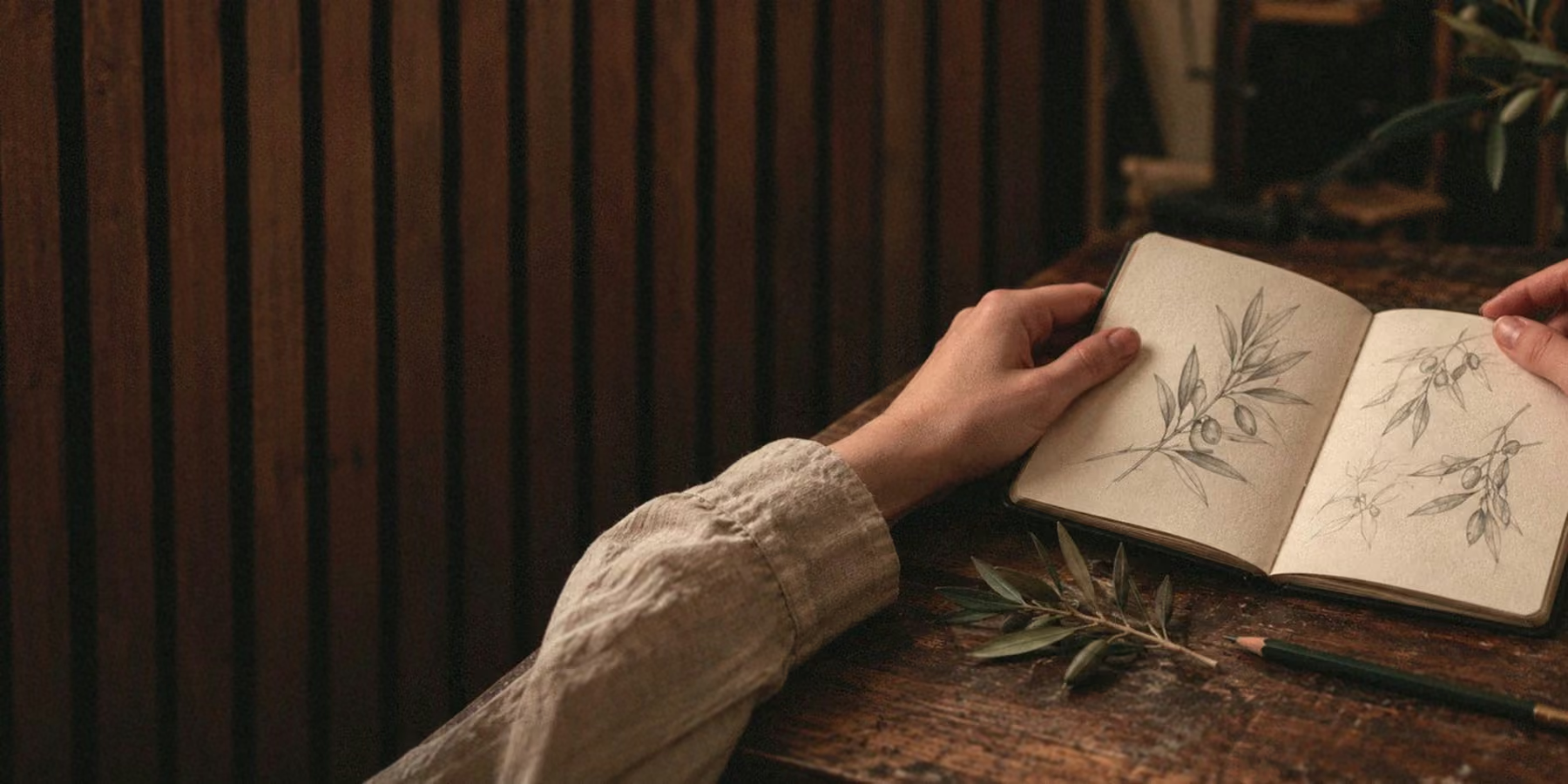

You don’t need to draw your tattoo design. That’s the artist’s job. You just need to explain what you’d like it to show, the mood you want, where on your body you want it and roughly how big it should be. Add three to five pictures you like and one or two you really don’t. That’s enough to get started.
Four questions to help shape your idea
Most people start with a feeling rather than a clear image: “I want a loving tribute to my mum”, or “something that reminds me of a trip”. That’s a perfectly good starting point. To turn that feeling into a brief, answer four questions:
- What’s in the pictureAn object, a plant, an animal, a symbol, lettering or just a line. You can have several options.
- What moodGentle, stark, playful or dark. One or two words often tell the artist more than a picture.
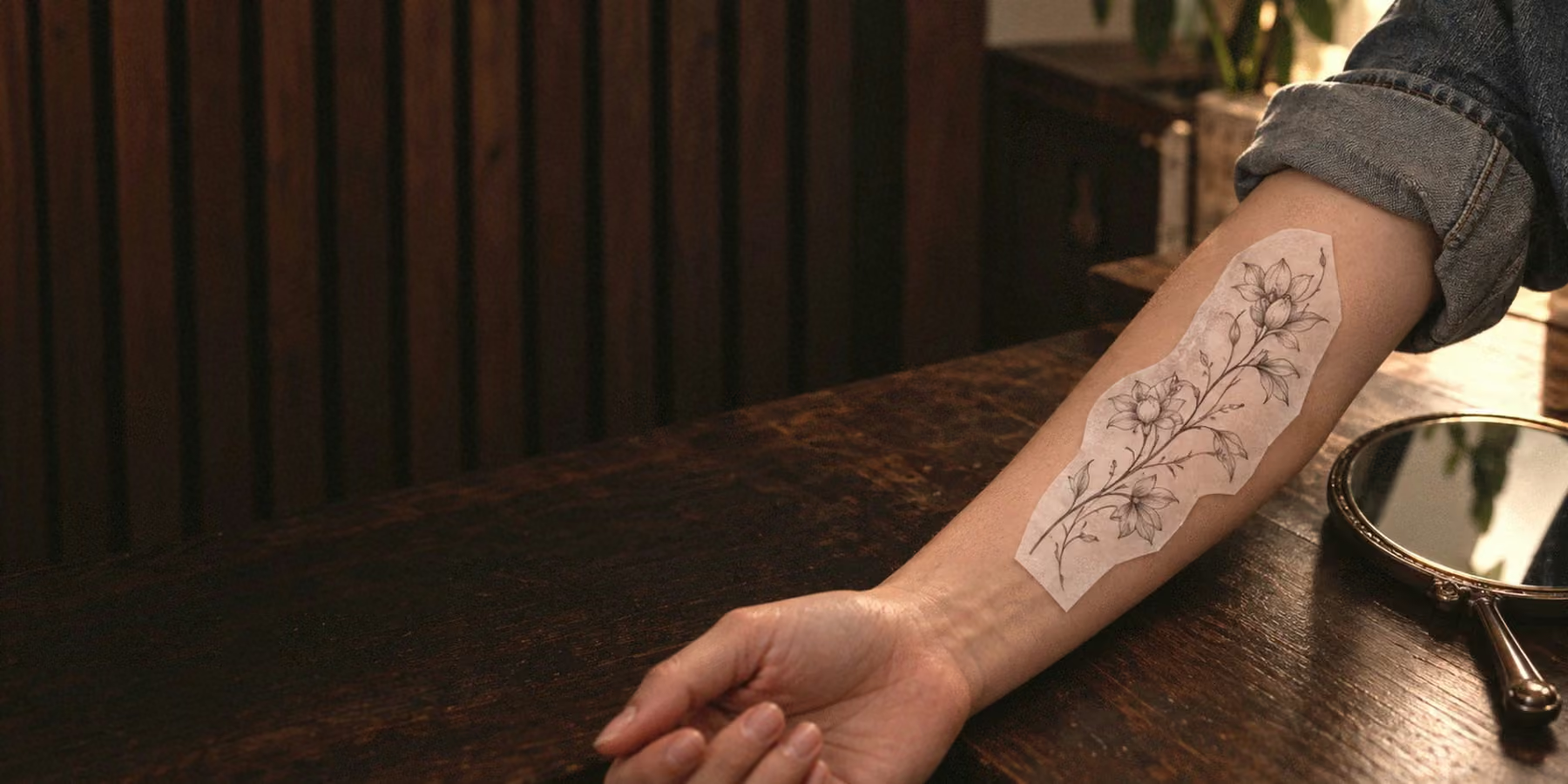
- Where on the bodyThe placement affects the design’s shape: along the collarbone it runs horizontally; on the forearm, vertically.
- What sizeA rough guide is enough: “the size of a matchbox”, “the size of my palm”, “the whole forearm”.
Meaning or beauty
Some people want their tattoo to mean something; others simply want it to look beautiful. Both are fine. Be honest about what matters to you. It determines whether you’ll be explaining the design to people who ask or simply enjoying how it looks.
If meaning matters, you don’t have to show it literally. Your grandmother’s favourite flower can be a tribute to her; the view of the horizon from a particular spot can remind you of a trip. You’re less likely to tire of tattoos like these than of literal symbols.
When a client tells me a story rather than showing me a picture, that’s often how the most personal designs begin. Feel free to tell me as much as you like. I’ll work out which details we need.
Make a mood board
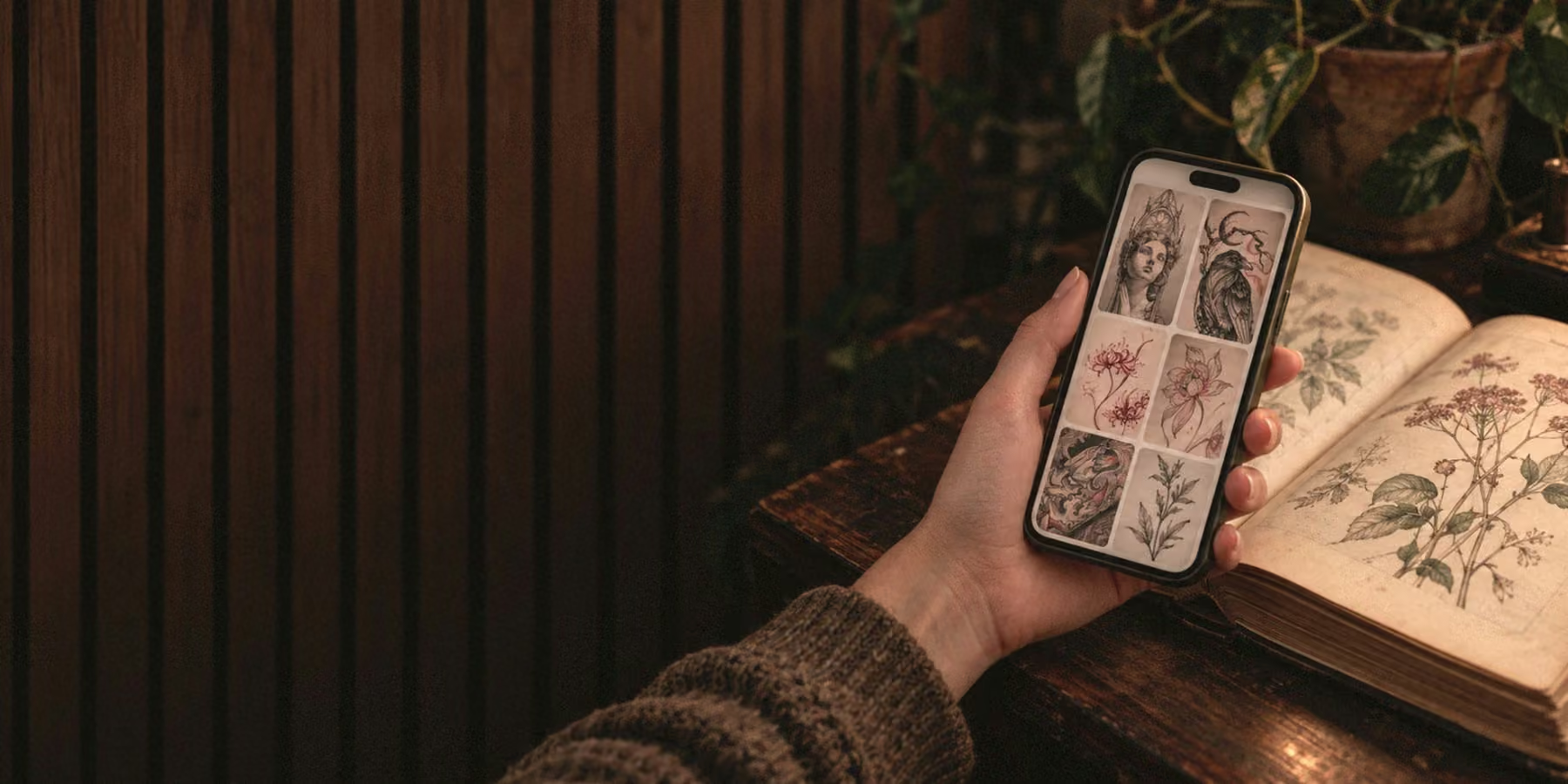
Save everything that speaks to you in one folder: tattoos, illustrations, photos, fabric patterns, even colours. After a couple of weeks, look at it as a whole — the overall mood usually jumps out straight away.
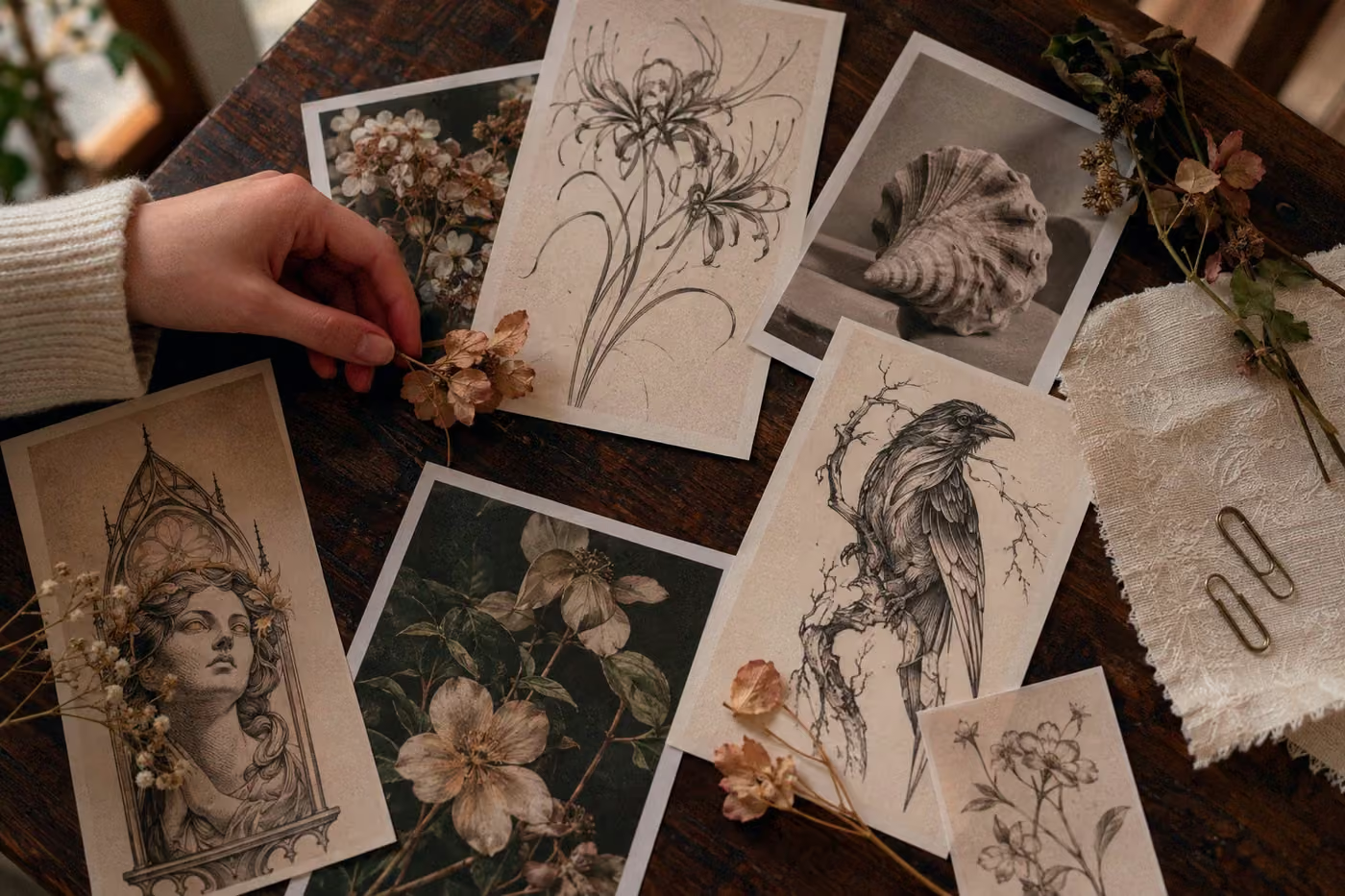
For help finding images without copying someone else’s work, see “Tattoo references”.
Be clear about what you don’t want
It really helps your artist to know what you don’t want. That narrows things down faster than ten more examples of things you like. Think about it in advance:
- which styles you don’t like — for example, too cartoonish or too dark;
- whether you want colour or only black;
- whether the tattoo should be noticeable or almost invisible;
- whether there are symbols you find unpleasant.
How to describe your idea to an artist
A good first message fits into a few lines. Here’s an example that tells the artist straight away what they’re working with:
I’d like a small olive sprig on the inside of my forearm, about the size of my palm. Something calm, with fine lines and no colour. I’m attaching three pictures I like and one that feels too heavy.
For what else to include, see “Your first message to a tattoo artist”.
If you have too many ideas, or none at all
If you have lots of ideas, pick the one you keep coming back to. The others won’t go anywhere — your next tattoo could carry on from the first.
If you have no ideas but still want a tattoo, look through artists’ available designs. Picking one is a perfectly good way to get an original tattoo without a long search.
Frequently asked questions
Can't find your question? Message me on Telegram or Instagram. I reply personally.
Can I come with no idea at all?
Yes. At the consultation we’ll work out what you like and find a direction. Sometimes one conversation is enough.
Do I need to draw a rough sketch myself?
No. A hand-drawn rough sketch helps if it makes things easier to explain, but the artist draws the actual design.
Can I bring a photo of someone else’s tattoo?
Yes, as an example of the mood or style. The artist won’t copy someone else’s work exactly — it’s another person’s original design.
How many pictures should I bring?
Three to five you like and one or two you don’t. More than that usually just confuses things.