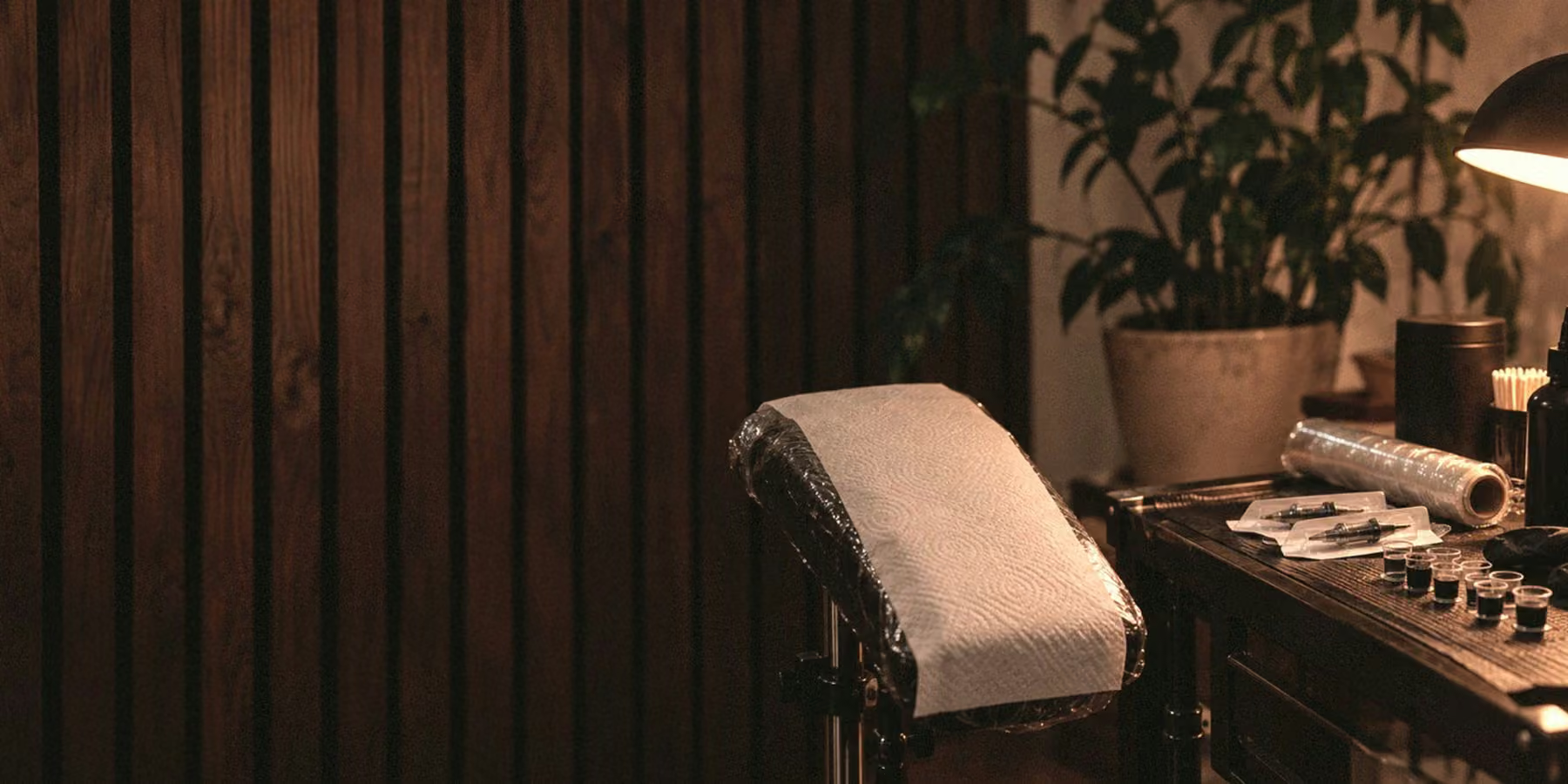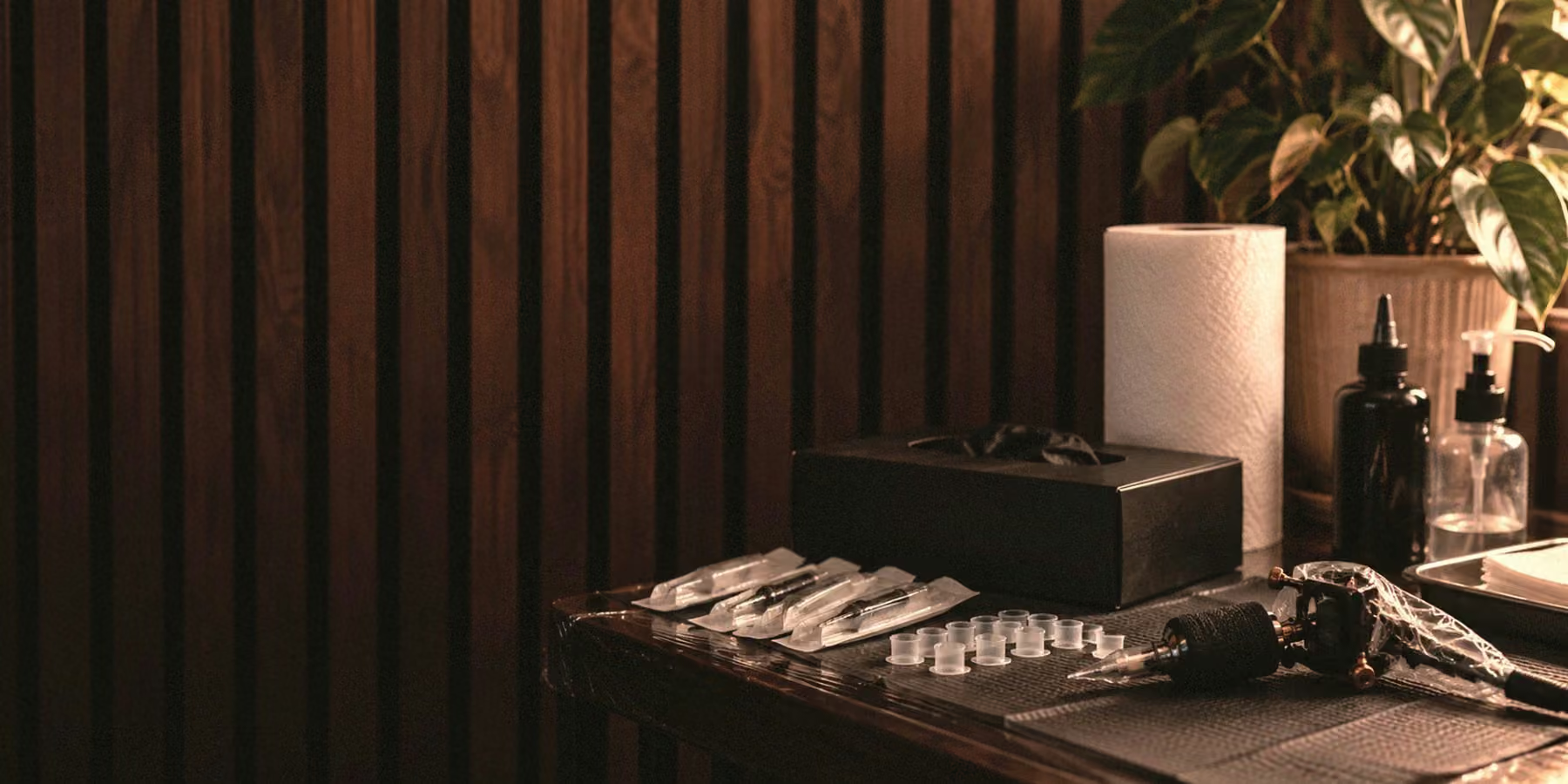

In a proper studio, everything that comes into contact with skin and blood is either single-use or sterilised: needles, cartridges, ink caps, gloves, barrier film. Needles are opened in front of you, surfaces are covered with protective film, and the artist changes gloves if they touch anything outside the work area. There's no shame in asking about this — a good artist will answer calmly.
What should be single-use
The main rule is simple: everything that touches your skin and blood is either single-use or sterilised. Single-use items are thrown away after the session, not washed and put aside “for the next client”.
- Needles and cartridges — from sealed packaging, opened in front of you.
- Ink caps — new for every client; leftover ink is thrown away.
- Gloves — nitrile, changed during the session.
- Protective film — on the machine, the cord, the lamp, the armrest and everything else the artist's hands touch.
- Razors and wipes — single-use, for preparing the skin.
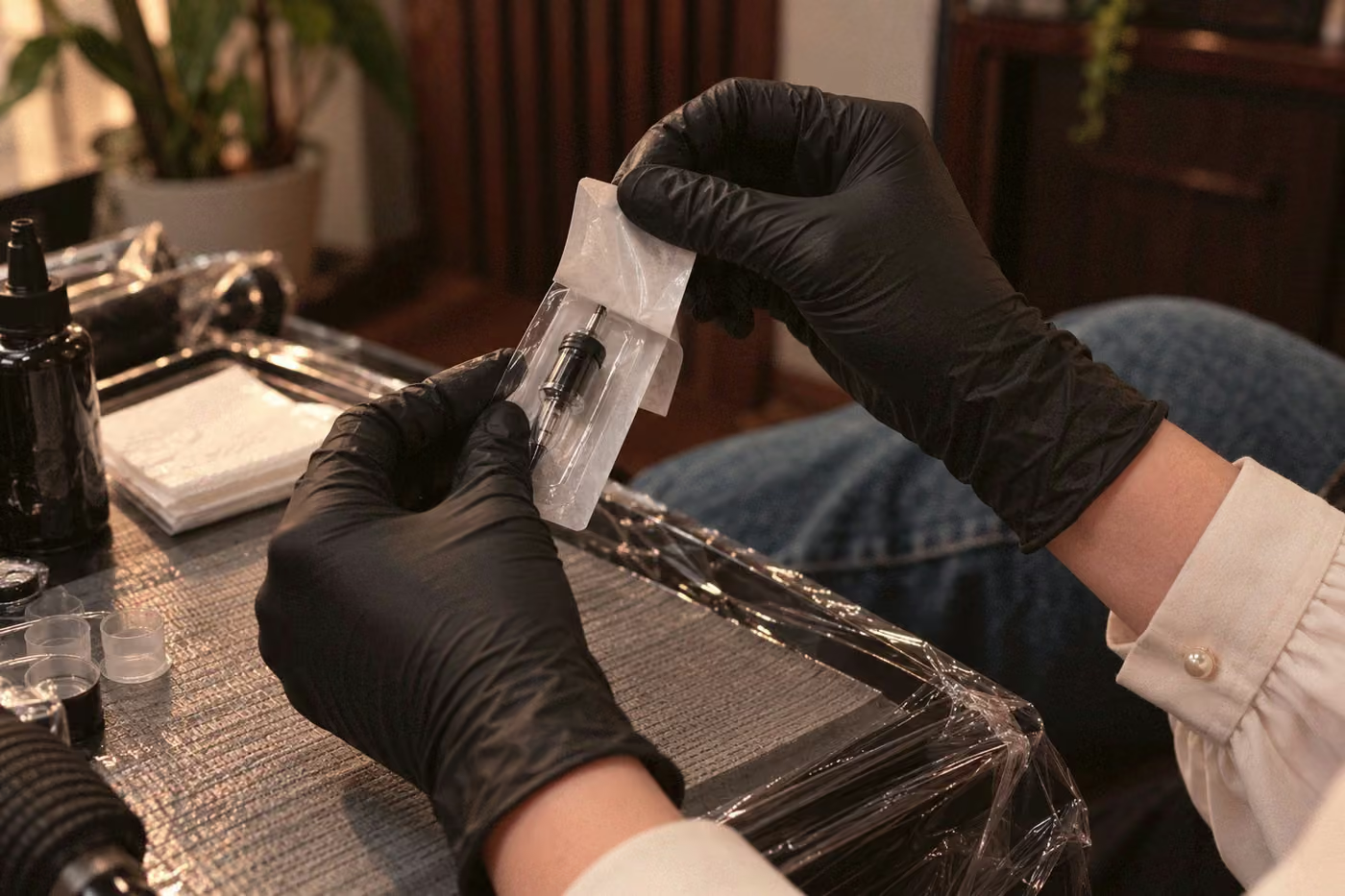
What the workstation looks like
The workstation is set up before you arrive or while you watch. The chair and armrest are wrapped in film or covered with a disposable sheet, and everything needed is laid out in advance, so the artist doesn't have to open drawers with gloves on.
The work area is kept separate from the places where people eat, drink and relax. It's bright, clean and uncluttered. A studio doesn't have to be luxurious, but it does have to be clean.
What the artist does
Before starting, the artist washes their hands and puts on gloves. Your skin is cleaned with antiseptic, shaved with a disposable razor if needed, and only then is the stencil applied.
During the session, gloves are changed every time the artist touches anything outside the work area: a phone, a door handle, their own face. If they pick up their phone and go back to your skin in the same gloves, that's your cue to say something.
I open every packet in front of you, and you're welcome to watch closely. If anything seems odd, ask. I'd much rather explain than have you worrying throughout the session.
Pigments and materials
Ink should be factory-made and come in labelled packaging with an expiry date. It shouldn't be diluted with whatever's to hand or poured from a large bottle into a smaller one without good reason. Your artist should be able to tell you which inks they use. Ask if you'd like to know.
If you've ever had an allergy to cosmetics, metals or henna, mention it in advance. More in “Restrictions and contraindications”.
Check the studio
All of this is obvious at a glance, if you know where to look:
If any of these is missing and you don't get a clear answer when you ask about it, it's better to leave. Other warning signs are in “Red flags when choosing an artist”.
Why home tattoos are riskier
A kitchen, a rented flat, a friend with a tattoo machine: these set-ups almost never have proper sterilisation, protective film or a full set of single-use supplies. The risk of infection is much higher, and correcting the tattoo later costs more.
The risk from a non-sterile needle is real: hepatitis B and C and other infections are transmitted through blood. If you're not sure about the hygiene, don't get in the chair.
More in “Hand poke and DIY tattoos”.
Safety after the session
Once the tattoo is finished, your artist cleans the skin, covers it with film and explains the aftercare. After that, you need to keep it clean: clean hands, bedding and clothes, no swimming pools and no borrowed creams. For the first few hours, see “Tattoo film and the first few hours”. For warning signs, see “Normal or a warning sign”.
Frequently asked questions
People ask about hygiene less often than they should. Can't find your question? Message me on Telegram or Instagram. I reply personally.
Is it all right to ask an artist about sterilisation?
Yes. It's a perfectly normal question, and a good artist will answer it calmly and in detail. Taking offence at it would be strange.
Should I shave the area myself before the session?
Usually not. Your artist will use a disposable razor. If you'd prefer to shave it yourself, check in advance: fresh nicks and irritation can make tattooing harder.
Can I bring a friend to my session?
It depends on the studio. Check in advance: sometimes space is tight, and the work area has to stay clear.
Why shouldn't I touch a fresh tattoo?
A fresh tattoo is an open wound. Dirty hands are the easiest way to introduce an infection.