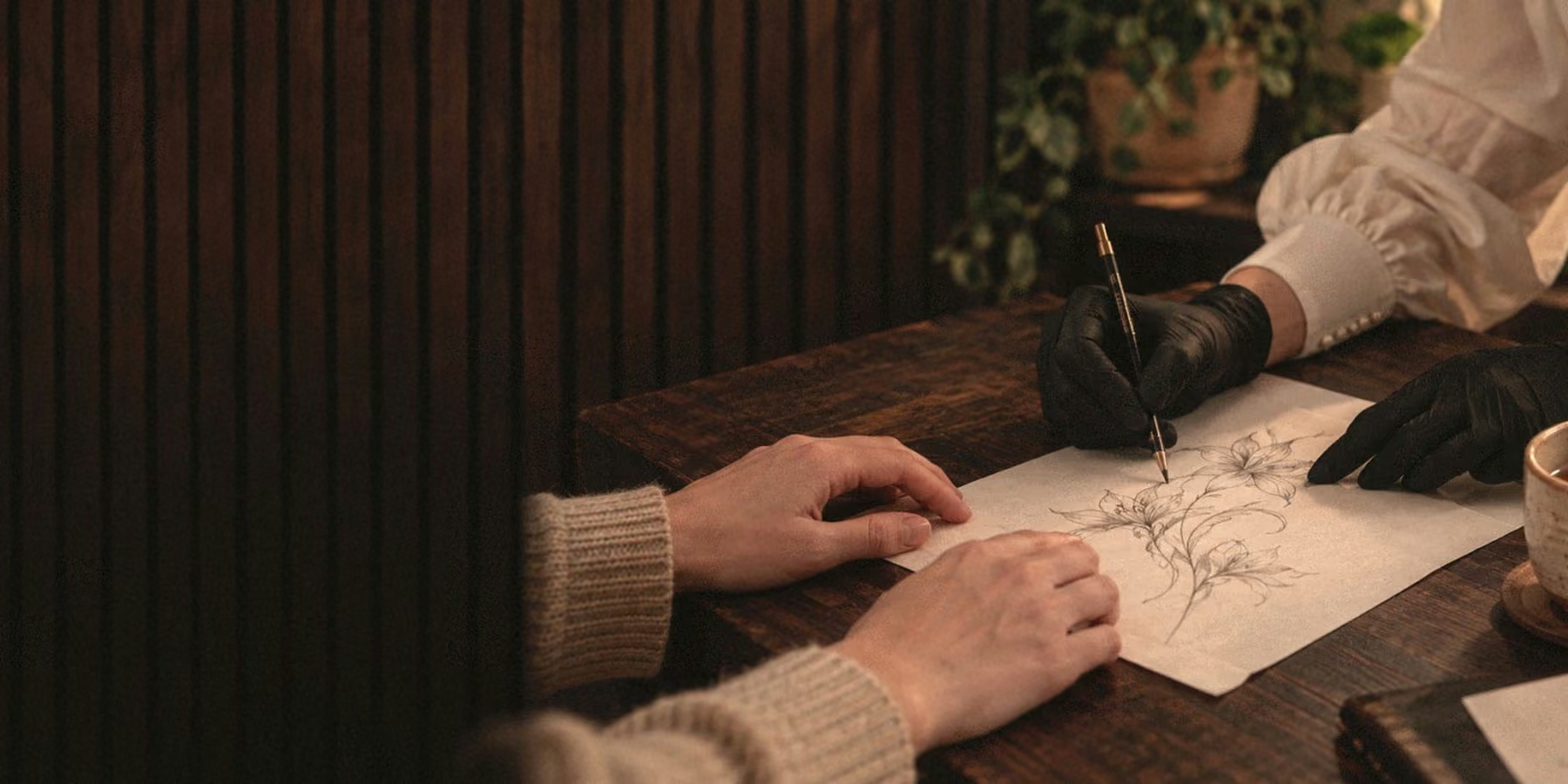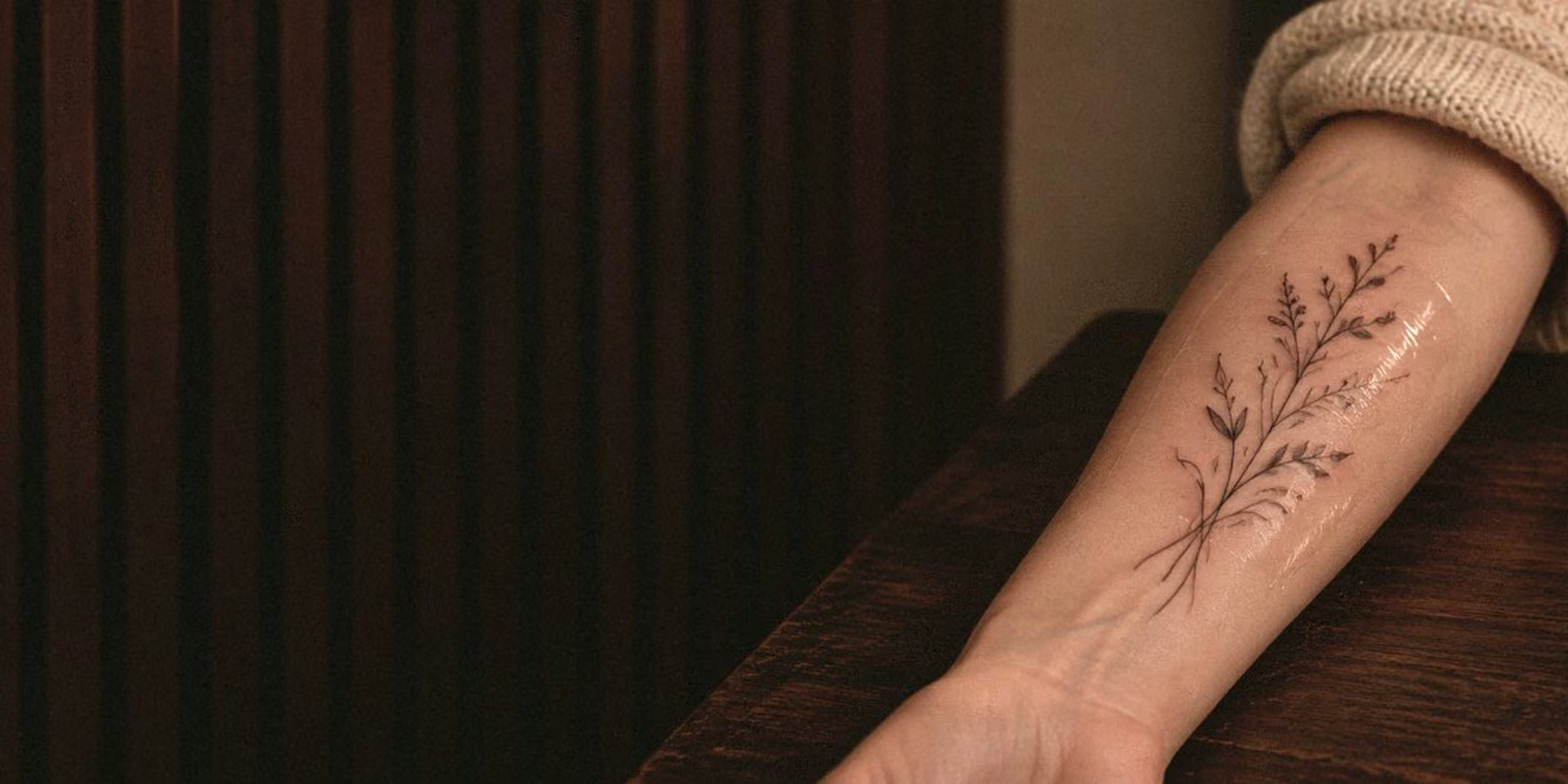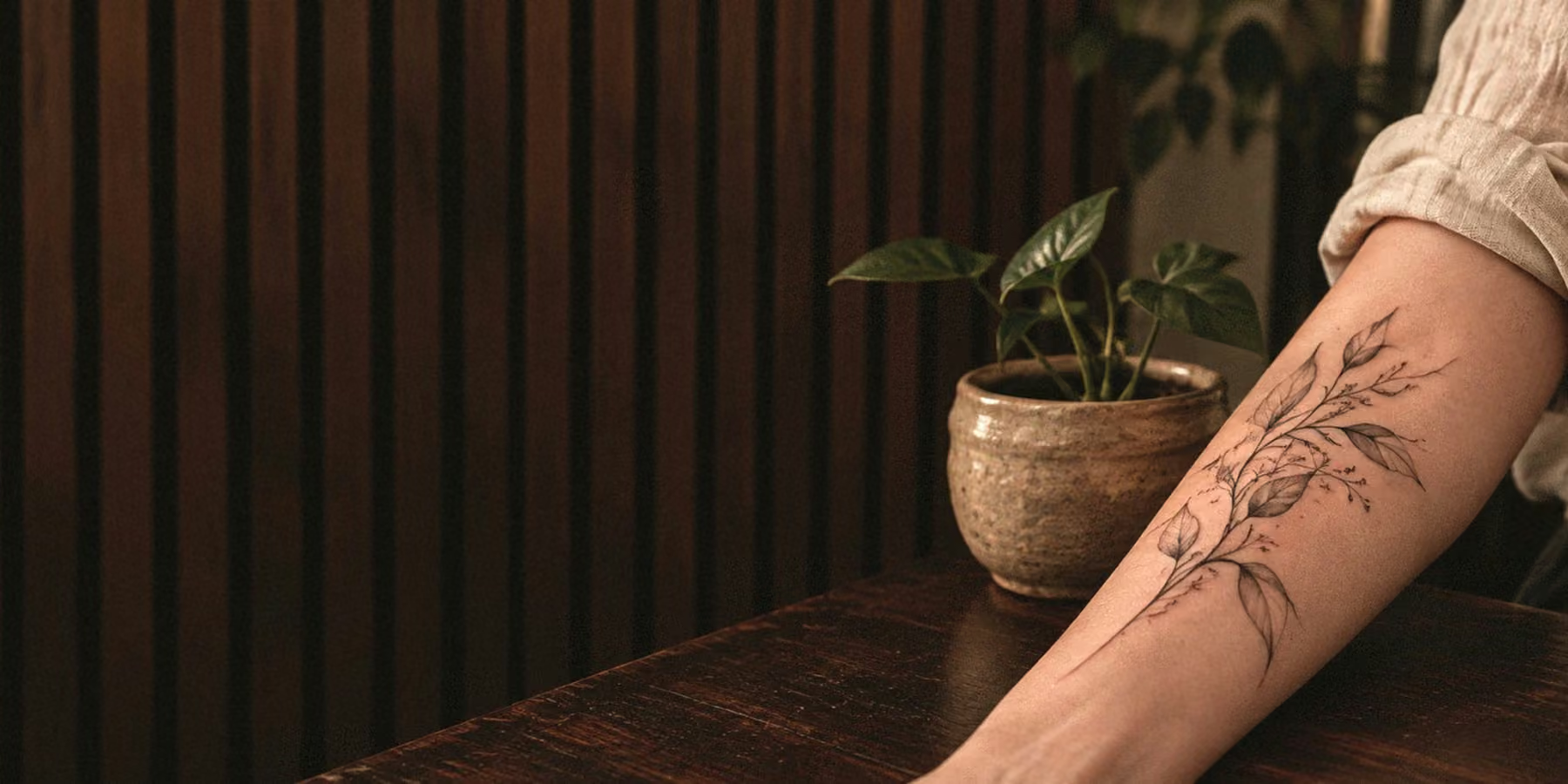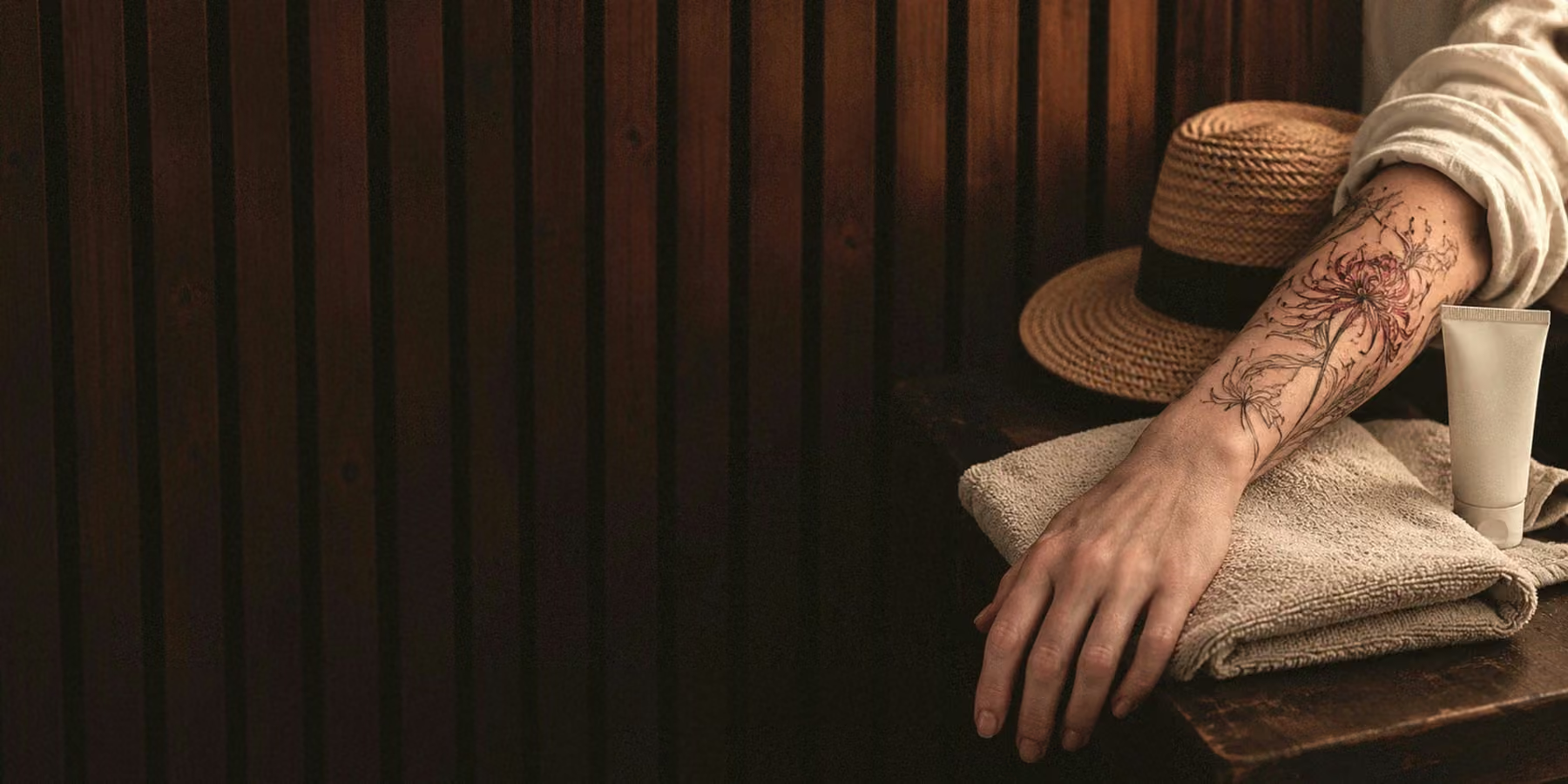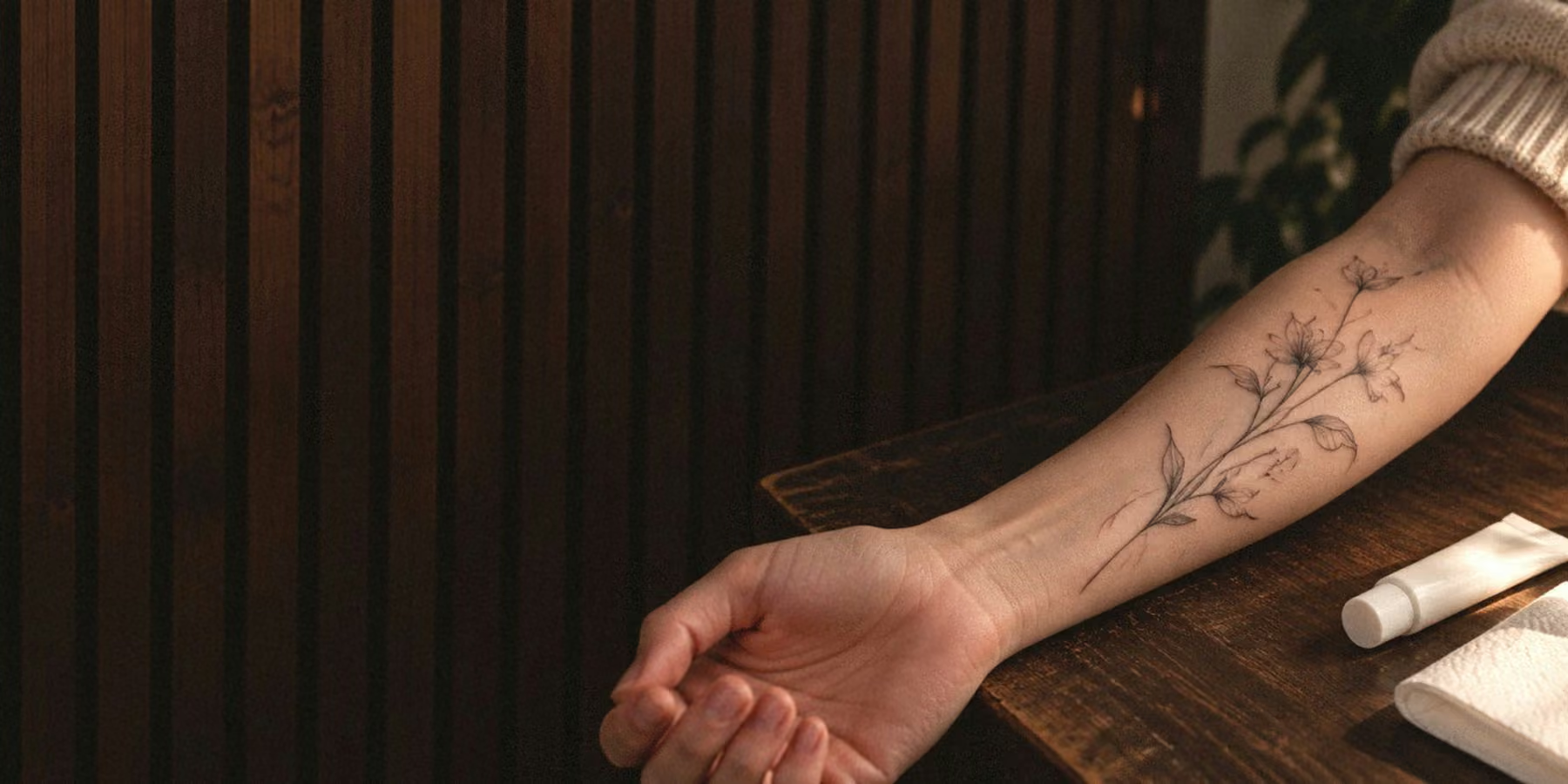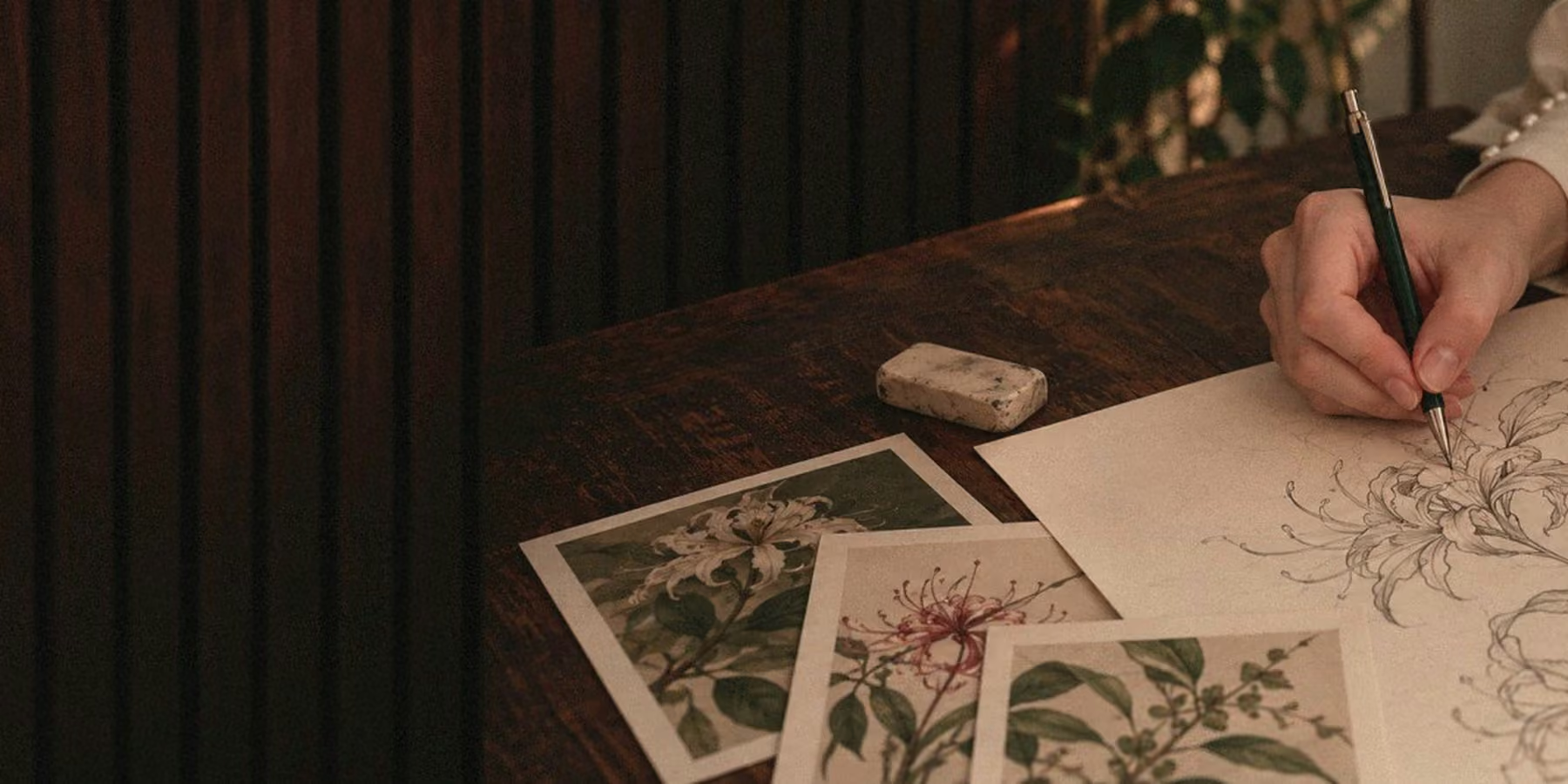

Your tattoo design is a drawing made to suit your chosen placement and size. The artist draws it using your idea and references, and you discuss any changes together. An image from the internet is usually reworked to make the design yours and help it fit your body.
What a tattoo design is for
A beautiful picture on paper and a good tattoo aren't the same thing. Skin is alive: it stretches, moves and changes over time. A tattoo design adapts your idea to work on skin.
When we work on the design, we decide:
- the size and proportions of the design;
- how fine the lines will be and how much detail will fit;
- how the design will follow the shape of your body — the curve of your arm, the collarbone, the line of the spine;
- how it will look in a few years, once the lines have softened a little.
What to give the artist to work with
You don't need a finished drawing. What matters more to the artist is understanding what you want to feel when you look at your tattoo.
- The idea in words. A couple of sentences about what it is and why it matters to you. For help putting it into words, see “Shaping your tattoo idea”.
- Three to five references. Pictures you like for their mood, lines or composition. More in “Tattoo references”.
- The placement and a rough size. “The outer forearm, about the size of my palm” is plenty.
- What you definitely don't want. A single “not like this” picture often saves a whole round of changes.
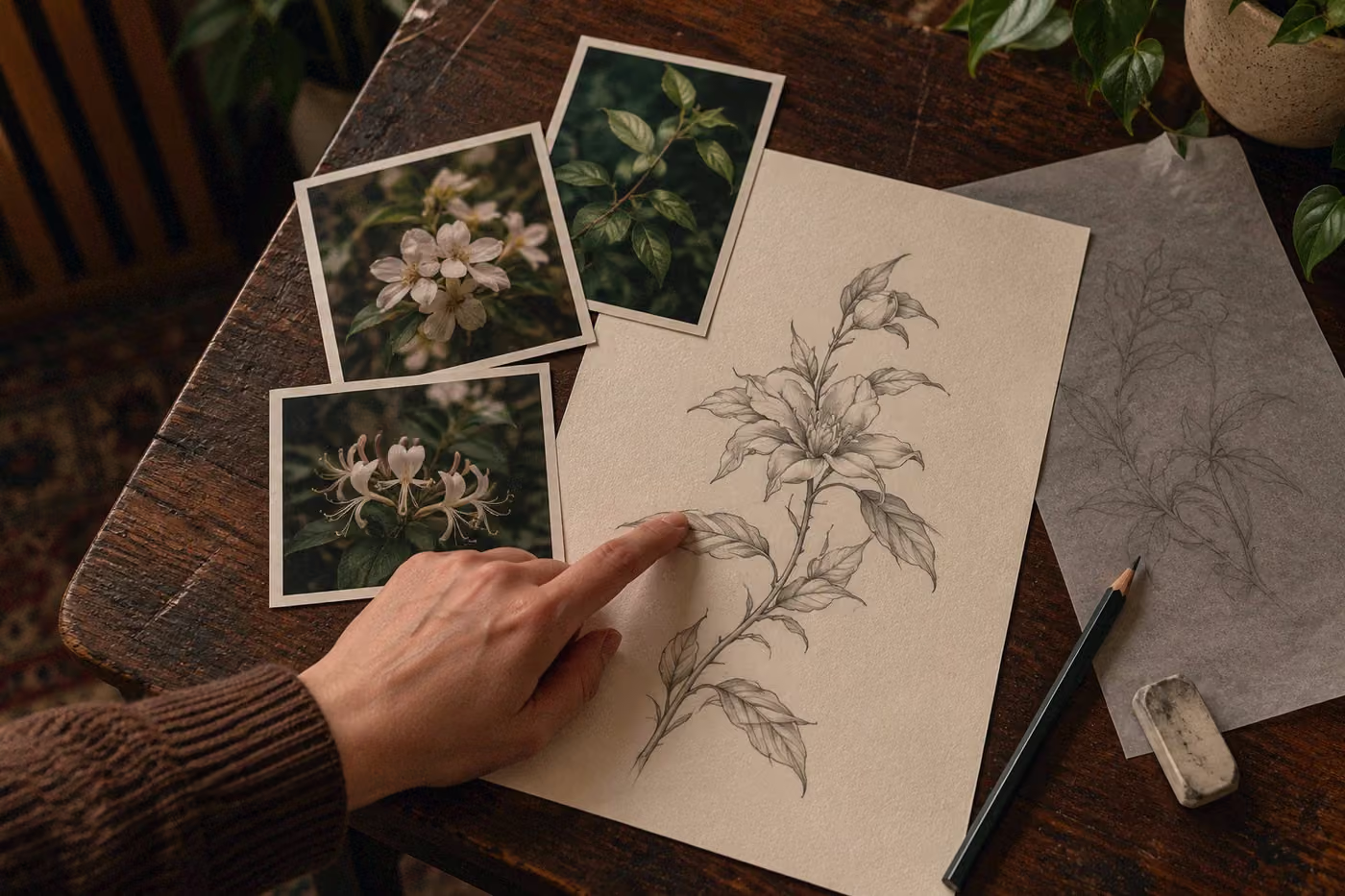
How your tattoo design takes shape
- The conversationYou discuss the idea, placement, size and style with your artist.
- The first versionA design that suits your chosen placement and the shape of your body.
- ChangesYou say what to keep and what to change.
- The final designThe version you look at without wanting to change a thing.
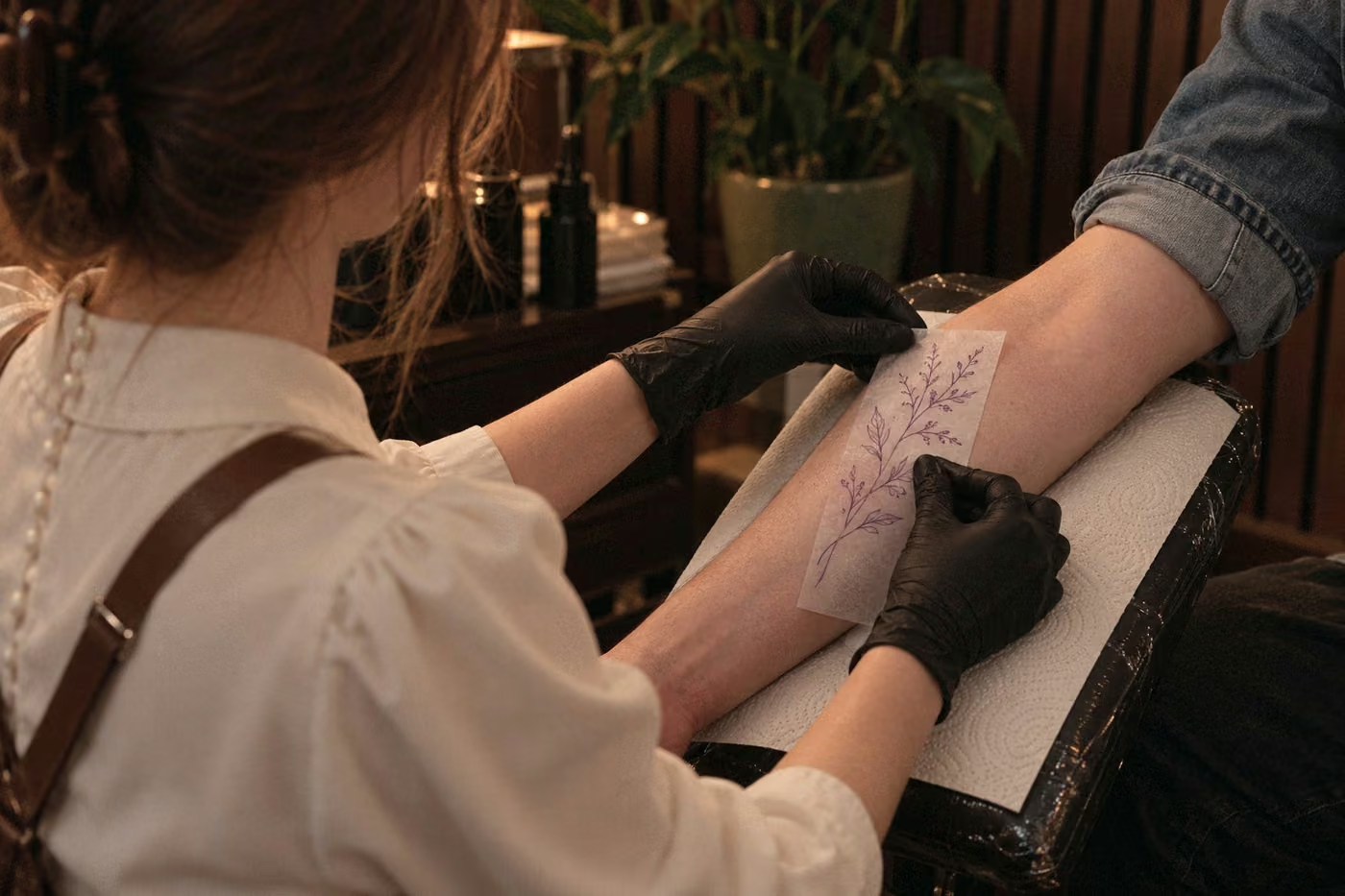
- The stencilOn the day of the session, the design is transferred to your skin so you can see how it sits.
I draw each design to suit its placement. That's why I need to know where the tattoo will go: the same flower looks different on a wrist and on a shoulder blade.
How many changes are normal
One or two rounds of changes are perfectly normal. To help your artist make the right changes, be specific rather than just giving your overall impression:
- “thinner lines” instead of “it feels a bit heavy”;
- “take out this leaf and make the branch longer” instead of “it's not quite right”;
- “a third smaller” instead of “maybe it's too big”.
If after several rounds the design still feels “not quite right”, go back to the idea. Perhaps the problem isn't the details but the direction itself, and it's easier to start with a different version.
If you have an image from the internet
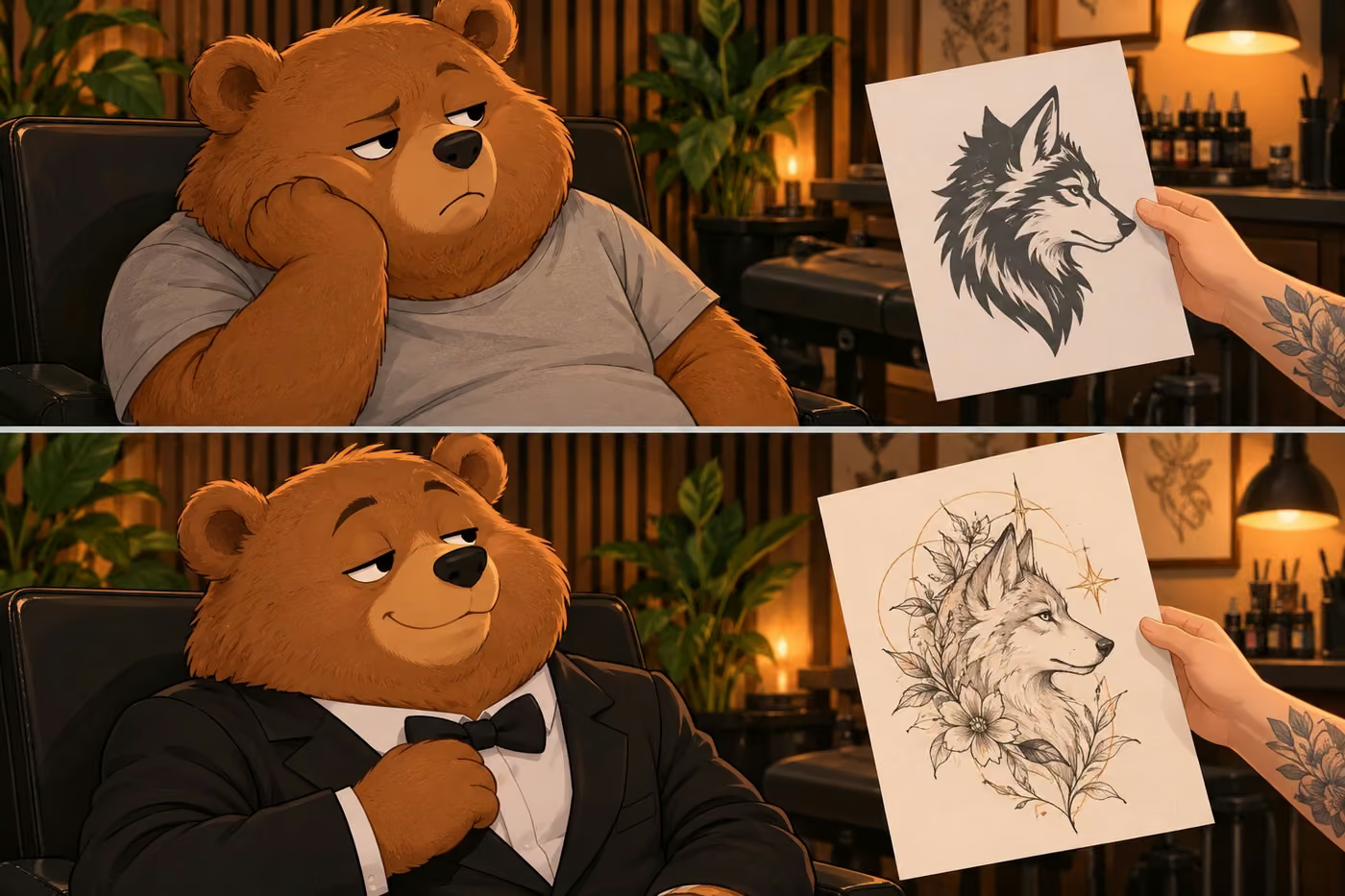
Artists don't usually copy someone else's tattoo exactly. It's another artist's work, and it was designed for someone else's body at a particular size, so the proportions won't look right on your arm.
Your artist will take what you love about the picture and draw their own version. It's the same with illustrations, photos and engravings: they need simplifying and turning into lines that will hold up on skin for years. You can see examples on the “Tattoo from a photo” page.
Design, size and placement
Fine details blur together over time. So your artist may suggest making the design bigger, removing some elements or spacing the lines further apart. These changes help the tattoo look good ten years from now.
More on proportions in “Tattoo size and composition”, and on what happens to lines over the years in “How tattoos age”.
How much a tattoo design costs
It varies from artist to artist: some charge separately for the design, others include it in the price of the session. Ask about this at the consultation.
- Consultation, 30 minutes
- free
- Design for your session
- free
- Mini tattoo up to 5 cm
- from €80
- Piece 5–15 cm
- from €150
- First mini tattoo, including the sketch
- from €80
What goes into the price of the work itself is covered in “What goes into the price of a tattoo”.
When the design is ready
You should feel comfortable with the final design. If you're unsure about a small detail, it can be adjusted on the day of the session, once the stencil is on your skin and you can see how everything sits. Bigger changes are best discussed in advance, so you don't have to move your booking.
Frequently asked questions
People ask about the design before they've even booked. Can't find your question? Message me on Telegram or Instagram. I reply personally.
Do I need to come with a finished drawing?
No. An idea and a few pictures you like are enough. The artist will draw the design.
Can I see the design in advance?
Usually, yes: the artist shows it to you before the session so there's time for changes. At the consultation, agree on when and how you'll see it.
Can I take the design and get the tattoo done by another artist?
A design is the artist's own work. If it's included free with the session, it's drawn specifically for a session with that artist. It's best to ask about this directly.
What if I really don't like the design?
Say so honestly and explain what's wrong. Sometimes one detail is all it takes; sometimes it's easier to start from a different idea.
Can the design be changed on the day of the session?
Small changes can be made when the stencil is on your skin. Bigger changes are best discussed in advance.