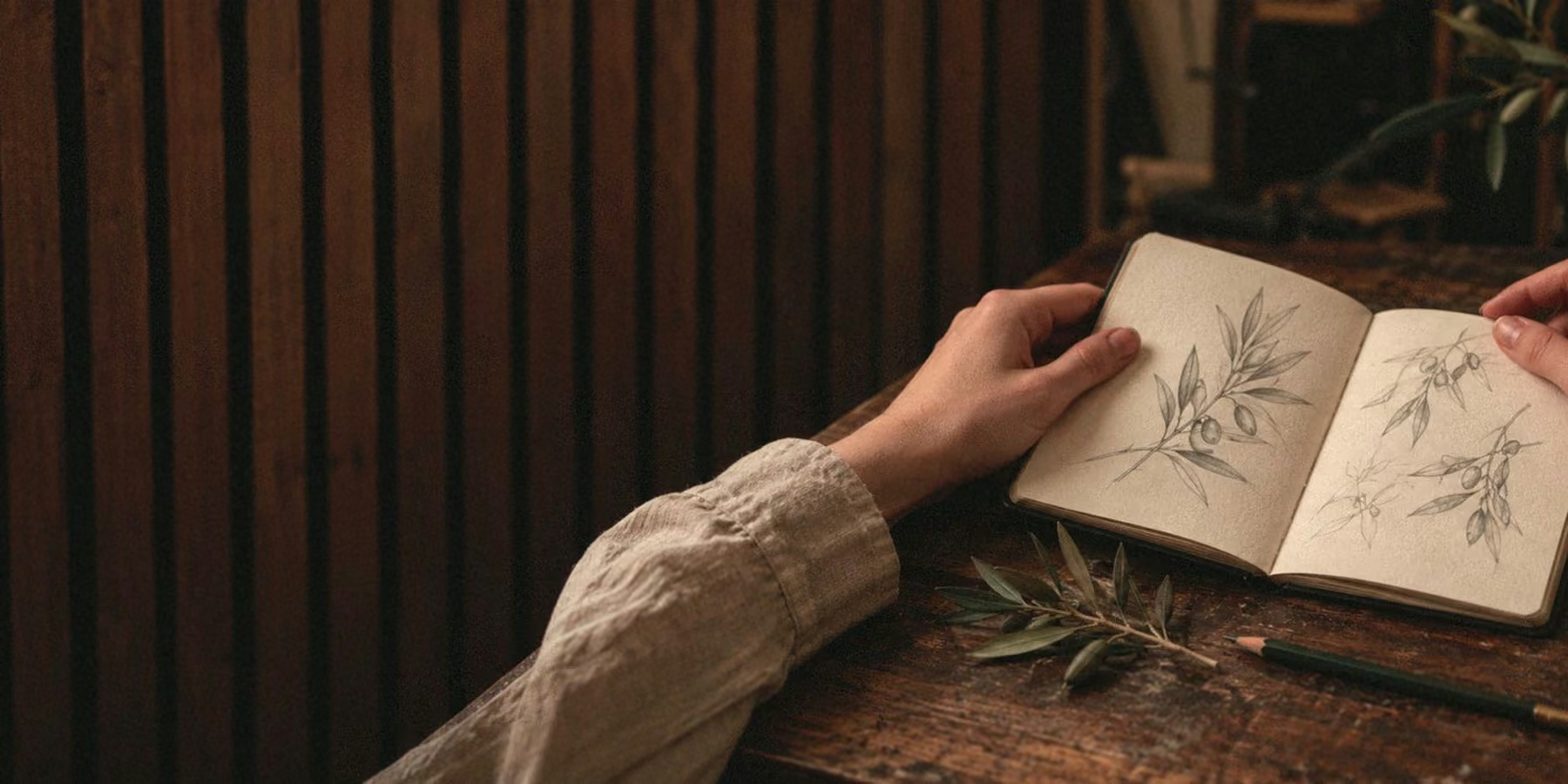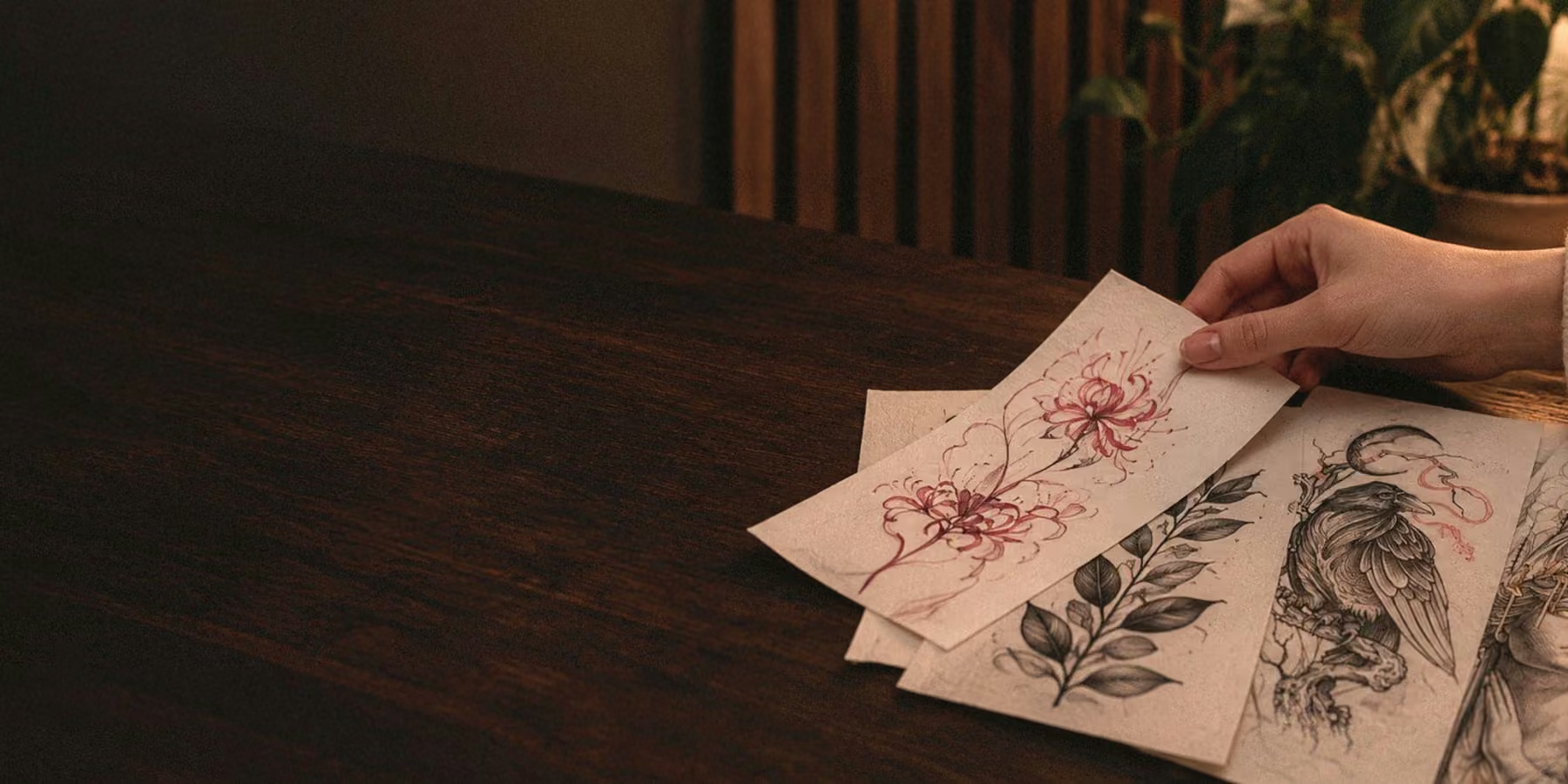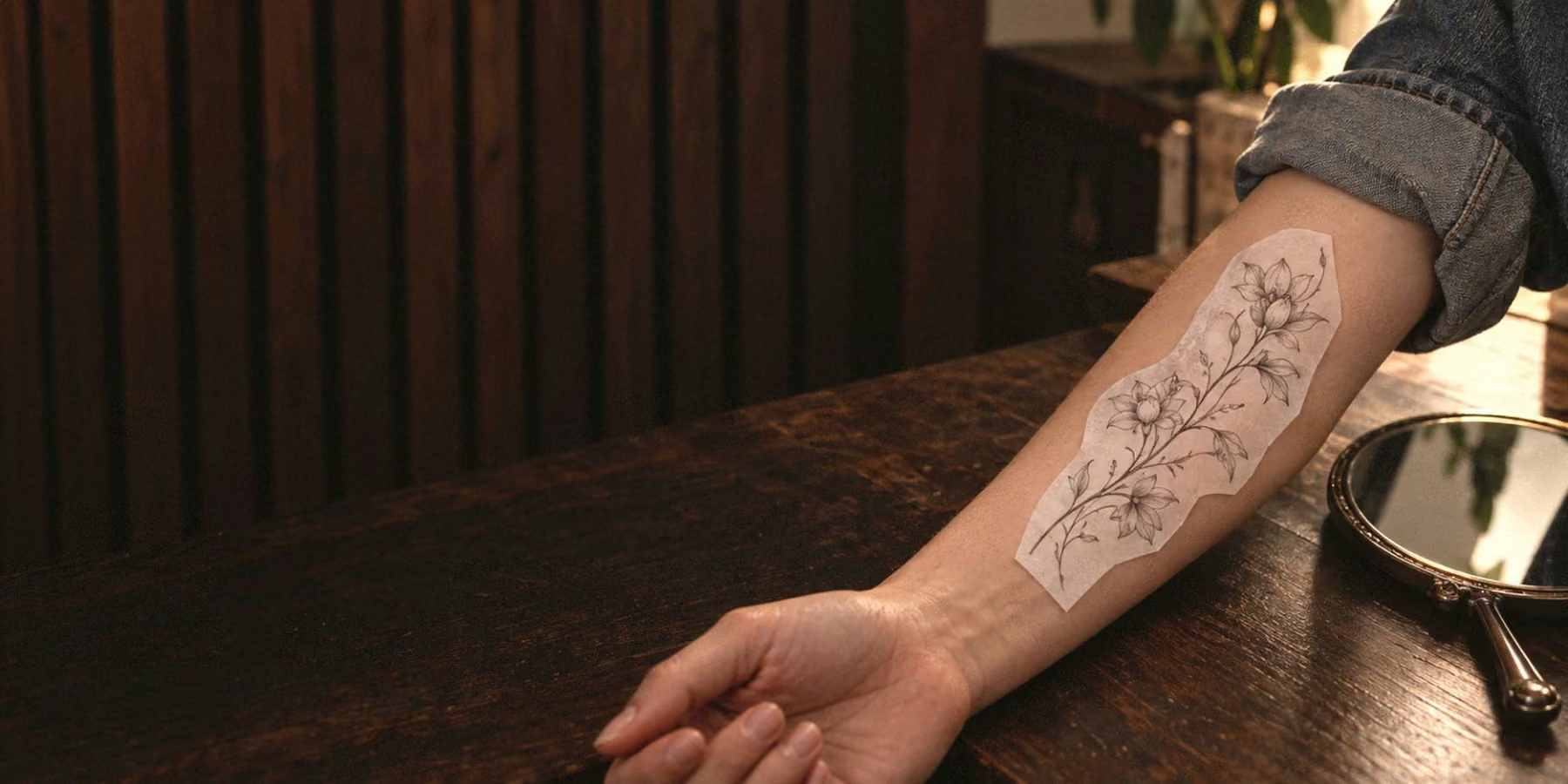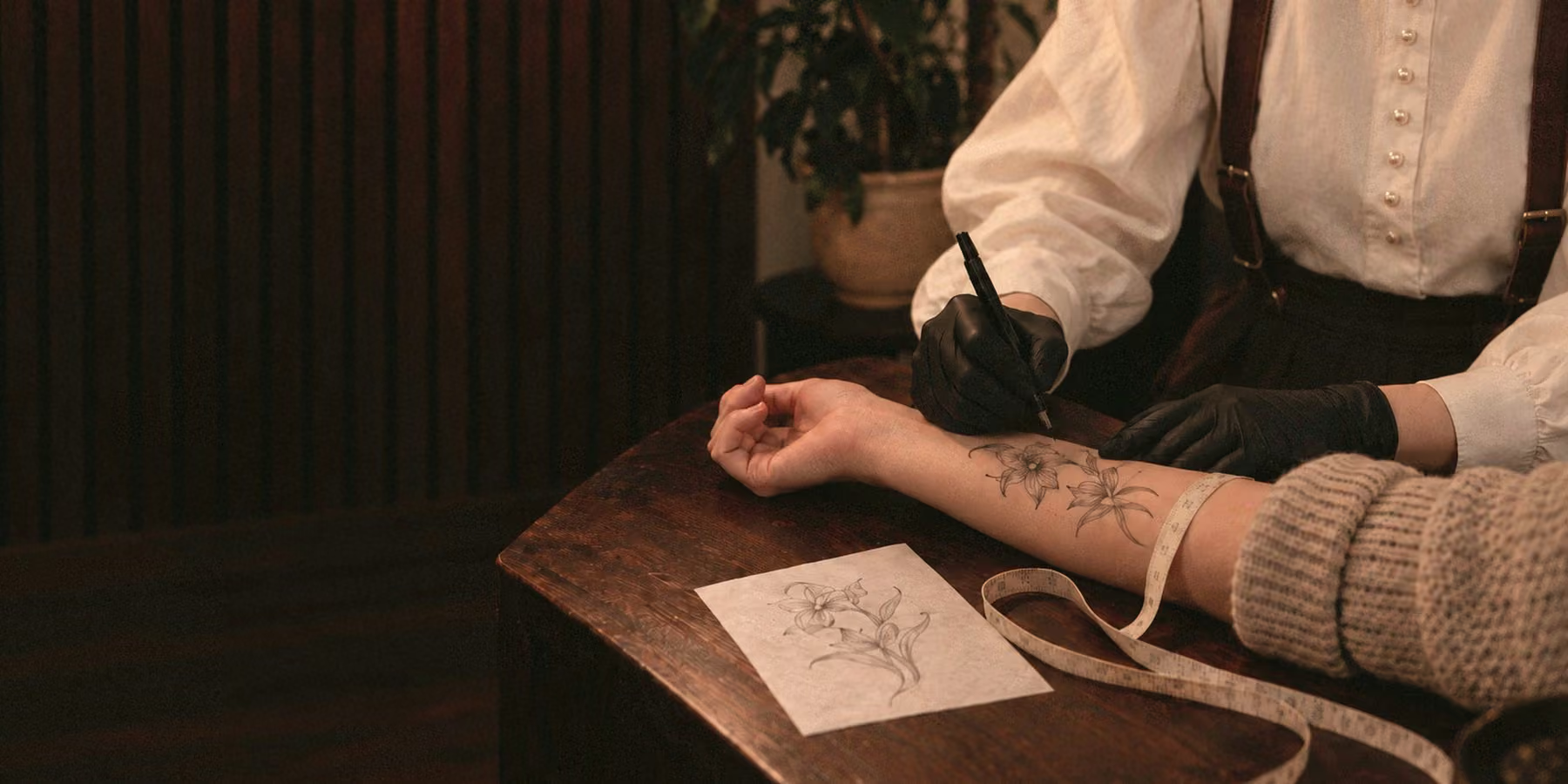

A reference is a picture that shows your artist what you have in mind: the style, mood, line weight and composition. Three to five examples you like and one or two you don’t are enough. You can take inspiration from someone else’s tattoo, but it isn’t copied in full: your artist draws a new design for you.
What a reference is and why you need one
It’s hard to explain what “delicate” or “graphic” means: everyone pictures something different. A reference helps bridge that gap. It shows the artist what you actually like, even if you struggle to put it into words.
A reference can be anything: a tattoo, an engraving, a photo of a plant, a pattern on a plate, a still from a film. The more varied the sources, the more interesting the design.
Where to look
- Artists’ portfolios. You can see how an idea looks on actual skin and how it heals.
- Pinterest and illustration collections. Good for mood and composition, but full of copies of other people’s work.
- Old engravings, botanical atlases, museum collections. A source of lively linework you won’t find in your feed.
- Your own photos. A flower from the garden, your pet’s silhouette, the view from your window — the most personal references of all.
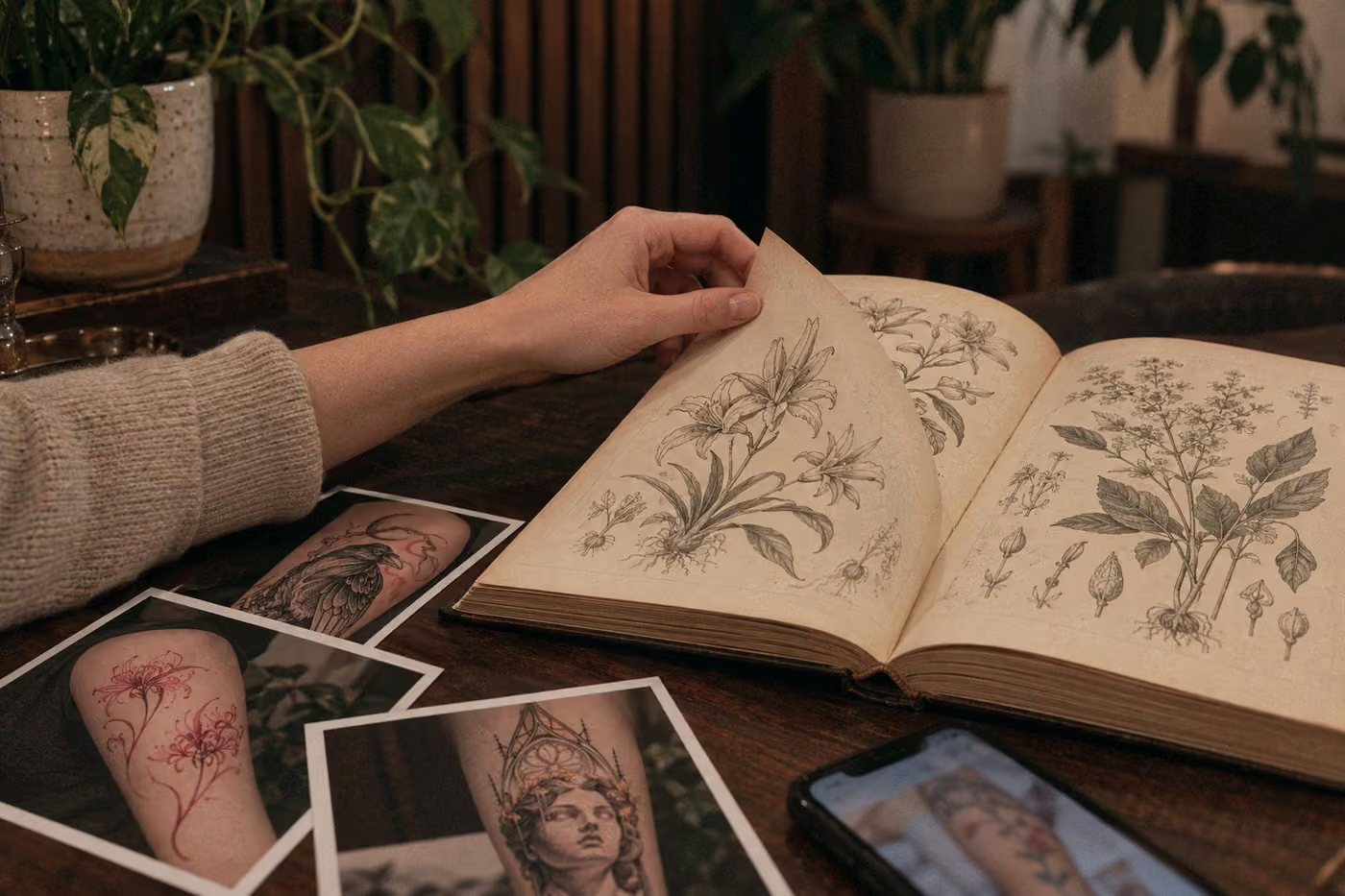
How many pictures you need
The sweet spot is three to five you like and one or two you don’t. With twenty pictures, it’s hard for the artist to see what they have in common, and the conversation turns into choosing between them.
It helps to note under each picture exactly what you like about it: the lines, the subject, the layout, the colour. “I like this leaf, but not the whole bouquet” is a really valuable hint.
Why you don’t copy someone else’s tattoo
Someone else’s tattoo is another artist’s original design and often tells a personal story. Copying it exactly is unfair to the artist and almost always gives you a worse result: the design was made for a different body, a different placement and different skin.
The usual practice is to take an idea or a technique from someone else’s work and ask your artist to make their own version. That way your tattoo will be one of a kind.
If an artist is happy to copy someone else’s work exactly without asking any questions, that’s a reason to think twice. More in “Red flags when choosing an artist”.
How to show your references to the artist
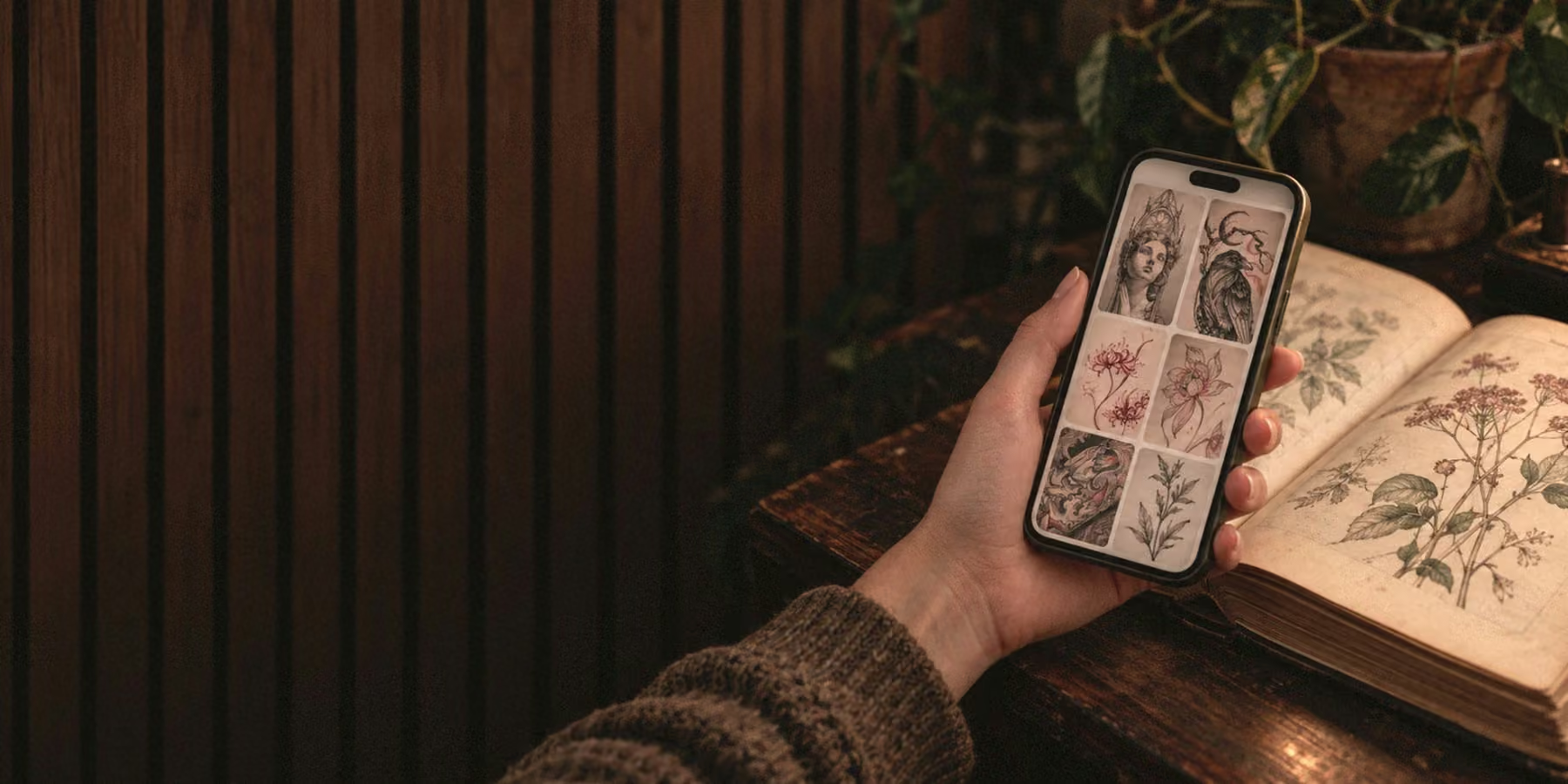
- Keep them in one folderOne album on your phone or one board — don’t send pictures one by one over the course of a week.
- Note what mattersA few words for each: what you like, what you don’t.
- Add a photo of the spotA photo of the arm or collarbone where you want the tattoo helps your artist estimate the size straight away.
- Be ready for changesThe artist may suggest changing the composition so the design sits better on your body.
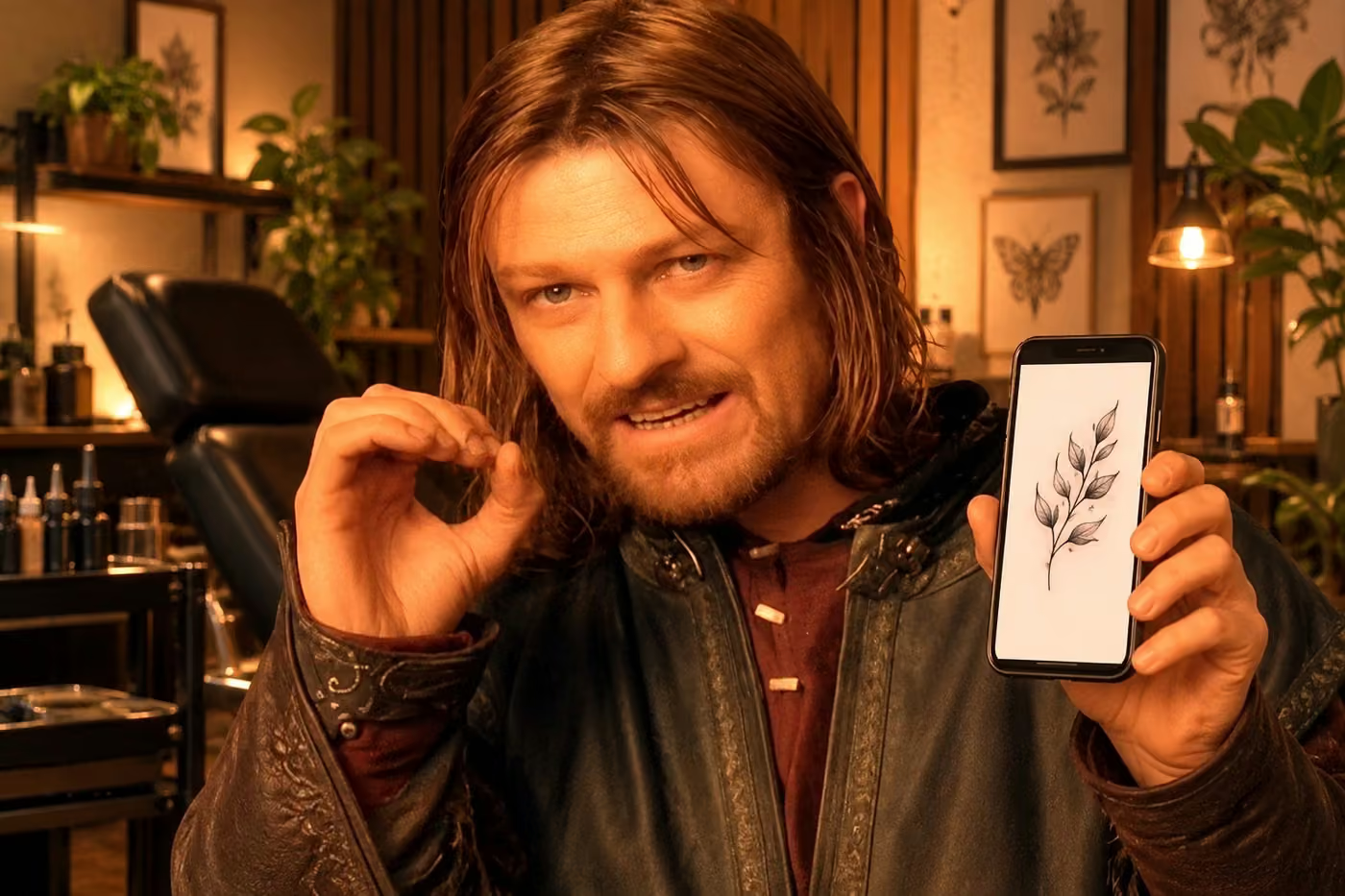
Frequently asked questions
Can't find your question? Message me on Telegram or Instagram. I reply personally.
Can I bring an AI-generated picture?
Yes, as a mood reference. Bear in mind that pictures like these often can’t be tattooed as they are: the design will still need to be drawn from scratch.
What if I like references in different styles?
Show them all and explain exactly what catches your eye in each one. The artist will help you pick one style or carefully combine elements from the different references.
Do I need references if I’m choosing one of the artist’s ready-made designs?
No. Just choose the design and discuss the placement and size.