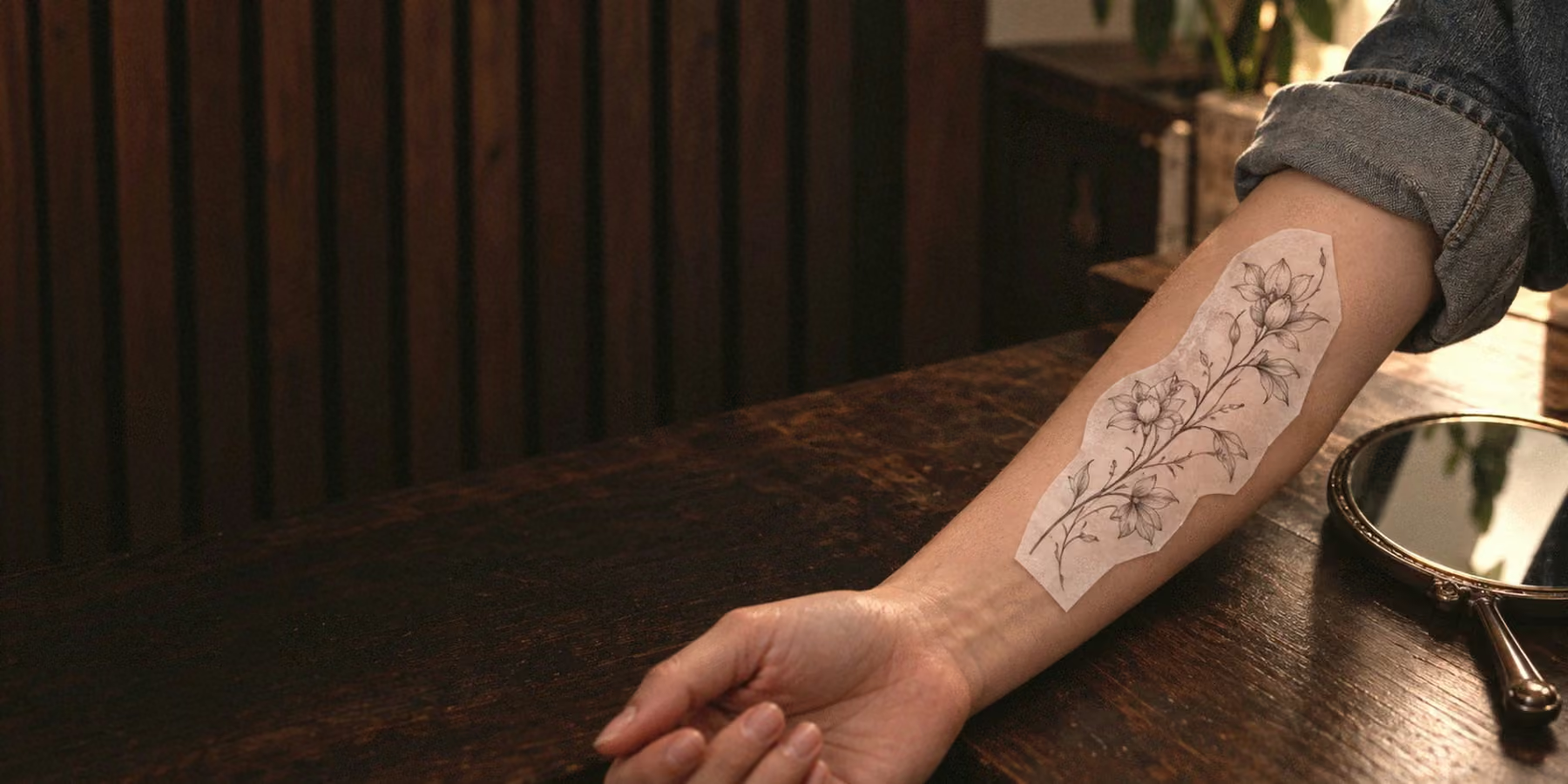

Choose the placement alongside the design: each part of the body has its own shape and amount of space. Think about whether you want to see the tattoo yourself and whether you want to show it to others, how worried you are about pain, and how the tattoo will heal and age in that spot. Try the design on your body. A look in the mirror often makes the choice clearer.
The design should follow the shape of your body
Your body isn’t flat like a sheet of paper. It curves, moves and changes shape when you lift your arm or sit down. A well-placed tattoo follows the lines of the body rather than cutting across them.
- elongated designs sit well along the forearm, the shin or the spine;
- round and fan-shaped ones on the shoulder, shoulder blade or thigh;
- symmetrical ones in the centre: the chest, the back, the back of the neck;
- small standalone designs on the wrist, the ankle or behind the ear.
You’ll find details on each area in the “Body area directory”.
Who will see the tattoo
One of the first questions is who the tattoo is for — you or other people. You see a design on your forearm every day; one on your back, only in the mirror or in photos.
- Always visible — hands, fingers, neck, face. Hard to hide.
- Visible when you want — forearm, shoulder, ankle, collarbone. Covered by a sleeve or clothing.
- Visible to almost no one — back, ribs, thigh, shoulder blade.
If a dress code matters, choose an area that’s easy to cover. A field-by-field breakdown is in “Tattoos and work”.
Where tattoos hurt more or less
Tattooing hurts more where the skin is thin, the bone is close to the surface or there are lots of nerve endings. It hurts less where there’s muscle and a layer of fat.
- More sensitive: ribs, feet, hands and fingers, collarbones, the inner arm, behind the knee, the elbow.
- Less painful: the shoulder, the outer forearm, the thigh, the calf.
If this is your first tattoo and you’re nervous about the pain, start with the shoulder, the thigh or the outer forearm. Ribs and feet are best left for later, once you know how you handle a session.
How the session itself works and what helps you get through it is explained in “How a tattoo session works”.
Placements that are harder to heal
Tattoos are harder to heal where the skin moves a lot, rubs against clothing or gets washed often. That includes hands and fingers, feet, elbows, knees and the inner wrist. A fresh tattoo on your foot is hard to protect inside a shoe, while one on your hand is hard to keep away from water and soap.
Tattoos on the fingers and the side of the hand often lose some ink as they heal, and fine lines there tend to blur. Be prepared for a touch-up and for the design to soften over time.
For care during the first few weeks, see “Daily tattoo aftercare”. For touch-ups, see “Tattoo touch-ups”.
How placement affects the way a design ages
A tattoo ages along with your skin, and placement plays a big part in that. Sun exposure has the biggest effect: the hands, forearms and neck are exposed most often, so tattoos there fade faster.
The second factor is changes in your body. The belly, sides, thighs and breasts change noticeably when you gain or lose weight, or during pregnancy. A design there can stretch or distort. More on this in “How a tattoo ages” and “Tattoos over scars and stretch marks”.
Placement and your lifestyle
Think about what you’ll be doing in the first weeks after the session. A fresh tattoo mustn’t be rubbed, soaked for long or left in the sun.
- running and gym workouts can be awkward with a fresh tattoo on your foot, your knee or under a backpack strap;
- summer and the seaside — exposed areas are harder to protect from the sun and water;
- belts, bra straps and tight waistbands rub against tattoos on the waist and shoulders.
Find out when you can return to your usual routine in “Back to normal after a tattoo”.
How to try out a placement
The best way to choose a placement is to see the design on yourself. It takes one evening.
- Print the design at the right sizeCut it out and hold it against your body, or trace the outline with a marker.
- See how it looks in motionRaise your arm, sit down and turn around. The design shouldn’t look disjointed when you bend or move.
- Check it with clothes onPut on what you usually wear: can you see the tattoo, and do you want to?
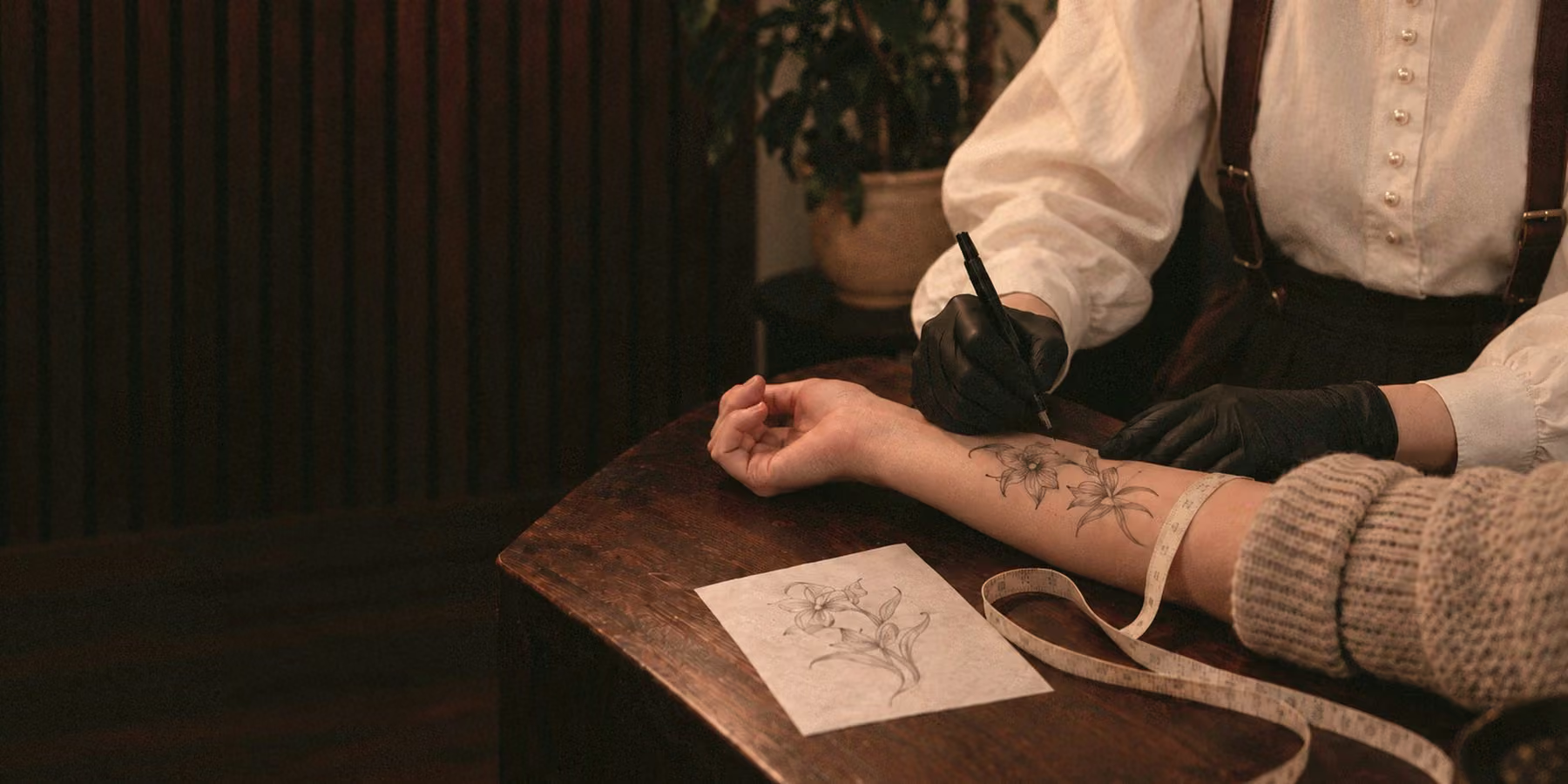
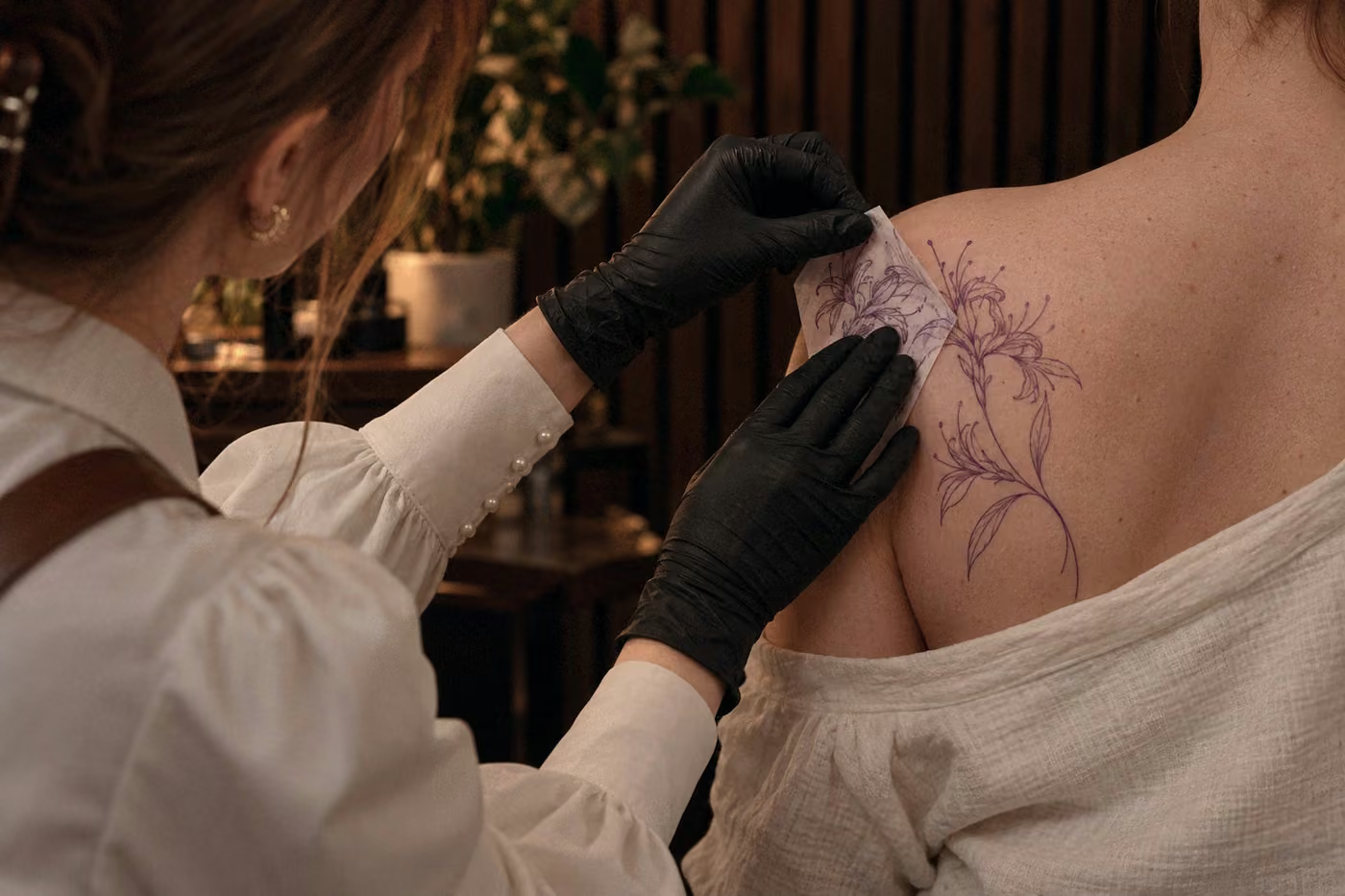
- Decide with your artistAt the consultation, the artist will sketch the design on your skin with a marker or hold a printout against it and suggest where to move the design. The stencil is applied on the day of your session.

Frequently asked questions
Placement comes up at almost every consultation. Can't find your question? Message me on Telegram or Instagram. I reply personally.
Where does a tattoo hurt least?
Usually on the shoulder, the thigh and the outer forearm. But everyone’s pain threshold is different, and how you feel on the day matters just as much as the placement.
Can I get my first tattoo on my hand or neck?
You can, but bear in mind that these spots are always visible and harder to heal. Many artists advise starting with a less noticeable area.
What if there’s a mole where I want the tattoo?
The design either goes around it or is moved. More on this in “Tattoos and moles”.
Can I change the placement on the day of the session?
Yes, if the stencil on your skin doesn’t look the way you expected. Sometimes it’s enough to move the design a couple of centimetres or turn it.