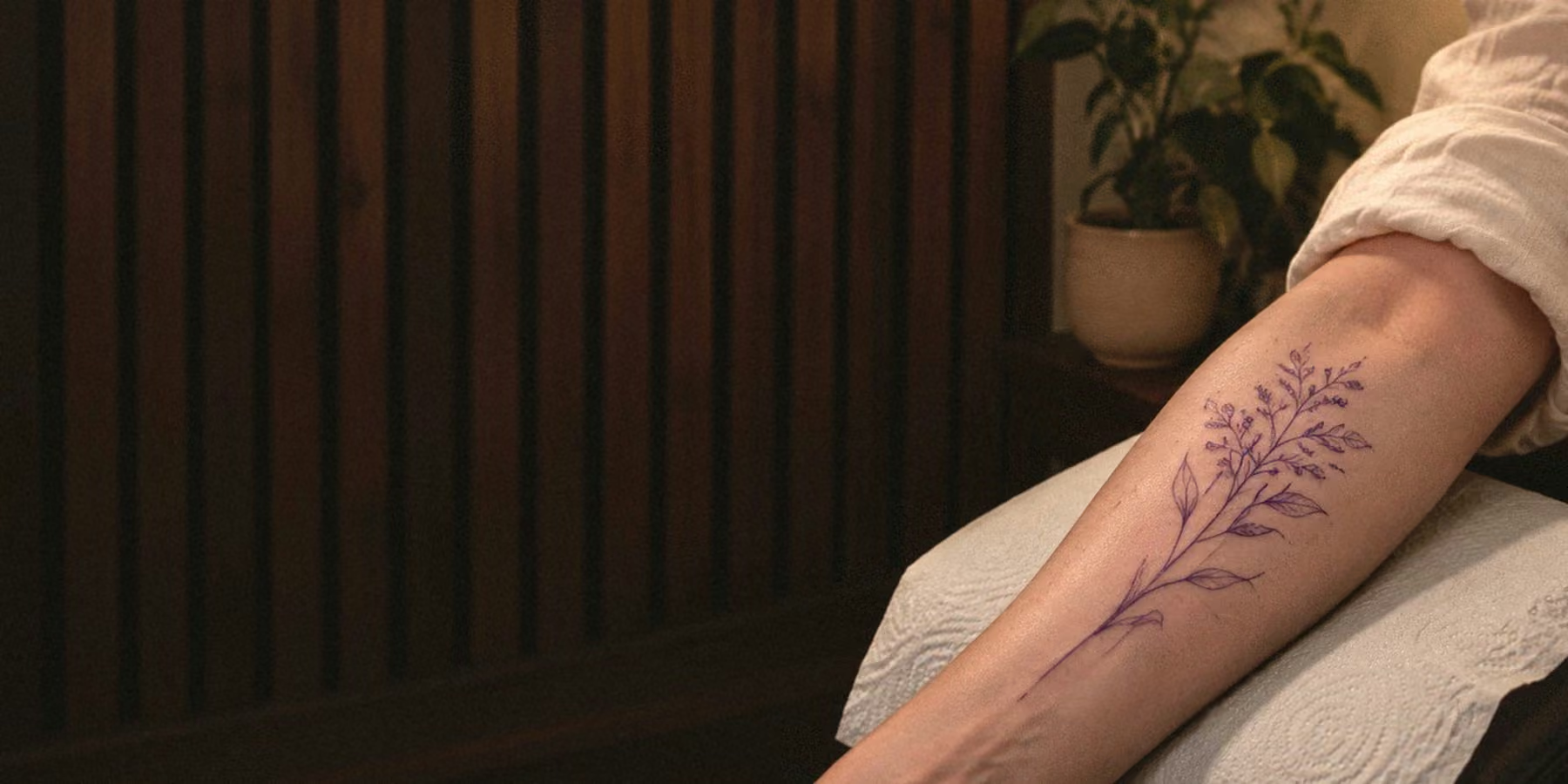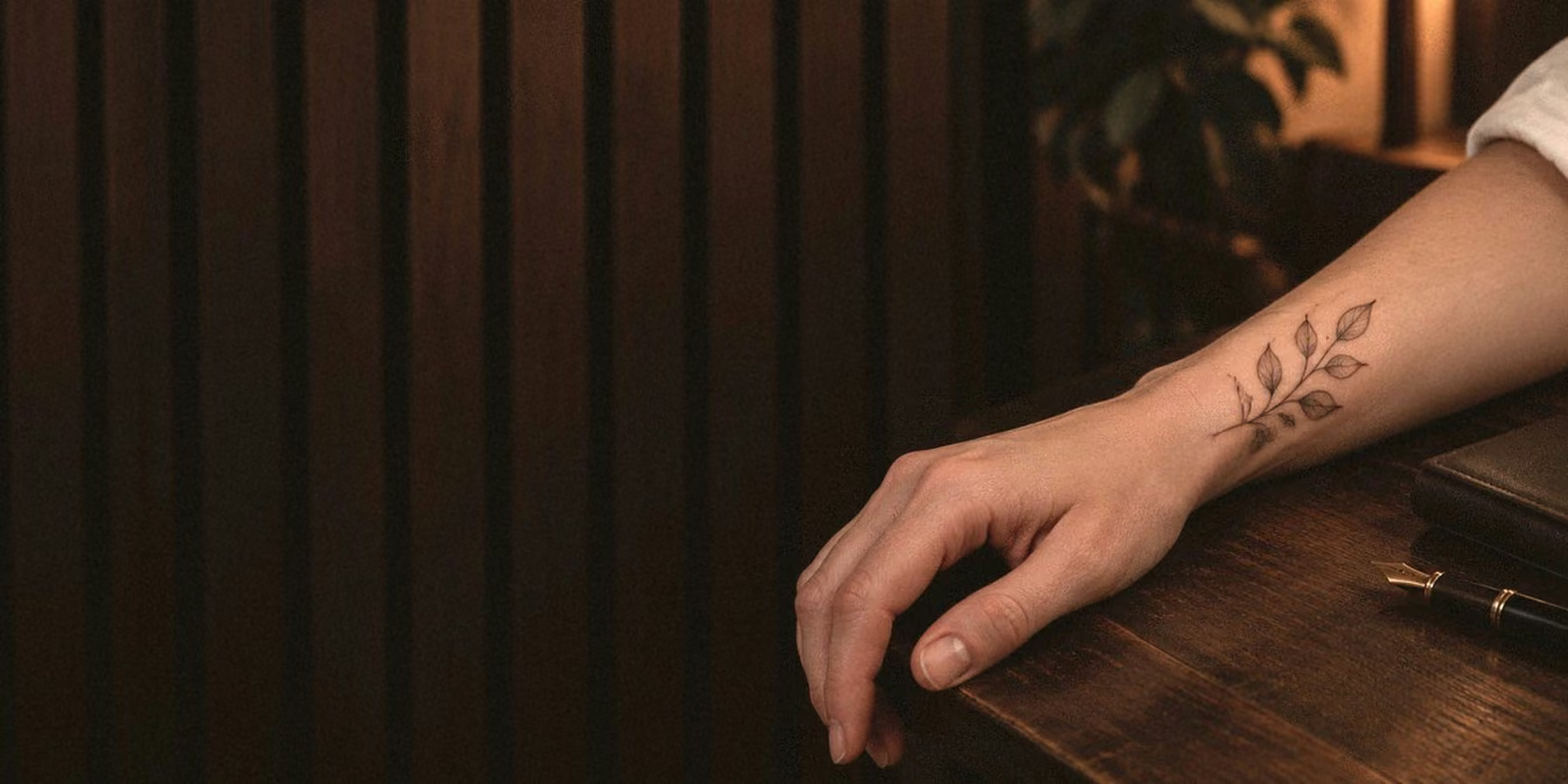

In most professions, tattoos stopped getting in the way of finding a job or moving up a long time ago. The rules are stricter where there's a uniform or a strict dress code: the armed forces and police, aviation, parts of healthcare and the service industry, some banks and law firms. If you're unsure, choose a spot an ordinary shirt will cover, and check your employer's rules before the session.
How tattoos are seen today
Just twenty years ago, a tattoo on your arm could cost you a job. Today, in offices, IT, design, retail and education, it barely raises an eyebrow. A neat, small piece is seen as part of your style, not as an act of rebellion.

Attitudes still depend on the country, the city and the particular company. Large international companies tend to be more relaxed about tattoos; in small family businesses and conservative industries, it varies.
Where the rules are stricter
Rules are stricter in jobs where you wear a uniform or your appearance is part of the company's image. It's usually not about banning tattoos altogether, but about what has to be covered while you're working.
- Uniformed services. Army, police, security: the rules usually concern visible areas and what the design shows.
- Aviation and hotels. Cabin crew and front-desk staff are often not allowed to show tattoos while in uniform.
- Healthcare. You may be asked to cover designs on your hands and forearms, but this is more often about hygiene than appearance.
- Banks, law firms, the civil service. It comes down to each organisation's dress code: in some it's enough to keep a tattoo under your sleeve, in others they're stricter.
- Working with children. What usually matters isn't the fact that you have a tattoo, but what it depicts.
The rules vary a lot by country and employer. If you're joining the military or police, an airline or the civil service, check the appearance requirements before the session: they're usually set out in writing.
Which tattoos will your work clothes cover?
Think about the clothes you wear to work when choosing a placement. If you wear long-sleeved shirts at the office, you have plenty of choice.
- Covered by a shirt or blouse: shoulder, forearm, back, chest, ribs, stomach.
- Covered by trousers: thigh, knee, calf, ankle.
- Almost always visible: hands, fingers, neck, behind the ear, face.
If you're unsure about work, start with the shoulder or the inner forearm. A sleeve keeps them covered at work, but you can show your tattoo at home or in summer.
For more about each area, see “Choosing your tattoo placement” and the “Body area directory”.
Size and subject both matter
A small flower on the wrist and an aggressive image of the same size come across very differently. Neutral designs such as botanicals, graphic work and minimalism don't usually raise any questions, even where the dress code is strict.
Be more careful with lettering and symbols: a word in a foreign language or a sign whose meaning you don't fully know can be read quite differently from what you intended. More on this in “Lettering tattoos” and “Symbols and cultural context”.
Interviews and the first few weeks
You don't have to hide your tattoo at an interview. Dress the way people do at the company and read the situation.
- look at photos of the team on the company website or social media: it makes it easier to see how people dress there;
- if the dress code isn't clear, ask about it at the interview or ask HR; it's a perfectly normal question;
- for the first few weeks, follow your colleagues' general style, and you'll soon see what's normal there.
Before a tattoo in a visible spot
Hands, fingers and the neck are beautiful placements, but you can't hide them under a sleeve. Before you book, be honest with yourself:
For a single day, a visible tattoo can be covered with high-coverage body foundation, a skin-coloured plaster or a thin sleeve. That's not practical every day, so it's best to choose the placement in advance.
A fresh tattoo and the working week
For the first few days, the tattoo is covered with film and needs care. It's handy to book the session just before a weekend, so you can get through the most uncomfortable days of healing in peace.
If your job is dusty or physical, or involves gloves or a tight uniform, let your artist know, and together you'll choose the placement and date. For when you can return to sport and your usual routine, see “Back to normal after a tattoo”.

Frequently asked questions
Questions people ask about work before their first visible tattoo. Can't find your question? Message me on Telegram or Instagram. I reply personally.
Can I be fired because of a tattoo?
That depends on the laws of your country and your contract. It usually only becomes an issue where appearance rules are written into your employment contract or internal policies.
Do I need to mention my tattoo at an interview?
No, as long as it doesn't break the company's rules. If your field is strict, it's better to ask about the dress code in advance.
Which areas will business clothes definitely cover?
Shoulder, back, chest, ribs and thigh. A long sleeve covers the forearm, but a short one doesn't.
Can I have the tattoo removed later if I change jobs?
Yes, with laser treatment, but it takes a long time and doesn't always leave the skin unmarked. More in “Tattoo removal”.