
Warning signs usually show up before the session: pressure to book or pay quickly, no healed work in the portfolio, vague answers about price, poor cleanliness, needles that aren't opened in front of you, or a willingness to tattoo anything, anywhere. One warning sign is a reason to ask questions; two or three are a reason to look for another artist. You can walk away at any stage, even when you're already in the chair.
Red flags in messages
The first signs show up before you've even met. Messages reveal how an artist treats clients and their own work.
- Rushes you to pay a deposit. “Transfer it today or you'll lose the slot” — before you've even discussed the idea.
- Asks no questions. Doesn't ask about placement, size or your skin — just gives you a date straight away.
- Agrees to everything. A tiny portrait on a finger, an exact copy of someone else's work — “no problem”.
- Is rude or disappears. If that's how it is at the start, it's unlikely to get better.
What a normal exchange looks like — see “Your first message to a tattoo artist”.
Red flags in the portfolio
The portfolio is the main proof of skill. Be on your guard if:
- the feed is full of designs, with hardly any photos of tattoos on skin;
- there's not a single healed piece, only fresh ones;
- the portfolio covers every style from realism to ornamental, but none of the work looks confident;
- the same images turn up on other artists' pages in a reverse image search;
- the lines are shaky and uneven in thickness, with blotches and gaps around them.
For advice on assessing an artist's work, see “How to choose a tattoo artist”.
Red flags in the studio
Cleanliness isn't a matter of taste. The rule is simple: if hygiene standards aren't met, don't start the session.
- the needle or cartridge came from unsealed packaging, or the packaging wasn't opened in front of you;
- the artist isn't wearing gloves, or picks up their phone and goes back to your skin in the same gloves;
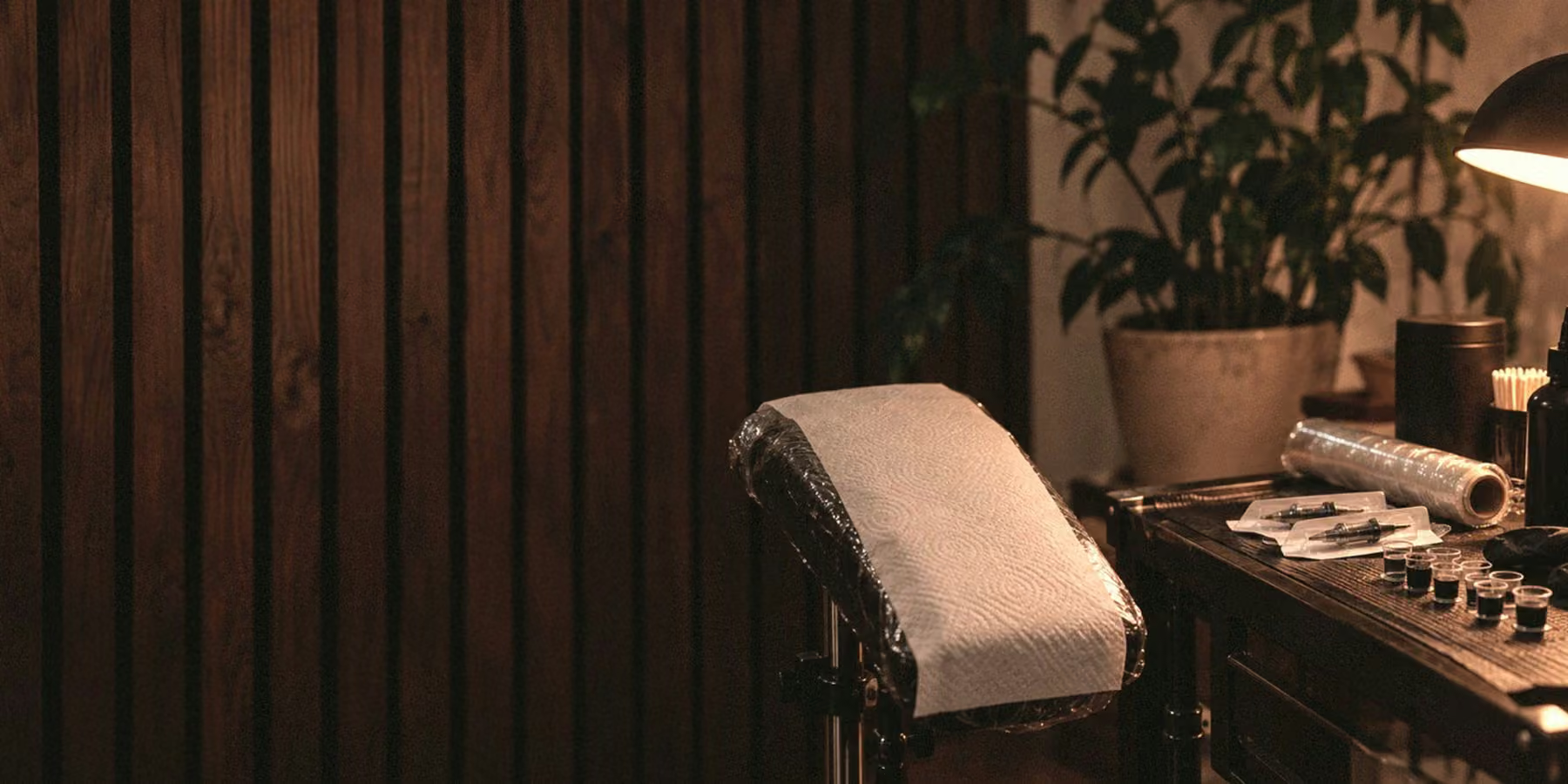
- the machine and armrest aren't covered with film;
- they work in the kitchen or wherever people eat;
- the ink is in an unlabelled bottle.
A reusable needle, or one whose packaging wasn't opened in front of you, is a reason not to start the session. This is a matter of health, not politeness. More in “Tattoo studio safety”.
Pressure and manipulation
A good artist makes suggestions; a bad one pressures you. That can sound like “the discount is only for today”, “other artists don't know anything about this”, or “let's go bigger, it's better” without explaining why. Comments about your body or attempts to talk you into a placement you don't want are even worse.
If an artist won't say “no”, even when a design is too small for the chosen placement, that's a warning sign too. Turning an idea down or suggesting an alternative shows they're thinking about the result rather than just filling a slot.
Red flags when working on the design
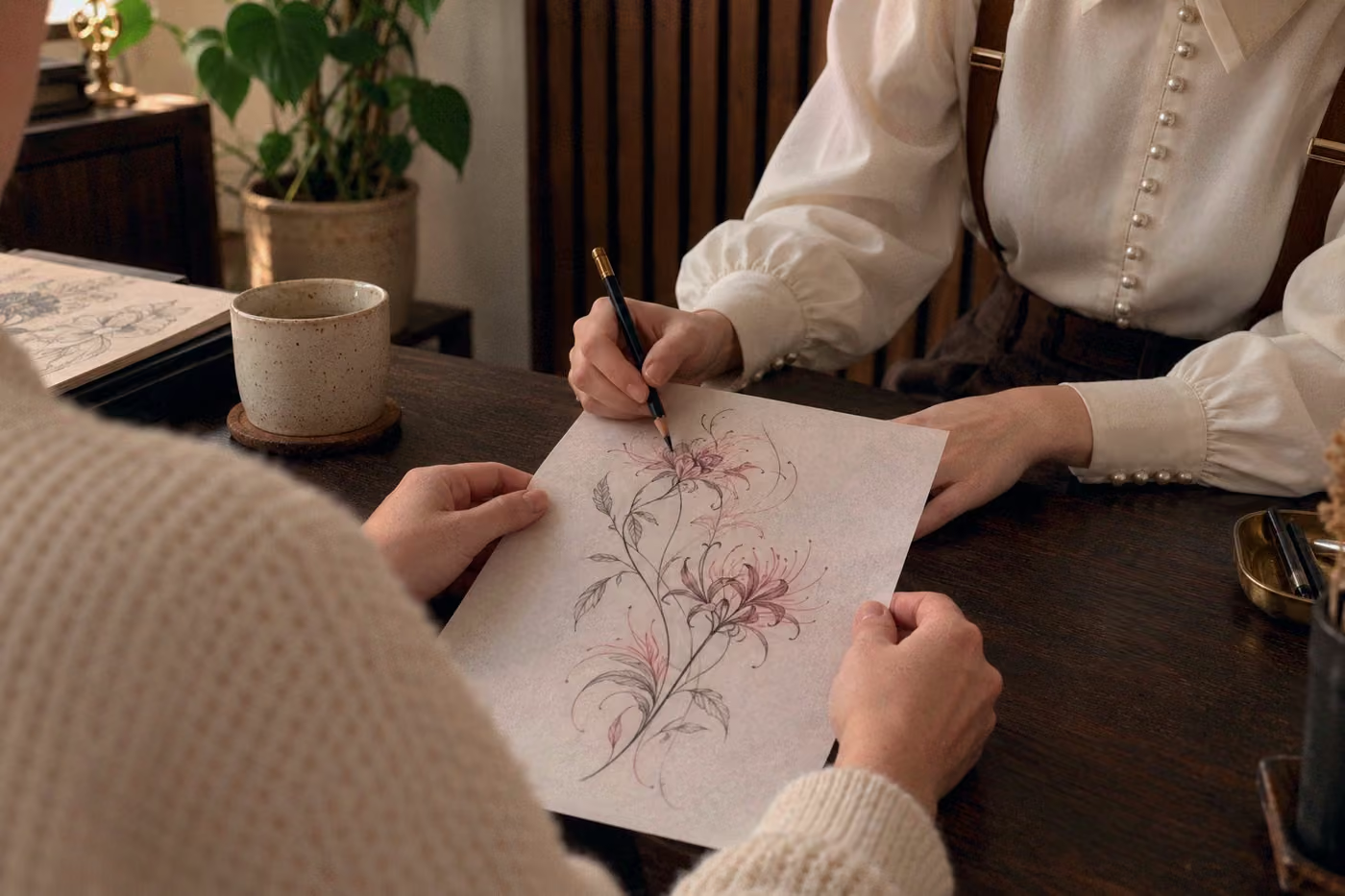
The design is what you and the artist agree will go on your skin. Be wary if the artist won't show you the design before the session (“I'll draw it on the day, you'll love it”), refuses to make changes or offers to copy someone else's tattoo exactly.
For an explanation of the design process, see “Your tattoo design”.
What isn't a red flag
Some things are off-putting, but actually point to a good artist:
- A deposit. It's standard practice and reserves the artist's time. What matters is that the terms are clear in advance — more in “Deposit and booking rules”.
- A waiting list that's several weeks long. More likely a sign of demand than a problem.
- The artist tries to talk you out of something. It means they can see a risk you haven't thought of.
- Questions about your health. The answers affect how the session goes and how your skin heals.
How to walk away if something's wrong
You can walk away at any stage: after messaging, at the consultation or even when you're in the chair, as long as tattooing hasn't started. Having paid a deposit doesn't oblige you to put up with something that feels unsafe. Keep your messages and calmly say you've changed your mind. For more on your rights during the session, see “Tattoo client rights and responsibilities”.
Frequently asked questions
People usually ask about warning signs once they've already been messaging an artist. Can't find your question? Message me on Telegram or Instagram. I reply personally.
Will I get my deposit back if I leave because of a red flag?
It depends on the terms you agreed in advance. If the artist breached hygiene standards or the terms, that's a strong argument for asking for your money back. That's why it's worth keeping your messages.
Is a low price a red flag?
Not in itself. But if the price is much lower than other artists with similar skills in your city charge, ask why. The difference often comes down to cheaper materials or less experience.
The artist works from home — is that bad?
Not always. There are tidy, well-run private studios. What matters is that the work area is separate and needles and other single-use supplies are never reused.
What if I only noticed a red flag after the session?
Keep a close eye on the healing, and if you get redness, pus or a fever, see a doctor. What's normal and what isn't — see “Normal or a warning sign”.