
Getting a tattoo makes sense if you want it for yourself and the idea still means something to you a few weeks later. You also need to be willing to take your time choosing an artist and allow for the cost, time and a couple of weeks of careful aftercare as well as the session itself. It’s normal to have doubts along the way.
How to know you’re ready
Being ready doesn’t usually mean feeling completely certain. More often, you feel calm: you still want the tattoo, but you don’t feel you have to rush. See which of these sound like you:
If almost everything on the list sounds like you, you can move on to choosing an artist and a design. If the decision came after an argument, on a dare or out of an urge to change something about yourself right now, it’s better to pause: impulses like that often pass, but the tattoo stays.
Why do you want a tattoo?
There’s no single right reason. Some people want to mark an important event, some simply want a beautiful picture on their skin, and others want to cover a scar. What matters is that you’re doing it for your own reasons, not someone else’s.
You’re unlikely to regret a tattoo if:
- you like how the design looks, without needing to explain it;
- it’s connected to a person, place or event whose meaning won’t change for you;
- you’ve wanted that particular style for a long time and have finally found your artist.
People are more likely to regret getting whatever tattoo is fashionable that season, a partner’s name at the start of a relationship, or a design chosen to win someone’s approval. You’re free to choose any of these, but it’s worth waiting a month to see whether you still want it.
A tattoo should be something you like even if nobody else ever sees it. If your answer to “why?” starts with “so that they…”, it’s better to wait.
How to decide without rushing
You rarely decide to get a tattoo in a single evening. Usually, you take it a step at a time, from saving a picture to talking to an artist.
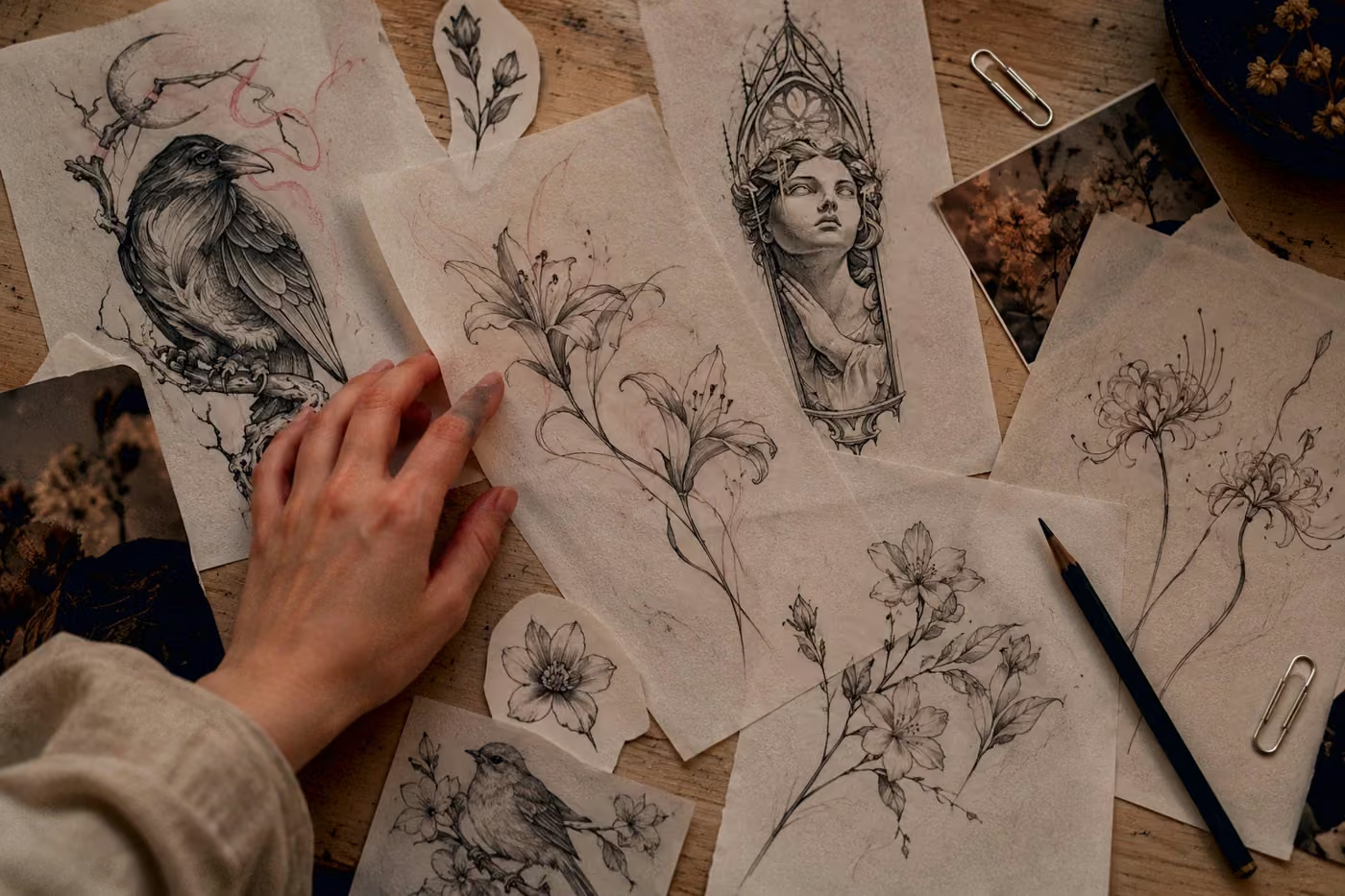
These steps can help you take your time without getting stuck:
- Let the idea settleSave your references in a separate folder and come back to them in two or three weeks.
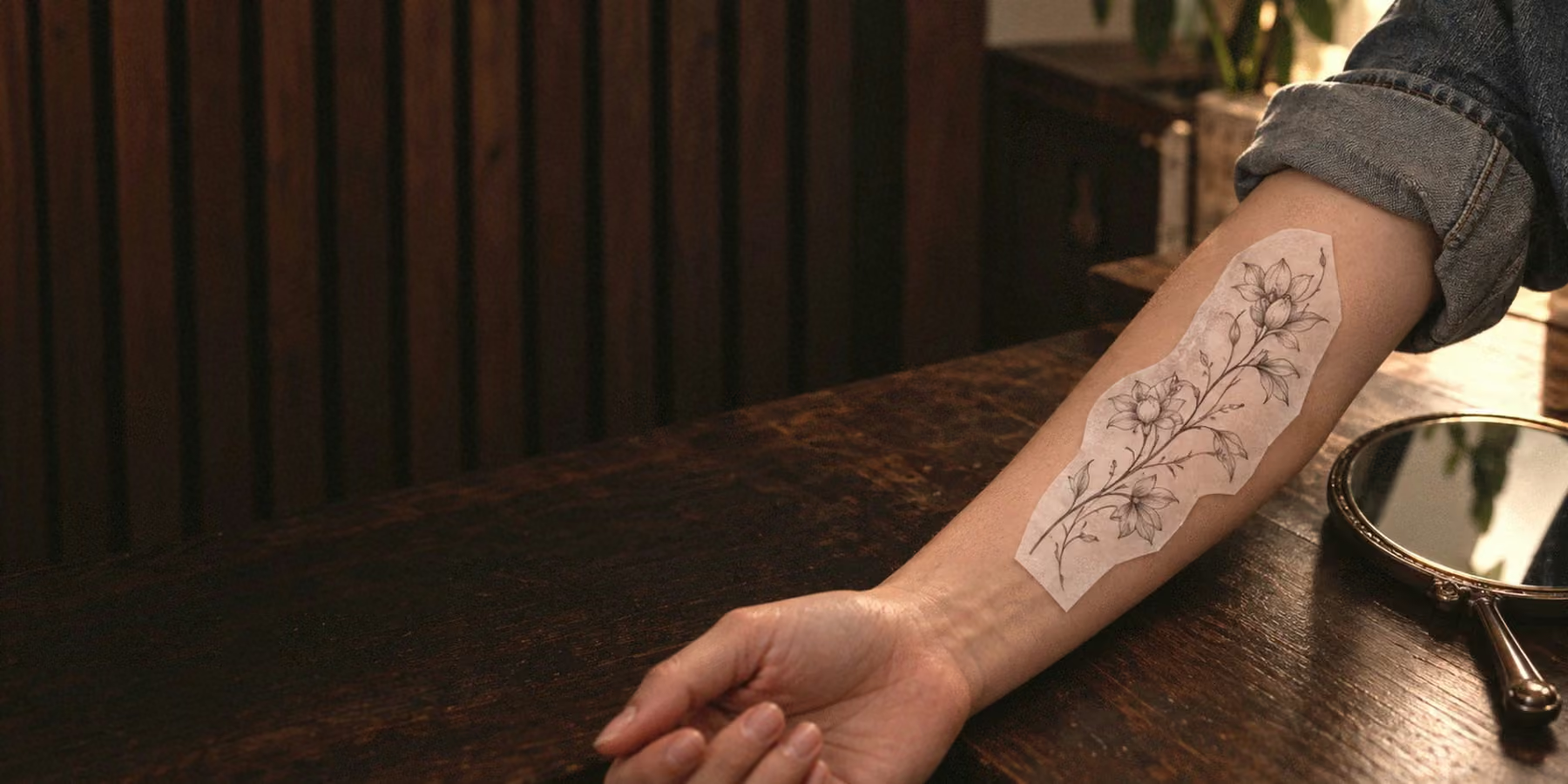
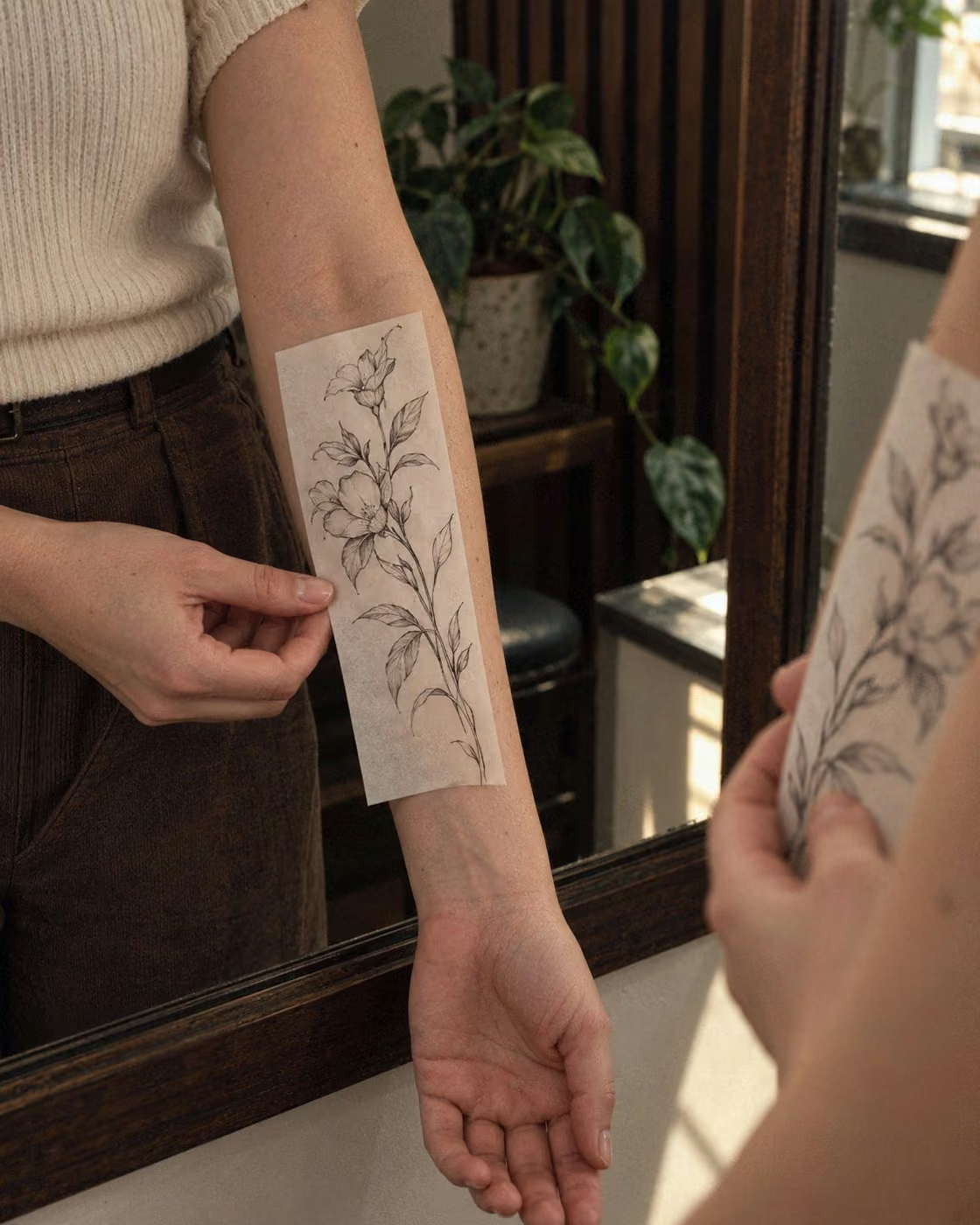
- Try out the size and placementPrint the outline at the right size and hold it against your body. Check it in the mirror with clothes on and while moving.
- Write down your questionsPain, aftercare, cost, timing — that way you won’t forget anything at the consultation.
- Talk to an artistA good consultation helps clear up doubts and doesn’t commit you to anything.
Typical situations
Everyone’s doubts are different, but some situations come up especially often.
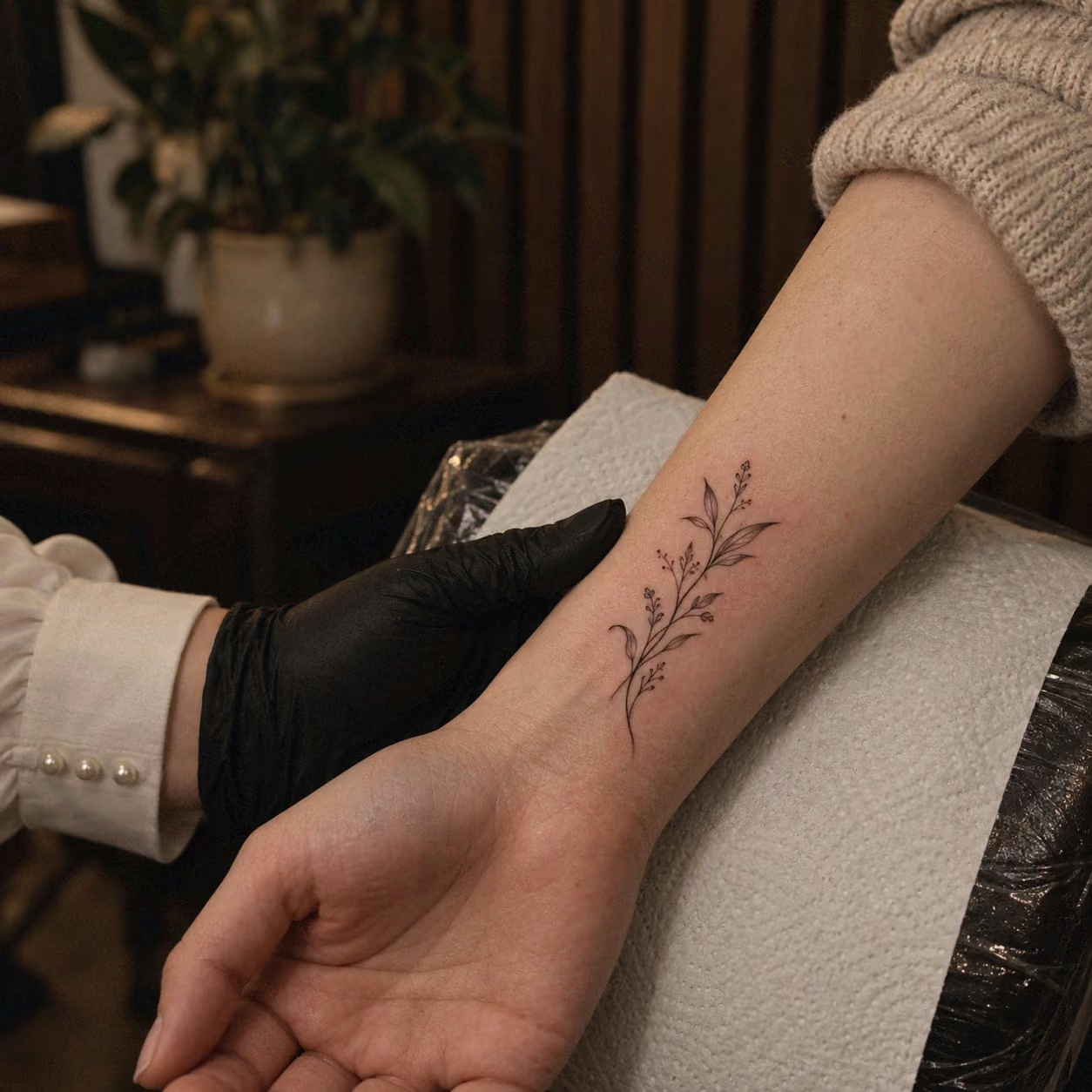 A first tattooStart with a consultation and a small design in a spot that’s easy to cover if you want to.
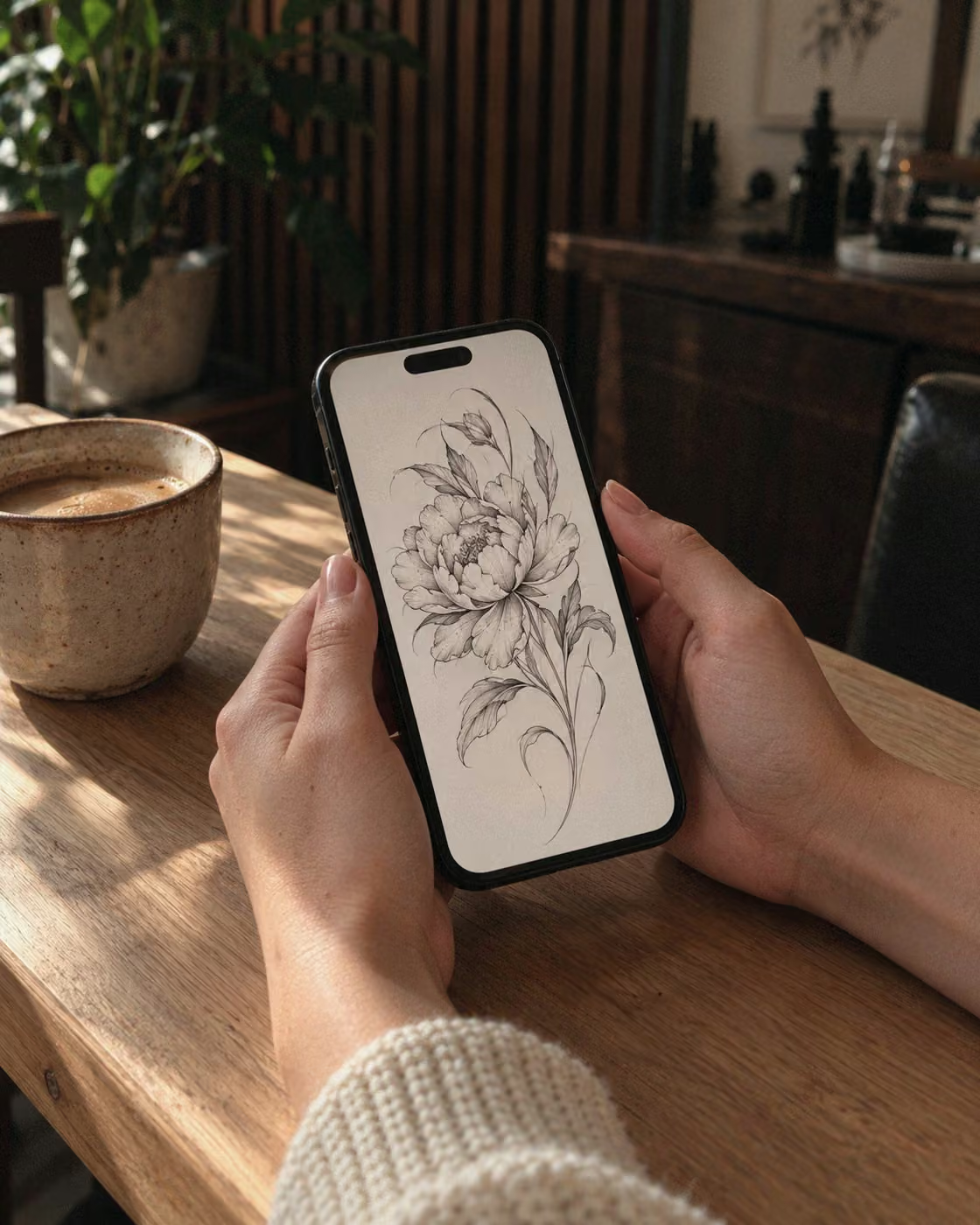 An impulsive ideaSave the reference image and come back to it in a couple of weeks. If you still want the tattoo, you’ll have time to choose an artist.
- A large pieceA sleeve or a back piece means several sessions. Discuss the stages, timing and budget in advance.
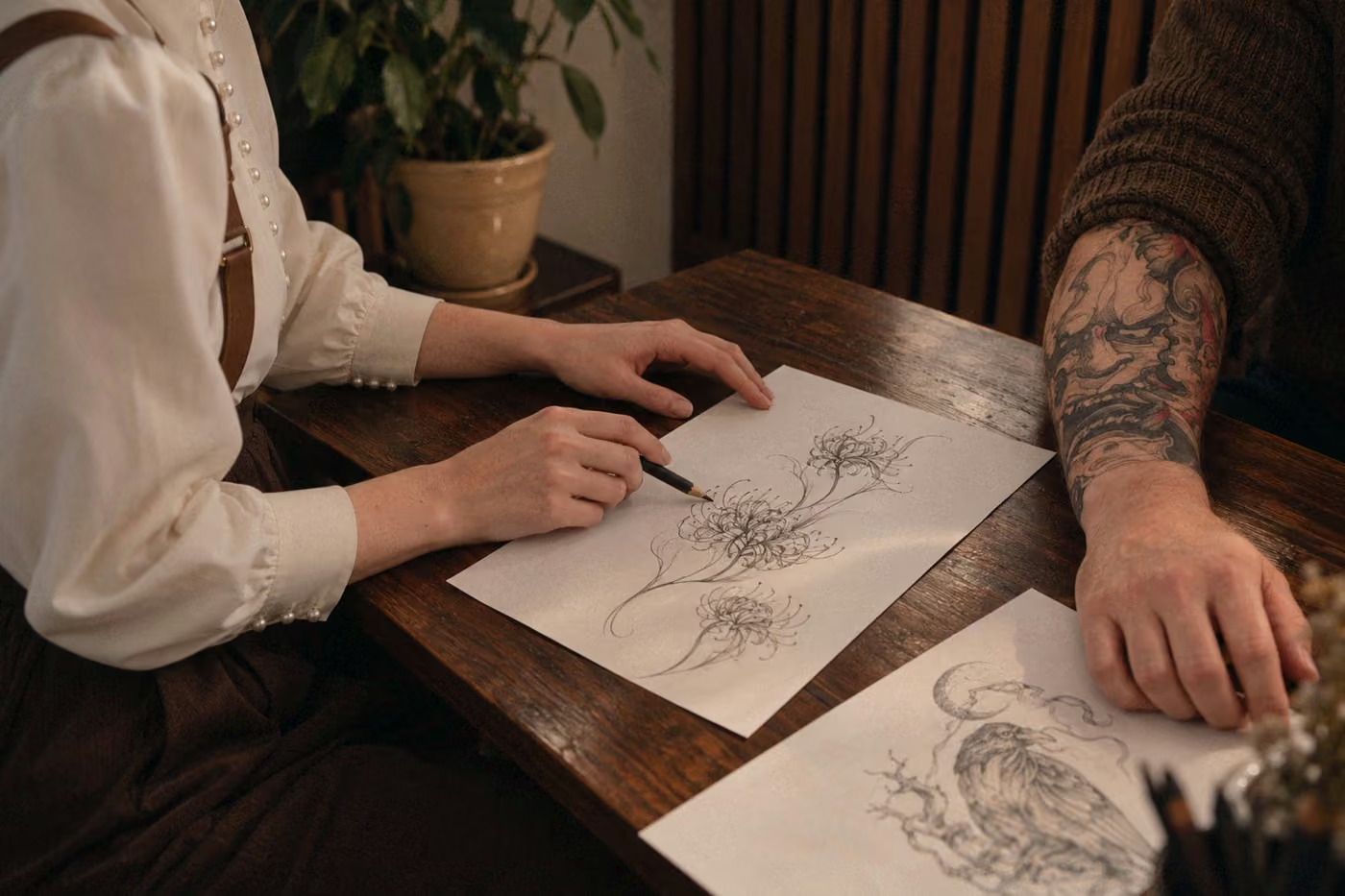 Covering an old tattooShow the old tattoo to the artist first: not every tattoo can be covered up well.
If you don’t have a finished design
Few people bring a finished design, and that’s not a problem. You just need to give the artist a sense of what you like, what you definitely don’t like, and where the tattoo will go. For help turning that into a clear brief, see “Shaping your tattoo idea”.
Bring three to five pictures you like and one or two you really don’t. The pictures you don’t like often help more: they show straight away what to avoid. For advice on finding reference images without copying someone else’s work, see “Tattoo references”.
“I was really nervous for lots of reasons: I didn’t have a proper design, and I was worried about the pain. When I came in, Olya and I put the design together and worked on it until it was exactly what I wanted.”
How to choose an artist
The artist matters more than the studio, a discount or the earliest available appointment. Don’t look at follower counts — look at four things:
- Work in your style. Minimalism and realism are different skills. Look for pieces in the portfolio that resemble your idea.
- Healed work. A fresh tattoo always looks vivid. The quality of the work becomes clearer a month later.
- Cleanliness and single-use supplies. Needles, gloves and film are unwrapped in front of you. That’s the norm, not something to be grateful for.
- A conversation without pressure. A good artist asks questions and may even talk you out of something. A bad one rushes you into paying a deposit.
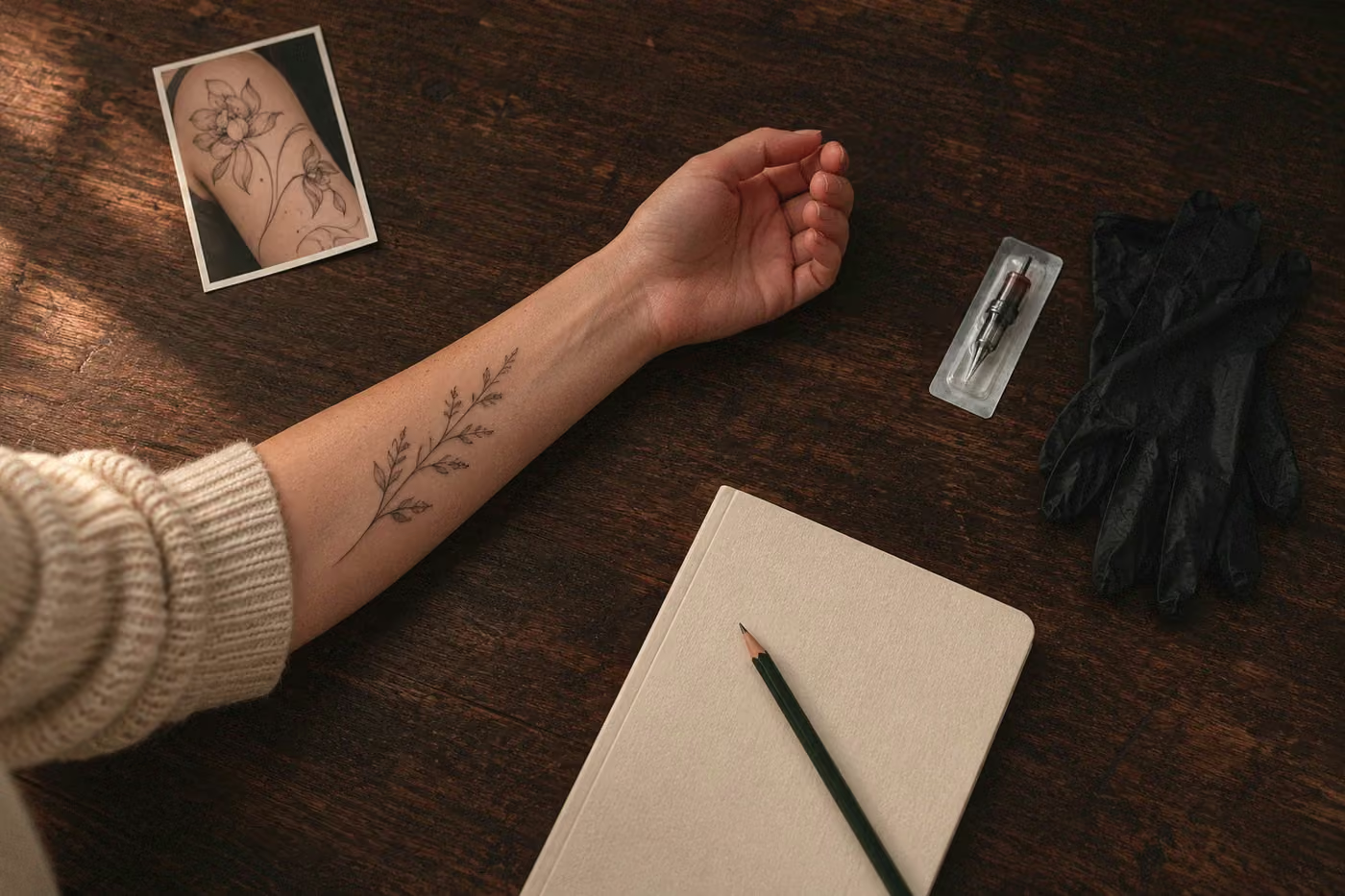 1Work in your styleA portfolio that fits your idea2Healed workQuality shows after a month3Single-use, opened in front of youNeedles and gloves straight from the packet4No pressureYou agree on the design together
- Work in your style
- Healed work
- Single-use, opened in front of you
- No pressure
If something already feels wrong when you’re messaging, trust that feeling. The warning signs are listed in “Red flags when choosing an artist”.
How to prepare for the consultation
The consultation is free and doesn’t commit you to anything. Come prepared, and half an hour can settle more than a month of messaging.
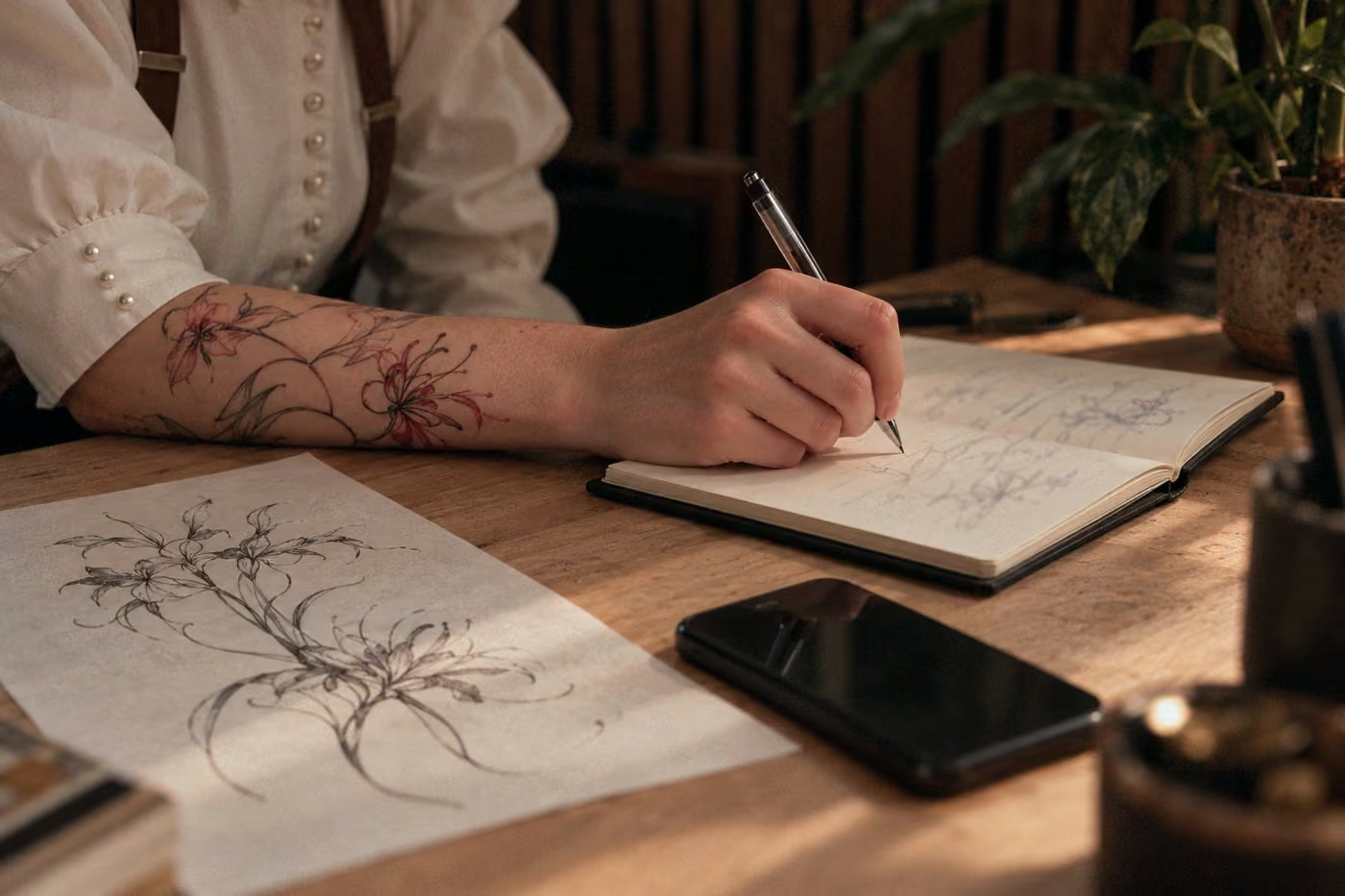
What to ask the artist:
- Does the placement I’ve chosen suit this size and design?
- How many sessions will it take, and how long is each one?
- What will the tattoo look like in 5–10 years?
- What’s included in the price, and do I need to pay a deposit?
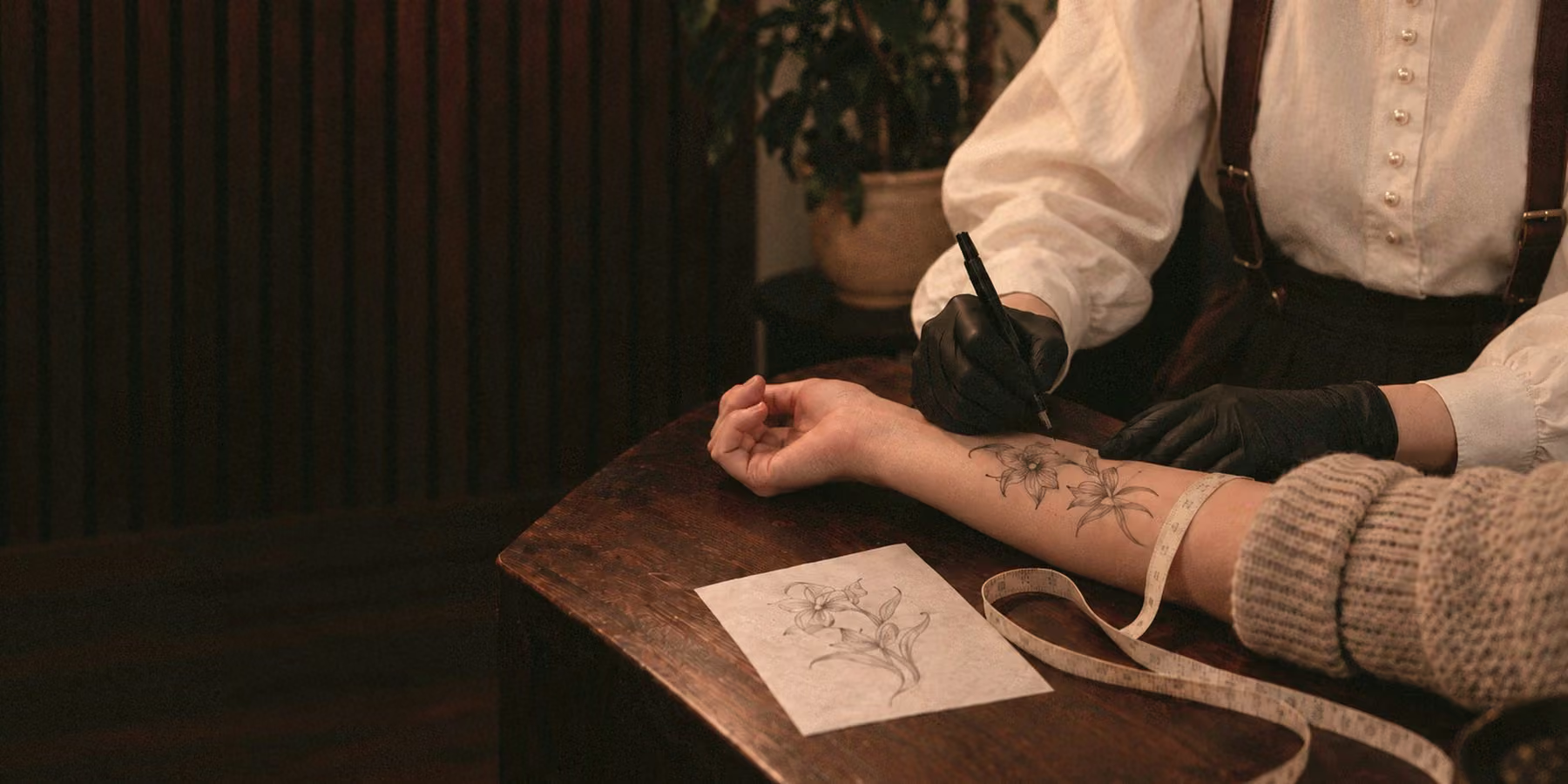
Bring pictures you like and wear clothes that give easy access to the area you want tattooed. The artist can try out the outline on your skin there and then, or draw a couple of lines with a marker.
How much does it hurt?
It hurts, but it’s bearable — that’s what most people say. It feels like a sharp scratch, over and over. The first ten minutes are the most intense; after that your body gets used to it.
Pain depends on three things. First, placement: ribs, feet, collarbones and the inner arm are more sensitive than the shoulder or thigh. Second, session length: it’s harder to bear after three hours than in the first hour. Third, how you feel on the day: a good night’s sleep and a meal before your session matter more than any tip.
Speak up if you need a break. Five minutes off won’t spoil anything, and there’s no point suffering in silence: tense skin takes pigment less well.
How much does it cost?
The price depends on the size, the level of detail and the placement — not on how much colour there is or how “complicated” the idea sounds. A small first piece is usually done in one session.
- Consultation
- free
- Mini tattoo up to 5 cm
- from €80
- Tattoo, 5–15 cm
- from €150
- Aftercare products
- about €15
- Total for a first piece
- from €95
Why two pieces of the same size can cost different amounts is explained in “What goes into the price of a tattoo”.
Health: when to wait or seek advice
Most people can get a tattoo, but some health conditions and circumstances mean it’s better to postpone your session or speak to a doctor first:
- pregnancy and breastfeeding;
- skin inflammation, eczema or psoriasis where the tattoo will go;
- taking blood-thinning medication;
- diabetes, clotting problems, an allergy to pigments.
This guide doesn’t replace a doctor. If you’re unsure, tell the artist about your health in advance and check with a specialist: postponing a session is easier than treating complications.
The full list is in “Restrictions and contraindications”.
When it’s better to put the decision off
Sometimes the right answer is “yes, but not now”. It’s worth waiting before you book if:
- you feel pressure from a partner, friends or the artist;
- you’re choosing an artist only because they have the earliest available appointment;
- you won’t be able to keep the tattoo out of the sun and water over the next few weeks;
- you’ve got a holiday, a trip to the seaside or an active break planned straight after your session;
- you’re feeling unwell or have been ill recently.

Waiting doesn’t mean saying no. You can keep an idea you like without rushing into a decision.
If you’ve made up your mind
From here it’s simpler than it seems: message the artist, arrange a consultation, and choose the design, placement and date together. Feeling nervous before your first session is normal — it passes in the first ten minutes.
Frequently asked questions
What people ask before their first tattoo. Can't find your question? Message me on Telegram or Instagram. I reply personally.
Do I need to know the exact size in advance?
No, a rough idea is enough: “the size of my palm”, “the whole forearm”. The exact size is best chosen together with the artist.
Can I come just for a consultation?
Yes. The consultation is there to clarify the idea, placement and size. You don’t have to book a session straight after it.
What if I like several different ideas?
Decide which one matters most right now and save the rest — you can come back to them next time.
Is it too late to get a first tattoo at 30, 40 or 50?
No. Age in itself isn’t a problem; the condition of your skin and your health matter more.
Can I have the tattoo removed later?
Yes, with a laser, but it takes a long time, costs more than the tattoo itself and may leave a mark. So make the decision as though removal weren’t an option.
What if I don’t like the tattoo once it’s healed?
A touch-up helps in most cases: the artist will add lines or adjust the tone. If the problem is the design itself, it can be reworked or covered up.