
Most fears about tattoos come from stories people were telling twenty years ago. Today, sterile single-use needles, good-quality pigments and proper aftercare remove almost all the risks. There’s usually just one truth behind these myths: the result depends on the artist and how you look after your skin after the session.
“It’s unbearably painful”
It hurts, but it’s bearable — that’s what almost everyone says after their first session. It feels like a sharp scratch, over and over. The first ten minutes are the least pleasant; after that your body gets used to it.
Tattooing hurts more on the ribs, feet, hands and areas where the skin is close to the bone. The shoulder, thigh and outer forearm hurt less. For more on what to expect, see “How a tattoo session works”.
“You won’t get hired with a tattoo”
Twenty years ago that was closer to the truth. Today, in most fields tattoos surprise no one, and a neat piece on the arm is seen as part of your style. Restrictions remain in certain professions — where there’s a strict dress code or a uniform.
If you’re unsure, choose a spot that’s easy to cover with clothing. A field-by-field breakdown is in “Tattoos and work”.
“It’ll all blur by the time you’re old”
Skin changes, and the tattoo changes with it — that’s normal. But whether a design turns into a smudge depends on three things: how well it was designed, how carefully and at what depth it was done, and how well you protected it from the sun.
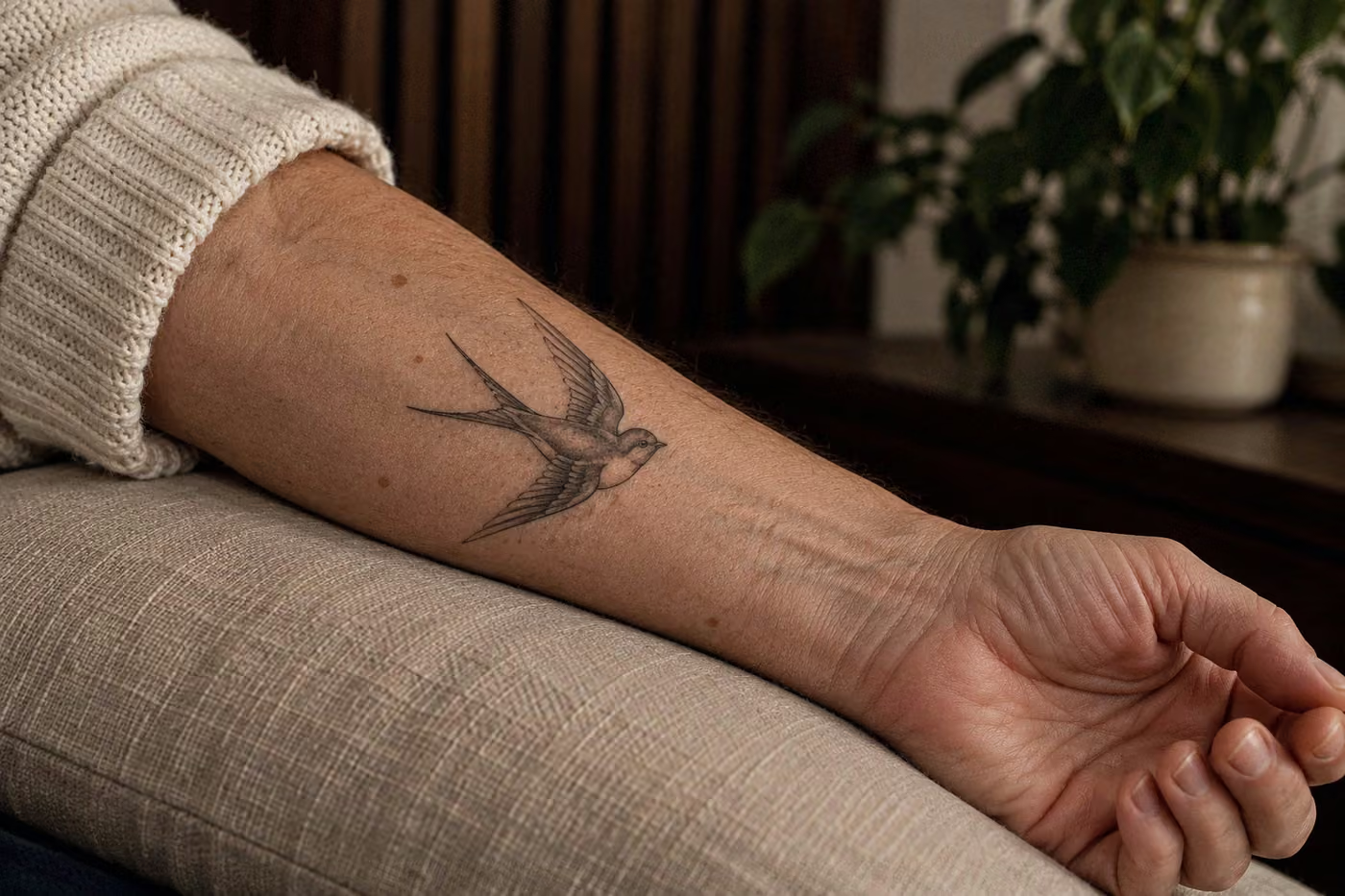
Very small details and fine lines packed tightly together really do merge over time. That’s why a good artist may suggest making the design a little bigger than you’d planned. More on this in “How a tattoo ages”.
“Tattoos are bad for your health”
With sterile single-use needles, good-quality pigments and proper aftercare, the risk of complications is small. The danger usually lies in how the tattoo is done rather than in the tattoo itself: home-made machines, reused needles and ink from an unknown source.
If you have a chronic illness or an allergy, or you take medication that affects your blood, talk to a doctor first.
The details are in “Restrictions and contraindications”.
Five more myths, one line each
- “You can’t have an MRI after getting a tattoo.” You can. Sometimes the tattooed area warms up slightly — let the doctor know in advance.
- “You can’t give blood.” You can, but after a new tattoo there’s usually a waiting period. Your blood donation centre will tell you how long.
- “No steam rooms or saunas.” True while the tattoo is healing. Once it’s healed, as often as you like.
- “A fresh tattoo should be covered in Vaseline.” A thick, greasy layer stops the skin from breathing. Your artist will recommend the products and routine.
- “You can remove it any time without a trace.” You can remove it, but it’s expensive, takes a long time and may still leave a trace.
“You’ll regret it one day”
People rarely regret a well-thought-out tattoo. What they usually regret is rushing: settling on a design in one evening, getting something “like my friend’s” and going to the first artist with a free slot. The best way to avoid regret is to take your time with the idea and the choice of artist.
If you still like the idea as much a month later as you did on the first day, you probably really want it. If you’ve gone off it, you haven’t lost anything.
Frequently asked questions
Can't find your question? Message me on Telegram or Instagram. I reply personally.
Is it true that colour tattoos fade faster?
Bright colours and lighter shades fade more in the sun. Black lasts longest. Sun protection extends the life of any tattoo.
Can I get a tattoo in winter?
Yes, winter is even more convenient: less sun and less sweating, and clothing protects the fresh piece. Just make sure wool doesn’t rub against it.
Can I sunbathe with a tattoo?
Once it’s healed, yes, but with sunscreen on the tattoo. UV is the main reason tattoos fade.
Does the pain depend on the artist?
Partly. Careful technique and the right needle depth make the session less painful and help the skin heal faster. But placement and how you feel on the day have a bigger effect.